Arkansas Can Expand Broadband Capability Through Existing Utility Poles

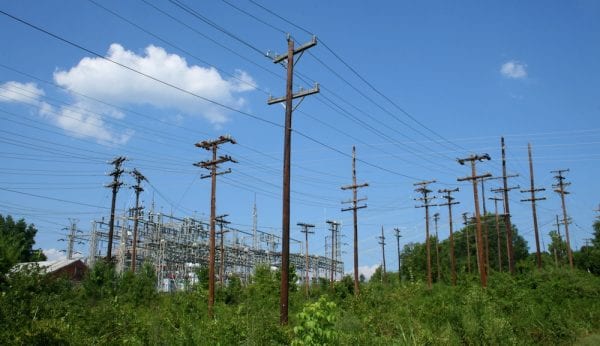
The need for increased broadband deployment is not in dispute as more people than ever before rely on faster Internet service for many aspects of everyday life. The question is whether the private sector or the government is best equipped to provide those faster services. A twist on the “private sector vs. government” debate is the case in Arkansas where wireless carriers are trying to get the public service commission to uphold their right under federal law to put “small cell systems” on telephone poles for better service. The need for enhanced wireless and broadband is clear considering Arkansas ranks 49th nationwide when it comes to Internet connectivity. For decades, cable and Internet providers have been using utility poles to ensure access to households, so using utility poles for telecommunications services is not a new concept. The use of existing utility poles is an important deployment opportunity for the many “small cell systems” that are now seen as potential tools to deploy broadband. The fight is over whether the electric utilities will allow wireless equipment on utility poles, and if so at what cost. Wireless carriers have agreed to pay the rate that cable companies have been paying, and they have also said they will comply with any and all required safety guidelines.


Continue ReadingArkansas Can Expand Broadband Capability Through Existing Utility Poles

Summer Reading: The REINS Act

Last week, the Taxpayers Protection Alliance (TPA) began the 2015 Summer Reading series that focuses on issues Congress will need to tackle when they return from the August recess. The first installment analyzed President Obama’s Clean Power Plan. This week, TPA is taking a look at the Regulations from the Executive in Need of Scrutiny (REINS) Act. This legislation is critical to reform the increasing regulatory apparatus that federal agencies have imposed over the last several years. Whether it is the Federal Communications Commission (FCC), Food and Drug Administration (FDA), Environmental Protection Agency (EPA), or even a specific law like Dodd-Frank overflowing with new rules, REINS will give Congress the necessary tools to stop costly job killing regulations.

Continue ReadingSummer Reading: The REINS Act

Small Changes to Social Security Could Vastly Improve Its Fiscal Health

(MacMillin Slobodien is the Executive Director of Our Generation, a grouop dedicated to research, educate and promote long-term, free market solutions to today’s public policy concerns.) Today, a growing number of Americans rely on the Social Security program as an income source when they reach an age where they can no longer work. Two thirds of seniors depend on Social Security for a majority of their retirement income, and one third of seniors rely on it for at least 90 percent of their income. Payroll taxes are supposed to finance Social Security programs. These taxes are imposed on employers and employees and are collected and paid to the taxing jurisdiction by the employers. These taxes are deposited into a trust fund the Department of Treasury manages. The way the Department of Treasury manages the trust fund suggests that there is no real money in the trust fund. Instead, it appears to consist of IOUs that are not worth anything unless people continue to buy United States’ national debt. Most Americans believe there is an actual trust fund with money in it. Instead there are IOUs to be paid with debt or current taxes. For the last 30 years, Congress has raided the Social Security Trust Fund. More than over $2.6 trillion has been taken from the trust fund to feather the nests of politicians. In addition, the total unfunded liabilities of the United States government exceeds any reasonable ability to pay. Beneficiaries need financial security and transparency for Social Security.

Continue ReadingSmall Changes to Social Security Could Vastly Improve Its Fiscal Health

Troubled Postal Service Continues to Hemorrhage Money According to Latest Quarterly Report

In a case of unsurprising déjà vu, the United States Postal Service (USPS) posted another quarterly loss. According to the 2015 third quarter financial report, USPS was $586 million in the red for the 3-month period ending on June 30. This loss adds to the $2.2 billion deficit in the first half of 2015, likely assuring that USPS will end the year with its ninth consecutive annual billion-dollar loss. Even though shipping and package revenue continued to edge upwards, operating expenses exceeded the growth in operating revenue. These dismal results come at a time when the USPS has been under scrutiny by members of Congress. Notably, several senators have questioned Postmaster General Megan Brennan on the agency’s failure to meet various performance standards in delivering mail to rural areas of the country. These service metrics, which have steadily declined each of the last 3 years, are only further hampering the USPS’s ability to fulfill its mission of delivering letter mail efficiently to all parts of the country at a reasonable price. Core responsibilities like delivering letters within a three to five day window for over a third of all items has not been met. And, local overnight delivery has been eliminated entirely.

Continue ReadingTroubled Postal Service Continues to Hemorrhage Money According to Latest Quarterly Report

TPA Signs Coalition Letter Supporting Right to Work Legislation in Missouri

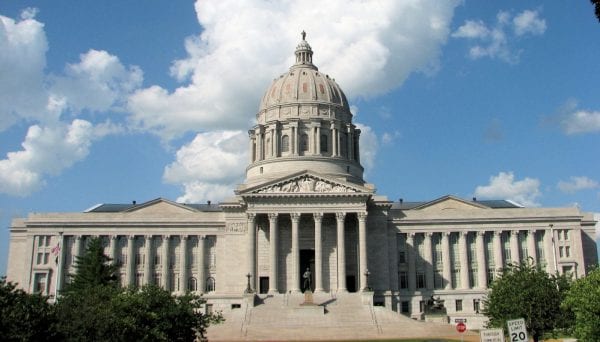
Missouri State House The fight for greater worker freedoms is a continuing battle that is increasingly being fought at the state level. Right to Work laws have proven to be a positive force for workers in many states across the country. TPA President David Williams has said that, "Collective bargaining restricts free labor markets, lowers per capita income and reduces individual freedoms." Keeping that in mind, Taxpayers Protection Alliance signed onto a coalition letter, sent by Americans for Prosperity, calling on the Missouri state legislature to pass Right to Work legislation in the upcoming special session in September. Back in June, Gov. Jay Nixon (D-Mo.) vetoed two Right to Work bills (HB 116 and 589) but lawmakers will have a chance to vote to override the veto and TPA hopes they are successful.

Continue ReadingTPA Signs Coalition Letter Supporting Right to Work Legislation in Missouri

Summer Reading: President Obama's Clean Power Plan

Last year, the Taxpayers Protection Alliance (TPA) featured a series of posts during the congressional summer recess called “Summer Reading.” The weekly posts focused on specific issues that House and Senate should work on after returning from their summer break. This year TPA is bringing back Summer Reading and the first installment of 2015 centers on President Obama’s Clean Power Plan (CPP), the energy initiative announced on Monday by the White House. CCP is the latest in a series of harmful Environmental Protection Agency (EPA) regulatory measures that will bring economic harm to taxpayers, states and working families. According to the Obama Administration, the $8.4 billion plan is aimed at reducing carbon emissions from power plants by implementing a new regulatory rule using section 111 (d) of the Clean Air Act (CAA). The new rule would force states to adopt their own plan in order to meet certain carbon reduction requirements.

Continue ReadingSummer Reading: President Obama's Clean Power Plan

First GOP Presidential Debate: Ten Issues the Candidates Must Address

Here we go again. Another election season is quickly approaching and the first sign of the 2016 election is the first debate. On Thursday August 6, ten republicans will square off in the first of many debates in an attempt to win the hearts and minds of republican voters. Thursday’s debate in Ohio will be the first (and certainly not the last time) for the presidential hopefuls to tell the voters why they should be the party’s nominee for President. Even though the Taxpayers Protection Alliance (TPA) will not endorse anybody for President, we do have a Top Ten list of issues should be addressed by the candidates.

Continue ReadingFirst GOP Presidential Debate: Ten Issues the Candidates Must Address

'I'm Just A Bill' is Comically Unrecognizable in Today's Washington

This article appeared in Inside Sources on August 2, 2015 If “Schoolhouse Rock” were to recreate its famous “I’m Just a Bill” cartoon short of yesteryear to reflect accurately how a bill becomes a law in today’s Washington, the cartoon would be longer and darker. It would need significantly more characters; some of them shady, and probably earn an “R” rating. While our adorable little bill sits on the steps of the U.S. Capitol, a bevy of distasteful, possibly even illegal activity, is taking place in its name behind closed doors. The lobbying tactics behind the effort to pass the Restoration of America’s Wire Act (RAWA) shows just how cynical and corrupt passing a law can be. RAWA would ban online gaming in the United States and would prohibit states’ use of some lottery games to raise revenue. And, instead of an intellectual philosophical debate, RAWA proponents are using sneaky and possibly illegal tactics.

Continue Reading'I'm Just A Bill' is Comically Unrecognizable in Today's Washington

TPA Joins Coalition Letter Urging Congress to Move on ECPA Reform

Privacy continues to be a major concern for all Americans, especially in this advanced technological age. There have been a number of recent examples that have tested the public’s trust regarding Washington’s role in protecting that privacy including the revelations about mass data mining and storage by the government; and the Office of Personnel Management (OPM) hack that compromised the personal information of more than 20 million Americans. The Taxpayers Protection Alliance shares these concerns, and last week joined in a coalition effort led by Tech Freedom sending this letter to members of the House and Senate Judiciary Committees outlining our collective support for reforming the Electronic Communications Privacy Act (ECPA) to ensure that warrants are granted before law enforcement can collect any emails and/or contents of other private online communications. Click 'read more' below to read the full letter

Continue ReadingTPA Joins Coalition Letter Urging Congress to Move on ECPA Reform
Read more about the article Dodd-Frank's Dire Legacy: The Durbin Amendment
President Barack Obama delivers remarks and signs the Dodd-Frank Wall Street Reform and Consumer Protection Act at the Ronald Reagan Building in Washington, July 21, 2010. (Official White House Photo by Lawrence Jackson)

Dodd-Frank's Dire Legacy: The Durbin Amendment

President Obama signs the Dodd-Frank Bill Iain Murray is the Vice President for Strategy at the Competitive Enterprise Institute. This post appeared on the CEI website on July 21, 2015 Today is the fifth anniversary of the passage of the Wall Street Reform and Consumer Protection Act, better known as Dodd-Frank. As the Mercatus Center revealed this week, it may be the biggest law ever written, because it gives the administration so much discretionary power to make secondary law. It has harmed consumers by reducing choice in financial services and failed to solve the problems it was purported to solve, as I outline in my new paper, How Dodd Frank Harms Main Street. One of the worst examples of this stems from the Durbin Amendment, a last minute addition to the bill that gives the Federal Reserve the power to cap interchange fees charged by debit and credit card networks. An interchange fee is a facility fee paid by a merchant when a customer pays using an electronic card network like MasterCard or Visa. The customer gets the convenience of using a card rather than cash, the merchant gets paid with protections against fraud, the card issuing bank gets an incentive to keep issuing the cards, and the card network gets some money to reinvest in improving the efficiency and security of its network. The merchant, bank, and network all get some profit and the customer gets an item of value. All parties see some gain from the trade. So far, so much Adam Smith. Yet unfortunately merchants all over the world bridle at having to pay the fee. In yet another example of Bastiat’s “seen and unseen,” they see the fee and have formed powerful lobby groups all over the world aimed at persuading governments to impose limits on the fees. Merchants argue they will be able to cut prices once a cap is introduced and that the fee is a hidden charge on the consumer.

Continue ReadingDodd-Frank's Dire Legacy: The Durbin Amendment