TPA Joins Coalition Urging Prevention of Another Taxpayer Bailout of Fannie Mae and Freddie Mac

In July 2008, as the Financial Crisis was reaching a peak point, the United States Government began to consider a federal takeover of Fannie Mae should the housing market further deteriorate. In September of 2008, that’s exactly what happened and in "one of the most sweeping government interventions in private financial markets in decades," the Federal Housing Finance Agency announced that Fannie Mae (and Freddie Mac) would be placed into conservatorship. Shortly after, the mortgage giant received a taxpayer-funded bailout to the tune of $116 billion. With that in mind, TPA joined National Taxpayers Union, Competitive Enterprise Institute, 60 Plus Association, Campaign for Liberty, Campaign to Free America, Center for Freedom and Prosperity, ConservativeHQ.com, Council for Citizens against Government Waste, Less Government, R Street Institute, Taxpayers for Common Sense, Tea Party Nation, and Able Americans signing this coalition letter urging the passage of H.R. 1673, the Enterprise Secondary Reserve Taxpayer Protection and Government Accountability Act of 2015, introduced by Rep. Marsha Blackburn (R-Tenn). This legislation would would prevent another taxpayer bailout of Fannie/Freddie. Click 'read more' below to read the full letter

Continue ReadingTPA Joins Coalition Urging Prevention of Another Taxpayer Bailout of Fannie Mae and Freddie Mac

Obamacare Gives Big Windfall To Insurance Companies As Quality of Healthcare Declines

This article originally appeared in The Daily Caller on August 24, 2015 When President Obama was selling the government health care takeover to Congress and the American people, he repeatedly promised that the Patient Protection and Affordable Care Act, otherwise known as Obamacare, would keep health insurance companies “honest” and held “accountable” for providing affordable, quality health care to Americans. Over the past five and a half years the country has experienced the unraveling of this unworkable law as millions of Americans continue to struggle with higher health care premiums, increased out-of-pocket costs, less choice and greater health uncertainty. Americans are paying more for out-of-pocket for health care now than they did in the past decade. Most still remember the president’s famous words, “if you like your doctor, you will be able to keep your doctor.” But for many, that’s turned out to be another unfulfilled Obamacare promise. Now, insurance companies are preparing to gouge consumers with massive premium increases. Estimates for 2016 show that insurance companies around the country are seeking premium rate increases of 20 percent to 40 percent or more, saying their new customers under Obamacare turned out to be sicker than expected.

Continue ReadingObamacare Gives Big Windfall To Insurance Companies As Quality of Healthcare Declines

Ten Years Later: Katrina Recovery Leaves Legacy of Taxpayer Waste

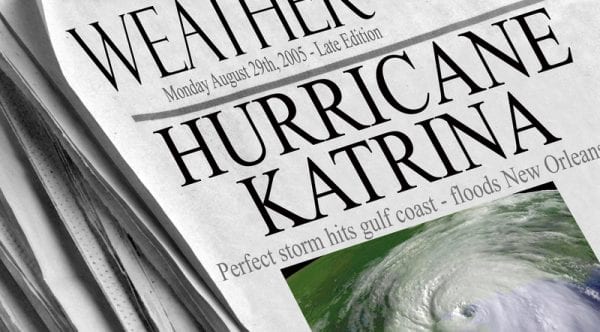
August 29th marked the 10th anniversary of Hurricane Katrina making landfall in the Gulf Coast. Katrina’s aftermath brought a legacy of physical and emotional damage to a region that is still working to rebuild a decade later. There is also another unfortunate legacy that was left in the wreckage of the devastating natural disaster: government waste. One of the most memorable symbols of government failure was the thousands of pounds of ice sent to Louisiana that was eventually sent back and than melted at a cost of $12.5 million. The recovery for residents in Alabama, Florida, Louisiana, and Mississippi has been a long process and still ongoing for many. However, the taxpayer money that has been wasted is something that gets little attention in the coverage yet it’s critically important to understanding the level of waste so that when future disasters occur taxpayer money can be better spent.

Continue ReadingTen Years Later: Katrina Recovery Leaves Legacy of Taxpayer Waste

Summer Reading: Intellectual Property; The Innovation Act and Music Licensing

This week’s edition of Summer Reading highlights intellectual property (IP) and legislation that Congress can move to reform the patent system and music licensing. The Taxpayers Protection Alliance (TPA) has been calling on Washington lawmakers to make the necessary reforms in both of these areas so that innovators and creators can continue to fuel the economy, while holding bad actors responsible for abuses in the system.

Continue ReadingSummer Reading: Intellectual Property; The Innovation Act and Music Licensing

Ten Years Later: Katrina Recovery Leaves Legacy of Taxpayer Waste

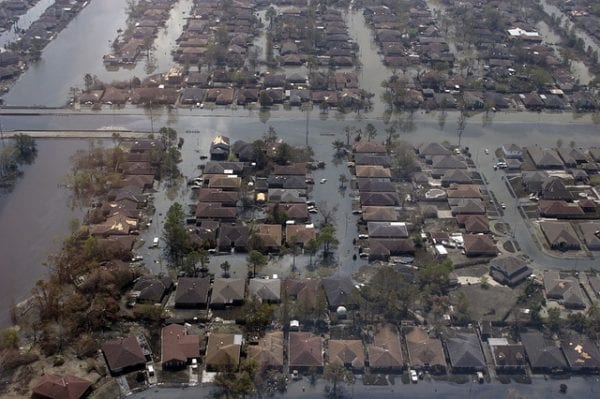
Flooding in New Orelans, LA caused by Hurricane Katrina This week marks the 10th anniversary of Hurricane Katrina making landfall in the Gulf Coast. Katrina’s aftermath brought a legacy of physical and emotional damage to a region that is still working to rebuild a decade later. There is also another unfortunate legacy that was left in the wreckage of the devastating natural disaster: government waste. One of the most memorable symbols of government failure was the thousands of pounds of ice sent to Louisiana that was eventually sent back and than melted at a cost of $12.5 million. The recovery for residents in Alabama, Florida, Louisiana, and Mississippi has been a long process and still ongoing for many. However, the taxpayer money that has been wasted is something that gets little attention in the coverage yet it’s critically important to understanding the level of waste so that when future disasters occur taxpayer money can be better spent. The incompetent response to the disaster was apparent immediately. The waste, fraud and abuse of taxpayer-funded aid following Hurricane Katrina was apparent to government watchdogs less than a year after the storm. Eric Lipton wrote an extensive piece for the New York Times in June of 2006 detailing many of the worst offenses of taxpayer waste related to the post-Katrina recovery.

Continue ReadingTen Years Later: Katrina Recovery Leaves Legacy of Taxpayer Waste

TPA Submits Comments on Plain Packaging to Australian Parliament

Parliament House in Canberra, Australia The Taxpayers Protection Alliance (TPA) has been sounding the alarm on various attempts by governments around the globe to institute plain packaging policies for tobacco. Australia was the first country to pass legislation mandating plain packaging of tobacco and after just a few years, the impact has been exactly what TPA warned they would be: greater tobacco consumption, increased illicit trade, and loss of revenue. Last week, the following submission was made to the Australian Parliament for public comments regarding the plain packaging laws. You can also download the full submission by clicking here. Click 'read more' below to see the full comment

Continue ReadingTPA Submits Comments on Plain Packaging to Australian Parliament

The Export-Import Bank is Dead and Should Stay That Way

This article appeared in The Hill on August 17, 2015 Some members of the U.S. Senate are attempting to resurrect the United States Export-Import (Ex-Im) Bank, whose charter expired on June 30. A few have even gone as far as to threaten a government shutdown over the issue when Congress returns in the fall. Those efforts would be severely misguided and a waste of time and taxpayer money, as the bank has proven to be immune from Congressional reform and has strayed far from its original charter. The Ex-Im bank provides taxpayer-backed funding to overseas businesses and foreign governments to buy U.S. products. Ex-Im was originally intended to specifically benefit American small businesses that might not otherwise receive private loans in order to assist their exporting ability abroad. A noble cause indeed, and in its infancy, the bank did just that, assisting with U.S. exporting efforts in the 1930 to the Soviet Union and Cuba. In recent decades, however, it has ventured far outside of its stated mission, instead distorting the free market, picking the politically connected corporations it chooses to do business with, and leaving many U.S. businesses at a comparative disadvantage. The three largest beneficiaries of Ex-Im financing are Boeing, General Electric and Caterpillar, not small businesses by any definition of the word. In fact, those three are multinational conglomerates that can most certainly find private financing elsewhere. That goes directly against the bank’s own charter, which states that the bank should provide export financing only for “export transactions that are unlikely to proceed without Ex-Im support.” In 2012, Boeing alone received 83 percent of all loan guarantees, and in 2013, just five corporations received 93 percent of all Ex-Im loan guarantees.

Continue ReadingThe Export-Import Bank is Dead and Should Stay That Way

Summer Reading: Taxes

The Taxpayers Protection Alliance (TPA) continues its Summer Reading series focusing on tax reform and specific tax issues that Congress should address. The most immediate needs for reform are the tax code, unresolved issues with how the IRS treats non-profit organizations, and the constant ambiguity on Internet taxes.

Continue ReadingSummer Reading: Taxes

FDA Could Vaporize E-Cigarette Industry In Just One Regulation

Food & Drug Administration Building in Silver Spring, MD Taxes are often the biggest barrier to business and innovation, but regulations have also been a major problem for the private sector. Burgeoning industries are faced with so many hurdles when it comes to growing and becoming profitable that onerous regulations can become too damaging for any venture to succeed. One industry that has been on the upswing over the last few years is the alternative to traditional nicotine products called “vaping.” The term was even made the word of the year in 2014 by Oxford Dictionaries. As many consumers have been turning to vaping products, the numbers show just how popular vaping has become.

Continue ReadingFDA Could Vaporize E-Cigarette Industry In Just One Regulation

GOP Candidates Noticeably Silent On Pentagon Spending Reform

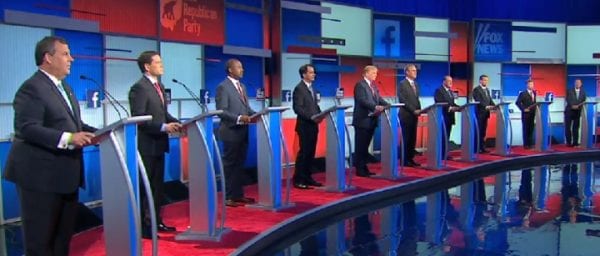
This article originally appeared in The Daily Caller on August 12, 2015 The future of the Republican approach to foreign policy and national security was on full display during the first presidential debates. The candidates made pledges to take on the Islamic State and to rip up the Iran nuclear deal, but unfortunately, they failed to offer a grand vision or strategy on how to deal with the security challenges of today and the years to come. They also failed to address Pentagon spending and how to reform the Pentagon to be more equipped fiscally and physically to fight the next war. Instead, many simply reiterated false narratives and stale talking points to justify throwing more money at the military.

Continue ReadingGOP Candidates Noticeably Silent On Pentagon Spending Reform