Private Sector Takes the Lead in Fighting Piracy and Protecting IP

As the technology sector continues to expand and innovation continues to be a key driver for growing the economy, it is important to recognize and strengthen intellectual property (IP) whenever possible. Abusers of the system are rampant, and in many cases they are aided and abetted by other bad actors who want to profit off of the IP violations that occur frequently. As Congress examines copyright in the digital age, there are examples of how the private sector is taking the lead in protecting IP. One recent example comes from WPP’s GroupM (the leading global media investment management company) with new guidelines and initiative aimed at fighting online ad-supported piracy. GroupM will require all of their media partners to receive anti-piracy certification from the Trustworthy Accountability Group (TAG), a “cross-industry accountability program to create transparency in the business relationships and transactions that undergird the digital ad industry, while continuing to enable innovation.”

Continue ReadingPrivate Sector Takes the Lead in Fighting Piracy and Protecting IP

TPA Joins Bipartisan Coalition Urging 'NO' Vote on NDAA, Citing Bad Process and Continued Taxpayer Waste

Last week, the National Defense Authorization Act (NDAA) for FY2016 passed the House of Representatives in a 270-156 vote. The future of the bill is still in doubt for a couple of reasons. First, the Senate must still pass the legislation. The vote could come as early as Tuesday but even if the bill passes there is still another hurdle to getting the NDAA (as reported out of conference) through, the White House. Last week the President issued a veto threat in response to the Overseas Contingency Operations (OCO) Account to bypass the spending caps put in place through the Budget Control Act (BCA) of 2011 and sequestration. TPA has always said the OCO is a slush fund used to bypass the base budget and avoid the spending caps but the solution is not to break the caps (as the President wants), the best way forward on Pentagon spending is to slash the waste, develop an overall national security strategy, and then fund based on that strategy and the priorities that come with it. Keeping that in mind, TPA signed this coalition letter, along with twenty other groups, urging Congress to reject the bloated NDAA and the process that brought it this far. Click 'read more' below to see the full letter

Continue ReadingTPA Joins Bipartisan Coalition Urging 'NO' Vote on NDAA, Citing Bad Process and Continued Taxpayer Waste

TPA to Congress: Return to Regular Order, Keep the Caps, and Pass a Responsible Budget

This week, the Taxpayers Protection Alliance (TPA) applauded the House and Senate for passing a short-term spending bill that funds the government at levels that will remain within the budget caps that were part of the 2011 Budget Control Act. The BCA caps are spending levels that Congress and the White House agreed upon and put into law, there is no reason to spend above those levels. TPA is calling on Congress to use the next few months to pass a spending bill that retains the budget caps, cuts spending, and ends the governing by crisis that has become too familiar in Washington. Congress ultimately needs to decide if they will get their act together and pass a full year CR or an Omnibus spending bill. Passing a year long CR will make it difficult (but not impossible) to add earmarks. An Omnibus spending bill is more problematic. Anytime a multi-thousand page bill is passed, there is always the temptation to add earmarks or provide funding for wasteful and unnecessary projects or resurrect dead programs like the Export-Import Bank. Of course, waiting to pass an Omnibus spending bill or multiple CR’s two moths after the beginning of the fiscal year is still a symptom of a larger problem of legislating by crisis versus not long term planning. Congress needs to return to passing individual appropriations bills so groups like TPA can evaluate each one based on its merits. Passing individual spending bills in a non-chaotic way also provides opportunities for members of Congress to offer amendments to cut wasteful and unnecessary spending. Getting back to “regular order” allows for more time to look at long term issues like comprehensive tax reform.

Continue ReadingTPA to Congress: Return to Regular Order, Keep the Caps, and Pass a Responsible Budget

NFL Stadiums, Broadband, and the Dangers of Taxpayer-Funded Shiny Objects

Politicians and bureaucrats know that the easiest money to spend money is somebody else’s. There are countless examples of this, but taxpayer-funded NFL stadiums and municipal broadband system show that spending other people’s money is even easier when it is spent on these shiny objects. Recently, the Taxpayers Protection Alliance (TPA) released a report detailing the reality of taxpayer-backed NFL stadiums in cities across America. TPA has also been exposing taxpayer funded broadband networks across the country that are costing taxpayers billions of dollars and failing at an alarming rate. TPA’s NFL stadium report documented the use of hundreds of billions of dollars in taxpayer money to build stadiums that were aimed at boosting local economies. In 60 percent of the cases examined the poverty rate increased and the median household income decreased. These were hardly the results that those securing the financing predicted. And, most certainly, not the results taxpayers envisioned with their money being used as the basis for building these venues. Government broadband is another troubling example of this ‘shiny object’ syndrome that state and local legislators have been taking part in for years. The scam is pretty simple, and horrendously expensive to taxpayers. State governments, prodded on by the Obama administration and the Federal Communications Commission (FCC), propose plans for a government-owned broadband network (GON) and use taxpayer dollars to build the infrastructure and maintain the network. Those backing the plan promise it will bring a faster, better, and cheaper internet. Once the “shiny object” is dangled in front of the press and lawmakers, the network is built and then the frenzy to show its success begins.. Unfortunately, the story takes an awful (and expensive) turn when the network is unsustainable and taxpayers have to provide more money. The GONs are usually failures for reasons that range from unworkable to unmarketable, because despite what some proponents say there is already competition and GONs usually offer service at lesser quality at a similar or higher cost.

Continue ReadingNFL Stadiums, Broadband, and the Dangers of Taxpayer-Funded Shiny Objects

TPA Signs Coalition Letter Urging Continued Opposition to Crony Online Gambling Ban

Congress is headed towards the final weeks of the legislative calendar and as fights over funding the government and leadership elections consume much of the conversation in Washington, there are other issues that taxpayers need to be concerned about. One issue that continues to be floating in the halls of Congress is a federal ban of online gambling. Taxpayers Protection Alliance remains adamantly opposed to any such legislation and will fight it for as long as it takes. TPA President David has stressed that, “the federal government should not be dictating how states decide this issue nor should they be using this as a backdoor route for Internet regulations." Keeping that in mind TPA signed onto this coalition letter sent to House Judiciary Chairman Rep. Bob Goodlatte (R-Va.) thanking him for his leadership in opposing the crony H.R. 707, Restoration of America’s Wire Act (RAWA) legislation as nothing more than corporate welfare to some in Las Vegas who want to shutdown competition. Click 'read more' below to see the full letter

Continue ReadingTPA Signs Coalition Letter Urging Continued Opposition to Crony Online Gambling Ban

Did We Learn Anything from the Solyndra Debacle?

This article originally appeared in Inside Sources on September 22, 2015 As if Solyndra’s monumental failure was not enough of a blow to taxpayers, a new report from the Department of Energy inspector general four years in the making finds the infamous solar company deliberately deceived Energy to secure millions of dollars from the federal government (read: taxpayers). What’s more, it appears the Obama administration was at the helm of the scandal. There’s no surprise that the administration refuses to see the truth about solar power considering that the vice president pledged an additional $102 million grant program for companies, universities and research laboratories to further expand solar power use. It is clear that the administration is ignoring all warning signs and doing whatever it can to shovel more tax money to an unproven and financially risky power source. Solyndra quickly became synonymous with wasteful spending and government absurdity after it received $535 million from taxpayers then went bankrupt. And, when news broke in 2011 that Solyndra was laying off 1,100 employees, just two years after receiving the loan guarantees, much of the American public was outraged.

Continue ReadingDid We Learn Anything from the Solyndra Debacle?

Hillary Clinton on Keystone: Late to the Party, and Absolutely Wrong

Showing herself to be a shrewd politician but a terrible judge of economic and energy policy, Democratic presidential candidate (and former Secretary of State) Hillary Clinton came out in opposition to the construction of the Keystone XL Pipeline this week. The move comes after years of dodging and silence on an issue that is critical to the nation’s economic outlook and overall energy strategy. The fact that Sec. Clinton waited this long, and then did so right during an historic U.S. visit by Pope Francis, shows that she’s well aware this decision is not only unpopular with much of the public, but that it is also bad policy. The proposed construction of the pipeline provides the capacity to move more than 700,000 barrels of oil each day. The increased production would provide thousands of jobs and help lower energy costs for working families nationwide.

Continue ReadingHillary Clinton on Keystone: Late to the Party, and Absolutely Wrong

TPA Joins Coalition Urging Congress to Repeal Crude Oil Export Ban

There are times when policy simply becomes outdated, and there’s no better example of that than the ban on crude oil exports that has been in place since the 1970’s. Spurred by an energy crisis that occurred four decades ago, the United States instituted the ban on crude oil exports but now the time has come to end the ban. Doing so would help spur job growth in the energy sector and expand the energy economy for the entire country. TPA has been an ardent supporter of lifting the ban, and part of the effort includes this Americans for Prosperity-led coalition letter urging Congress to repeal the antiquated ban. Click 'read more' below to see the full letter

Continue ReadingTPA Joins Coalition Urging Congress to Repeal Crude Oil Export Ban

Time for the GOP Presidential Candidates to Get Serious on Pentagon Reform

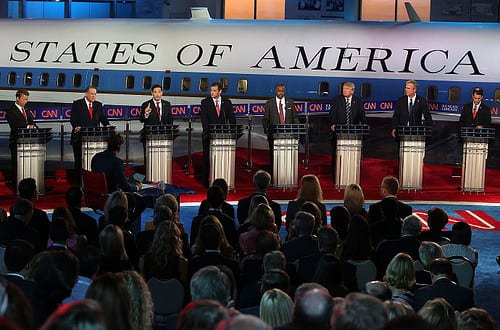
This article appeared in Rare on September 17, 2015 As the dust settles from last night’s Republican presidential debate, much of the media attention is still focused on winners, losers, and who offered the best zingers. But it’s important to point out that while many candidates talked about foreign policy and which countries they wanted to bomb, one important issue received scant attention: our bloated Pentagon budget. For years now, efforts to rein in out-of-control federal government spending have brought conservatives of all stripes together. The rise of the tea party and the ever-increasing influence of the libertarian strain of the GOP is evidence of that. But for some reason, the Pentagon’s seemingly limitless credit card has been barely mentioned by the Republican presidential hopefuls. What’s even more worrying is that some of the candidates think the Pentagon should have more money, despite the fact that we currently have no idea how effectively it spends what it is allotted now, and amid ample evidence of rampant waste, fraud, and abuse.

Continue ReadingTime for the GOP Presidential Candidates to Get Serious on Pentagon Reform

Washington's Focus on Breaking Spending Caps A Major Problem

The 2014 Senate takeover by the Republican party presented an opportunity for Congress to return to regular order and pass appropriations bills to fund the government. You know, the way it’s supposed to happen. That opportunity has been squandered and the country is now just days away, once again, from running out of money and a potential government shutdown. The Taxpayers Protection Alliance (TPA) and others have been calling on Congress to pass appropriations bills instead of waiting for deadlines to nearly hit and passing short-term stop-gap spending measures. Unfortunately, those calls have been ignored and now a more important fight is creeping up: the debate over raising the Budget Control Act (BCA) spending level caps and undoing sequestration.

Continue ReadingWashington's Focus on Breaking Spending Caps A Major Problem