Kentucky Broadband Plan 'bad idea'

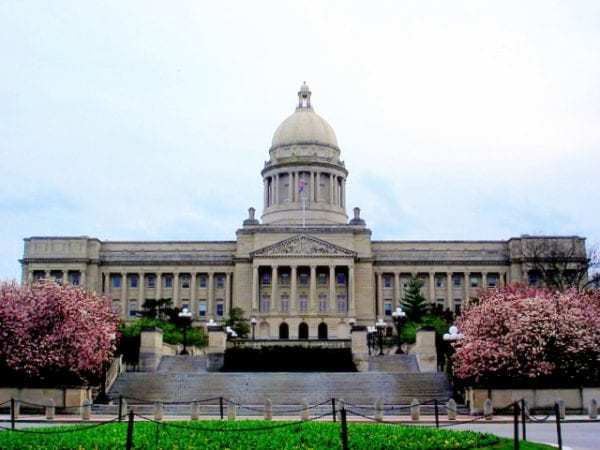
This article appeared in The Courier-Journal on September 17, 2015 Governments at all levels have squandered billions of dollars on wasteful and unnecessary projects. At the federal level pork-barrel earmarks funded everything from indoor rainforests to tattoo removal programs to gigantic subsidies for the solar energy industry. At the state and local level, Boston taxpayers watched as Boston went $10 billion over budget for the “Big Dig,” one of the biggest transportation infrastructure boondoggles in U.S. history. Today some of the most egregious cases of taxpayer waste are government-owned broadband networks. In fact, Kentucky is working to secure $324 million for a government-owned network (GON) that the state will, despite a partnership with an Australian financial firm, maintain and operate. State taxpayers will contribute $30 million to this project while federal taxpayers will kick in another $23.5 million. This project is a bad idea for five reasons: the state’s partner on this project, the likelihood of cost overruns, consumer cost considerations, privacy concerns and the weight of competing government spending priorities.


Continue ReadingKentucky Broadband Plan 'bad idea'

TPA Joins Coalition Letter on Tariffs and Trade Legislation

Trade continues to be a key issue in Washington long after the passage of Trade Promotion Authority (TPA). Taxpayers Protection Alliance worked aggressively to get TPA over the finish line but that was just one core component of ensuring that trade can move forward in a positive for taxpayers and the economy. Currently, in H.R. 644, the Trade Facilitation and Trade Enforcement Act of 2015 is working its way through Congress and how lawmakers deal with Miscellaneous Trade Bills (MTBs) will be important. MTBs provide relief from tariffs on highly-sought finished goods and raw materials brought into the United States and that is why Taxpayers Protection Alliance joined an effort led by National Taxpayers Union signing this letter urging Congress to find a way forward on MTBSs. Click 'read more' below to see the full letter

Continue ReadingTPA Joins Coalition Letter on Tariffs and Trade Legislation

Boeing Threatens Layoffs to Keep Taxpayer Spigot Open

This article appeared in The Washington Examiner on September 4, 2015 Boeing is expected to report record sales numbers this year, has a seven-year backlog of 5,800 commercial aircraft orders and is expected to receive $5.6 trillion in revenue from its commercial aircraft over the next two decades. Yet, the world's largest maker of commercial aircraft has decided to blame the closure of the U.S. Export Import (Ex-Im) Bank for its decision to lay off "several hundred" employees at its satellite division in El Segundo, Calif. According to the Los Angeles Times, Boeing said the cuts were needed after the Bermuda-based global satellite operator ABS couldn't get financing from Ex-Im. This decision stands in stark contrast to multiple public commitments from senior Boeing officials that it would be able to "cover" or self-finance its own transactions once the bank expired — but it would just rather not have to do that. As recently as this summer, Boeing's new CEO Dennis Muilenberg assuredinvestors during a conference call on Boeing's second-quarter earnings that, should Ex-Im expire, "There are multiple commercial credit sources available today." In 2013, when the bank was originally scheduled to expire, the managing director of Boeing's financing arm, Kostya Zolotusky, also said he was confident the company could find alternative funding sources for customers, according to The Wall Street Journal. And earlier this summer, Boeing spokesman Tim Neale told The Wall Street Journal, "We do provide some customer financing, and if there's a short-term shutdown of Ex-Im, we will work with customers who are scheduled for deliveries to ensure they get the financing they need, even if we have to provide it ourselves."

Continue ReadingBoeing Threatens Layoffs to Keep Taxpayer Spigot Open

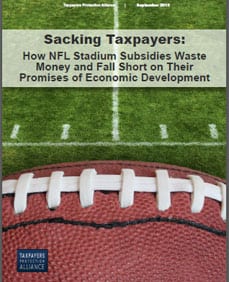
Sacking Taxpayers: How NFL Stadium Subsidies Waste Money and Fall Short on Their Promises of Economic Development, September 2015

When the National Football League (NFL) season kicks off Thursday, the New England Patriots and Pittsburgh Steelers will battle in a stadium built using $72 million of taxpayers' hard-earned money.…

Continue ReadingSacking Taxpayers: How NFL Stadium Subsidies Waste Money and Fall Short on Their Promises of Economic Development, September 2015

How the Calculator Killed Innovation

Mytheos Holt is a Senior Fellow with the Institute for Liberty. This article orginally appeared in Townhall.com on September 1, 2015. In the battle over patent reform, one question that looms bizarrely large is the issue of “venue reform.” That is, one of the many complaints offered by supporters of reform is that particularly litigious patent holders need to be restrained from dragging their targets into random, out-of-the-way courtrooms. If we were talking about civil rights, this sort of complaint would make historical sense. For a topic as arcane as patents, it’s more than a little baffling. You wouldn’t think the way courts handle the topic would be all that different. Yet it very much is. Indeed, one specific East Texas district court has become infamous for its disproportionately favorable treatment of plaintiffs in patent cases, even going so far as to foreclose constitutional protections to defendants with procedural hurdles. The town where all this takes place – Marshall, TX – has become quite prosperous as a result of their courtroom’s status as a hanging judge for multibillion dollar companies. Samsung, for instance, built an ice rink in Marshall as a transparent bribe of its citizens. Their good will doesn’t seem to have paid off, however, since Marshall retains its pro-patent reputation, to the point where patent lawsuits filed there have reached a record high. Most of these lawsuits are filed by transparently shady patent “trolls” which seek to either freeload off others’ innovation, or, as in the case of Securus Technologies, which claims to have patented video calling in prisons without any indicator as to why this counts as an invention, to increase their market share by suing their competitors out of business. Nevertheless, despite their bad faith, the trolls win in East Texas.

Continue ReadingHow the Calculator Killed Innovation

TPA Releases Detailed Report on NFL Stadium Finances

The Taxpayers Protection Alliance Releases New Report on NFL Stadium Financing Washington, D.C. - This week, the Taxpayers Protection Alliance (TPA) released a new report, “Sacking Taxpayers: How NFL Stadium Subsidies Waste Money and Fall Short on Their Promises of Economic Development” detailing the public financing deals for NFL stadiums across the country. The report examines the economic impact of taxpayer-financed NFL stadiums on the people who pay the taxes that fund the construction of those very stadiums. Since 1995, a staggering 29 of the 31 stadiums that house NFL teams received public subsidies for construction, renovation or both. Over the last twenty years, taxpayers have been forced to spend nearly $7 billion subsidizing NFL stadium construction and renovation projects. “Americans love watching the NFL and football fans love going see their team play each week at stadiums across the country,” said David Williams, TPA President. “Unfortunately, beneath all of the glitz and glamour, these venues are nothing more than monuments to corporate welfare and taxpayer handouts. These stadiums have been built on the backs of taxpayers who had no or little say in the matter and in many cases have benefitted little or not at all.” The report comes as the NFL opens its 2015 season, which began on Thursday night September 10 as the Pittsburgh Steelers were defeated by the defending Super Bowl Champion New England Patriots. The game was played in Gillette Stadium, which was built using $72 million of taxpayers’ hard-earned money.

Continue ReadingTPA Releases Detailed Report on NFL Stadium Finances

IRS to Taxpayers and Business: Privacy? What Privacy?

Individuals and organizations should expect a modicum of privacy when it comes to certain personal or financial information. Unfortunately, that expectation has taken a hit recently as news of hacks have dominated headlines. The Office of Personnel Management (OPM) hack was embarrassing for the federal government as more than twenty million public employees had their personal information exposed. The Internal Revenue Service (IRS) has a had a less than stellar track record of late when it comes to keeping in line with protecting the interests of taxpayers and their record on privacy. Everyone knows by now the IRS targeting scandal that revealed a political witch-hunt within the agency that focused on harassing and delaying the tax classification free-market and conservative non-profits. However, this is not the only way in which the IRS is going after groups and individuals. The IRS has been looking for ways beyond the treatment of non-profits to widen their authority over individual taxpayers and organizations. Businesses have come under fire with increasing regulatory action from federal agencies like the Environmental Protection Agency and the Federal Communications Commission but now even the IRS is starting to ratchet up the hostility towards the private sector.

Continue ReadingIRS to Taxpayers and Business: Privacy? What Privacy?

TPA Releases New Report on NFL Stadium Finances

The Taxpayers Protection Alliance Releases New Report on NFL Stadium Financing Washington, D.C. - Today, the Taxpayers Protection Alliance (TPA) released a new report, “Sacking Taxpayers: How NFL Stadium Subsidies Waste Money and Fall Short on Their Promises of Economic Development” detailing the public financing deals for NFL stadiums across the country. The report examines the economic impact of taxpayer-financed NFL stadiums on the people who pay the taxes that fund the construction of those very stadiums. Since 1995, a staggering 29 of the 31 stadiums that house NFL teams received public subsidies for construction, renovation or both. Over the last twenty years, taxpayers have been forced to spend nearly $7 billion subsidizing NFL stadium construction and renovation projects. “Americans love watching the NFL and football fans love going see their team play each week at stadiums across the country,” said David Williams, TPA President. “Unfortunately, beneath all of the glitz and glamour, these venues are nothing more than monuments to corporate welfare and taxpayer handouts. These stadiums have been built on the backs of taxpayers who had no or little say in the matter and in many cases have benefitted little or not at all.” The report comes as the NFL prepares to open its 2015 season on Thursday night September 10 as the Pittsburgh Steelers visit the defending Super Bowl Champion New England Patriots. The game will be played in Gillette Stadium, which was built using $72 million of taxpayers’ hard-earned money.

Continue ReadingTPA Releases New Report on NFL Stadium Finances

Labor Board Boosts Union Bosses With Ruling That Jeopardizes Jobs

Yesterday, folks from around the country enjoyed the Labor Day holiday by relaxing with their families at the end of long weekend. But while many people had the day off Monday, many businesses were still processing a recent ruling by the National Labor Relations Board (NLRB) that could have a lasting negative impact on millions of jobs. On Thursday, August 27, the NLRB voted along party lines to expanded the liabilities of employers as “joint-employers” and changed decades of labor policy that will impact how many companies have do business and will likely lead to harmful consequences for many workers. According to the St. Louis Dispatch, “Previously, the NLRB had a direct-control standard, meaning that a company was a joint employer only if it actually gave orders to the workers or controlled their working conditions. Now, a company may be a joint employer even if it merely reserves the right to influence working conditions.” The case involved Houston-based waste management company Browning-Ferris Industries and whether or not they were responsible for contract staffing they utilized for a facility in California. The NLRB ruled that Browning-Ferris was responsible for the contract employees, and in doing so set forth a precedent going forward that will cause many businesses to rethink how they operate with regards to contract staffing and franchises. The 3-2 ruling is bad news for small businesses and franchisees.

Continue ReadingLabor Board Boosts Union Bosses With Ruling That Jeopardizes Jobs

Summer Reading: Budget and Spending

It was a productive August for the Taxpayers Protection Alliance (TPA), providing Congress with reading material during their August vacation with the 2015 Summer Reading series (click here for more). The final installment for this summer focuses on what’s ahead for lawmakers in September with the looming budget deadline of September 30. The House and Senate have major work to do in order to pass a spending bill that will keep the government funded to avoid a shutdown. And, as usual, there won’t be much time for them to get it done. In fact, Congress will only be in session for 12 days in September, making the budget deadline more ominous. Let’s start with how Congress ended up in this familiar situation. The last several years have been marked by multiple stop-gap spending measures that seem to get passed at the last minute. This has been a trend because the annual appropriations bills never made it out of both chambers. Though the House has been working to pass all the needed appropriations bills, the Senate has failed to pass spending bills. The government will run out of money at the end of September, so there will have to be some kind of funding bill passed in order to avoid a shut down. There are some key issues driving the debate over what any short-term funding package will look like, but TPA is calling on Congress to avoid using this must-pass legislation as a vehicle for irresponsible spending. The most preferred way to resolving the budget impasse is for both chambers to pass appropriations bills; but that option is no longer on the table. Another option would be a major budget deal; that is also off the table due to the lack of time before government funding expires. In lieu of those two preferred pathways, House and Senate leaders will likely move another short-term spending measure that will fund the government from anywhere from one day to a year.

Continue ReadingSummer Reading: Budget and Spending