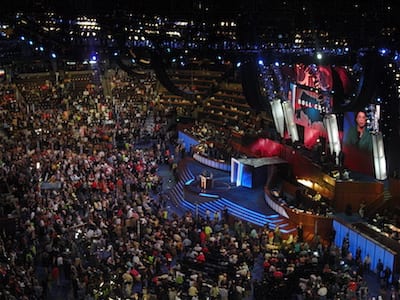
Not Much Attention on Spending Reform or National Debt at Political Conventions

The Republican National Convention (RNC) and the Democratic National Convention (DNC) have both concluded, with taxpayers kicking in $50 million on security costs for each, and the campaign for President is now in that limbo period where nothing is really supposed to happen until the debates. However, there are a lot of issues that the candidates could and should be talking about. Three issues in particular that are critical, but have been largely ignored by Secretary Clinton and Mr. Trump, are tax and spending reform and the national debt. While the candidates have made comments on these issues in passing or during interviews, the focus throughout this campaign so far has lacked a meaningful conversation on taxation, spending and the debt. The conventions were no exception.
Continue ReadingNot Much Attention on Spending Reform or National Debt at Political Conventions

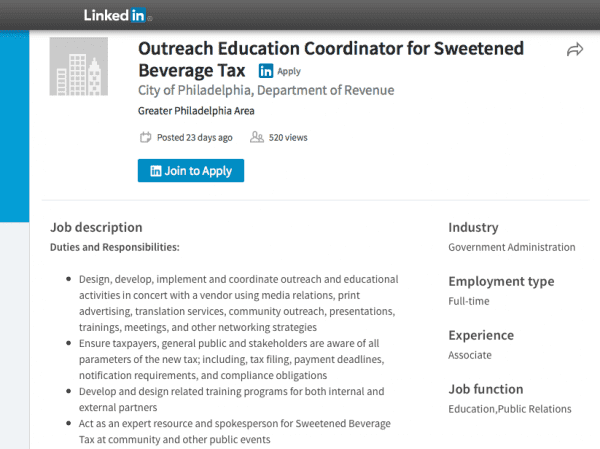
Philadelphia Creates New Taxpayer Funded Position After Creating Soda Tax

Excise taxes are among the most harmful taxes imposed on lower and middle- income people. And, unfortunately, state and local governments have a strong penchant for implementing these burdensome taxes. In addition to disproportionately affecting people, they also harm small businesses, and rarely (if ever) generate the projected revenue that many of the proponents say they will. Knowing all of these concerns, these taxes still frequently pass in cities all across the country, including Philadelphia, Pa. where a new soda tax was passed. The new Sweetened Beverage Tax, will impose a 1.5 cents-per-ounce tax on more than 1,000 beverages and will go into effect on January 1, 2017. The Taxpayers Protection Alliance (TPA) strongly opposed the tax as it was being debated. TPA was part of a broad coalition that urged the city council not to adopt Mayor Kenny’s new tax. In fact, the coalition (led by Capitol Allies) sent a letter to the city council before the vote laying out all the problems that the tax would place on families all across the city of Philadelphia.

Continue ReadingPhiladelphia Creates New Taxpayer Funded Position After Creating Soda Tax

TPA Signs Bipartisan Coalition Letter Urging NDAA Conferees to Strengthen Military Whistleblower Protections

Congress remains in recess, but there will be plenty of work to do when the return in September. Putting together a National Defense Authorization Act (NDAA) in conference with House and Senate members is a top priority and Taxpayers Protection Alliance (TPA) is hopeful the conferees will get that done. This year’s bills in both the House and Senate versions contain specific provisions to strengthen the integrity of military whistleblower protections. Whistleblowers are an important line of defense against waste, fraud, and abuse and it is critical to ensure whistleblowers that are civilians, government employees, or military are able to be protected, and not intimated. Recently TPA signed a bipartisan coalition letter urging NDAA conferees to maintain the provisions included in the House and Senate NDDA bills, so as to “solidify common sense protections for military whistleblowers facing retaliation and incentivize internal whistleblowing within the Department of Defense.” Click 'read more' below to see the full letter

Continue ReadingTPA Signs Bipartisan Coalition Letter Urging NDAA Conferees to Strengthen Military Whistleblower Protections

TPA Releases Survey Results and Report on Failed Government-Owned Internet Networks

WASHINGTON, D.C. – Today, the Taxpayers Protection Alliance (TPA) released results of a national phone survey along with a new analysis of twelve failing taxpayer-funded municipal broadband networks around the country. The phone survey showed that the vast majority of Americans are strongly opposed to government-owned internet networks. The new report titled, “THE DIRTY DOZEN: Examining the Failure of America’s Biggest & Most Infamous Taxpayer-Funded Broadband Networks” details 12 of the country’s failed Government-Owned Networks (GONs) and how taxpayers have been paying billions of dollars for the failures. Click here for poll results and here for the report.

Continue ReadingTPA Releases Survey Results and Report on Failed Government-Owned Internet Networks

The Jeb Stuart High School Name Change Farce – A Debunked Activist Campaign Rolling Down a Slippery Tax Slope

Andre Billeaudeaux is a Fairfax county taxpayer and a father of two school aged children who attend or will be attending JEB Stuart High School. The following blog post is a response TPA recieved from Mr. Billeaudeaux to an Inside Sources op-ed authored by TPA President David Williams. Last month David Williams of the Taxpayers Protection Alliance warned Virginians of Fairfax County that they were the target of a Hollywood-based “PC” crusade against the name of the county’s JEB Stuart High School. Williams dutifully warned that a victory for this ‘pet social cause’ would cost “a whopping $700,000 at a time when dollars for education are already stretched thin.” While the county loudly laments the loss of nearly 2,200 school positions and $500 million from their budget since 2007, County leaders are looking to stem their fiscal bleeding by slapping an extra 4 percent surcharge on meals served in Falls Church restaurants. The proposed “Meal Tax” will hit everyone in the county from tourists to “Raider” students. For many in the JEB Stuart community, the thought of heaping on needless costs for an unwarranted name change became too much to bear when it became clear that they were becoming victims of not just a Stuart smear campaign but a campaign that was seemingly embraced, yet intellectually unchallenged, by at least one member of the twelve member school board who was pushing for a speedy option to have the name changed.

Continue ReadingThe Jeb Stuart High School Name Change Farce – A Debunked Activist Campaign Rolling Down a Slippery Tax Slope

TPA Joins Coalition Opposing New Regulation for Backdoor Student Loan Bailout

While Congress is home for their annual summer recess, federal agencies and the Obama Administration continue their output of new rules and regulations meant to give the executive branch greater authority, putting taxpayers at risk. The latest rule is the “Defense to Repayment Regulations” rule and comes from United States Department of Education (US ED). The new rule is said to protect students, but in reality it will cost taxpayers and is merely a bailout for student loans. The rule would “prohibit pre-dispute arbitration agreements and class action waivers and create a stampede to file claims for loan forgiveness based on a newly broadened, vague standard.” This is unacceptable and TPA believes Congress should be the authority on any commitment of taxpayer dollars for repayment of student loans. This new rule would cost anywhere from $2 billion to $43 billion according to the US ED’s own analysis, rule-making of that scale must not be done through agency declaration. Keeping that in mind, TPA joined a coalition led by American Commitment signing this letter sent to US Ed Secretary John King opposing the rule and calling on Congress to make any decision regarding student repayment. You can read the full letter below:

Continue ReadingTPA Joins Coalition Opposing New Regulation for Backdoor Student Loan Bailout

The Pentagon Should Look To Reform Acquisition Spending To Save Taxpayer Money

Proper and responsible budgeting is a problem in Washington. Spending continues to grow despite big deficits (the White House announced last week the budget deficit is set to rise to $600 billion this year) and recent reforms such as the Budget Control Act and curbs on earmarks have been conveniently forgotten by members of Congress. Some companies are seeking to profit from dysfunction in D.C. by destroying procurement protocols and pursuing what could be considered backdoor earmarks. One particular tech company is targeting the Pentagon to fund an incomplete and insufficient defense intelligence program by working Congressional contacts to pull an end-around on the Army’s contracting process. While “disruption” in Defense spending is a worthy goal, this particular special interest gimmick would leave taxpayers on the hook for a system that doesn’t meet our military’s needs in the near- or long-term leading to higher costs in the future.

Continue ReadingThe Pentagon Should Look To Reform Acquisition Spending To Save Taxpayer Money

With Lots to Do and Not Much Time Left, Congress Takes a Seven-Week Break

This article originally appeared in Inside Sources on July 21, 2016 Last week the heat index in the nation’s capital reached 104 degrees, meaning summer is definitely in full swing in Washington. And, just as the temperature heated up, Congress cooled down and headed home for their annual summer recess. Unfortunately for taxpayers, lawmakers still have a great deal of work to do in an already abbreviated calendar that will only be shorter once they return in September, that’s right, September. There are many fiscal problems that are gripping the country, including a deficit that is expected to reach $600 billion this year. Now, while Congress can’t wave a magic wand and solve every problem, there are things that they have the power to do and should have gotten done before they decided to leave town for a month and half.

Continue ReadingWith Lots to Do and Not Much Time Left, Congress Takes a Seven-Week Break

TPA Joins Coalition Opposing New MMA Regulatory Bill

Government overreach and increasing regulation has been a hallmark of the last several years. Right now regulations are costing the economy trillions of dollars annually and there doesn’t seem to be an end in sight. The latest example of regulatory overreach by the government is new legislation to interfere with a new, growing, and increasingly popular sport. H.R. 5365, the “Muhammad Ali Expansion Act,” would regulate mixed martial arts (MMA) and it would put government bureaucrats in charge of ranking fighters and matchmaking. There is no need for this bill when the private sector is doing just fine, all one needs to look at is the continuing growth in popularity and prosperity of MMA in the United States. With that in mind, TPA signed onto a coalition effort led by Frontiers of Freedom sending this letter to Rep. John Kline (R-Minn.), Chairman of the House Committee on Education and the Workforce and Rep. Fred Upton (R-Mich.), Chairman of the House Committee on Energy and Commerce opposing the MMA regulation legislation. This is a bad solution in search of a problem that doesn’t exist, and TPA strongly urges Congress to kockout H.R. 5365. Click 'read more' below to see the full letter

Continue ReadingTPA Joins Coalition Opposing New MMA Regulatory Bill

IP Concerns Continue to Grow for FCC AllVid Proposal

FCC Headquarters in Washington, D.C. It should come as no surprise that the Federal Communications Commission (FCC) is having a hard time selling their AllVid (set-top box) proposal. The Taxpayers Protection Alliance (TPA) continues to oppose the proposal, which would require traditional pay-for-TV providers to make video programming available to third-party devices. The cost and negative impact the proposal would have on consumer choice have been well documented. Now, voices of concern continue to grow about the problems with the weakening of intellectual property in the new regulation. Last week, FCC Chairman Tom Wheeler and other FCC Commissioners appeared on Capitol Hill as the House Energy and Commerce Communications and Technology Subcommittee held a hearing on oversight of the agency. The set-top box rule was one of many topics that came up during the nearly five-hour hearing (which can be seen here). Members of Congress from both sides of the aisle expressed their reservations about the new FCC regulation. One critical piece of information revealed at last week’s oversight hearing was that there are concerns coming from another government agency, the Copyright Office.

Continue ReadingIP Concerns Continue to Grow for FCC AllVid Proposal