The World Health Organisation Is In Crisis – And At A Crossroads

This article originally appeared in The Huffington Post on August 18, 2016 The World Health Organisation (WHO) has just embarked up a year-long election to find a new Director-General to run the 8,000 person organisation. Arguably, the person who is eventually elected will not have an enviable job. WHO is mired in accusations of lack of transparency, corruption, and even stifling press freedom - in strict contravention to the UN Charter. Even its friends are scathing... “underlying WHO’s relationship with its member states is a lack of trust in the WHO Secretariat’s ability to deliver” laments Charles Clift, Senior Consulting Fellow at Chatham House. WHO matters to the world and, given that it receives 75% of its funding from the USA, the UK and the Bill Gates Foundation, we should all care that its functions properly. The specific accusations made against WHO are too numerous to list here, and I will outline only three. Firstly, there is proof of serious malpractice. The UN’s own Office of Internal Oversight recently conducted a damning audit of WHO stating that 2015 saw a 66% increase in the demands for investigation of wrongdoing. Incidents of reported fraud were up 20% over the previous period, and instances of fraud shot up 166% in 2015.

Continue ReadingThe World Health Organisation Is In Crisis – And At A Crossroads

TPA Signs Coalition Letter Supporting the Final CHOICE ACT

The Obama Administration has presided over the worst economic recovery in more than six decades, and the policies they have been implemented are directly responsible for that weak recovery. Over the last several years wages have been stagnant, regulations have been growing, and the government is continuing the terrible practice of cronyism that picks winners and losers harming the free market. These policies have to end if there will ever be a fast-paced recovery that sees better job growth and higher wages for working Americans. There is legislation in the House of Representatives sponsored by Financial Services Committee Chairman Rep. Jeb Hensarling (R-Texas) that can fix some of the problems mentioned. The Financial CHOICE Act would help to halt cronyism and bring accountability to Washington by ending some of the worst practices that make bailouts and regulations a normal trend. The Taxpayers Protection Alliance (TPA) recently signed a letter supporting the Financial CHOICE Act, sent by the Institute for Liberty urging Congress to adopt the bill. Click 'read more' below to see the letter.

Continue ReadingTPA Signs Coalition Letter Supporting the Final CHOICE ACT

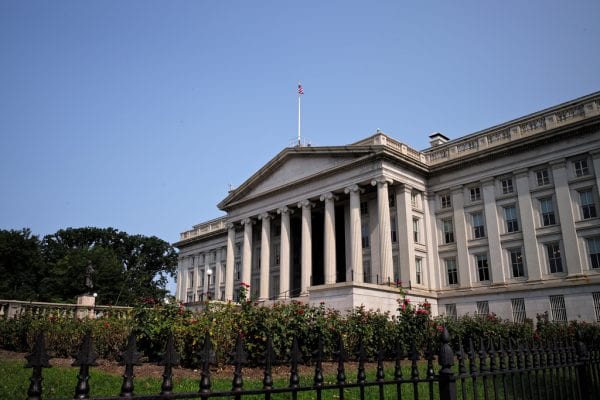
Treasury Department Facing Challenges and Criticism to IRS 385 Rule

The Obama Administration has been one of the most aggressive regulatory administrations in history. In 2015, the annual cost of the regulatory regime hit a whopping $1.885 trillion, according to an analysis from the Competitive Enterprise Institute. President Obama and his administration have been responsible for issuing a record 600 new major regulations during his time in office so far, a record that has had an adverse effect on the economy. One of the more recent regulatory proposals that the administration, specifically the Treasury Department, has proposed is what is known as the “Debt-Equity Rule” or Section 385 of the Internal Revenue Service Code. The new rule was first made public in April of this year, and many taxpayer advocates as well as business groups and key players in the financial services sector have all expressed concerns about the potential impact of the new rule.

Continue ReadingTreasury Department Facing Challenges and Criticism to IRS 385 Rule

Back to School for Many, Back to Tax Increase Proposals in California

Growth of government continues to be a problem not just at the federal level but also in many states around the country. Some of the worst growth in government is usually paid for through excise taxes on products like soda, tobacco, and alcohol. These taxes are harmful to the middle class because they never raise the projected revenue. And, in the case of tobacco taxes, illicit activity increases when taxes are high. Proposition 56 (Prop 56), a $2 per pack cigarette tax increase in California, will be on the ballot and could be a fiscal and legal nightmare for the state. Proponents of Prop 56 claim the new tax will help public safety and raise revenues. In reality however, it is nothing more than a $1.4 billion tax increase meant to fund more government bureaucracy and provide a bailout to specific industries while subverting existing law in the state and neglecting the real problems that Californians face.

Continue ReadingBack to School for Many, Back to Tax Increase Proposals in California

Contact Lenses are About to Get More Expensive if this Legislation Passes

This article originally appeared in Independent Journal Review on August 2, 2016 At times, the government has an uncanny way of coming up with a solution to a problem that doesn’t exist. It doesn’t make any sense, but it happens. When the federal government uses its power to micromanage a perceived problem, it hurts the very people it means to protect. The Contact Lens Consumer Health Protection Act (S.2777), put forth by Sen. Bill Cassidy (R-Louisiana), purports to protect contact lens consumers from health problems associated with using lenses and not following accepted protocol when wearing them. The truth is that this legislation would have the opposite effect by limiting choice and increasing the cost of contact lenses.

Continue ReadingContact Lenses are About to Get More Expensive if this Legislation Passes

TPA Urges Decatur City Council To Not Waste Taxpayer Money Expanding Government Broadband

Taxpayers Protection Alliance (TPA) recently released a report and survey results on government owned internet networks (GONs) showing the cost of these failed networks that taxpayers have been paying for, as well as attitudes towards the idea of government spending money on these vanity projects. The survey showed that a majority of respondents don’t want to go into debt for these boondoggles, and that the government can’t do a better job than the private sector of providing quality, affordable internet to consumers. Unfortunately, the trend of these GONs popping up in cities around the country is continuing and this week TPA sent a letter to the Decatur City Council in Illinois urging them against using taxpayer money to expand government broadband. Click 'read more' below to the see the letter

Continue ReadingTPA Urges Decatur City Council To Not Waste Taxpayer Money Expanding Government Broadband

Can You Have Your Subsidized Peanut Butter Cake and Eat It, Too?

Veronique de Rugy is a senior research fellow at the Mercatus Center at George Mason University and a nationally syndicated columnist. This article appeared on Mercatus.org on July 28, 2016 The federal government is packed full of crony programs, such as the Export-Import Bank and the ethanol mandate. When it comes to the unhealthy marriage between government and the private sector, however, the U.S. Department of Agriculture may take the cake. With the exception of food stamps, which should have nothing to do with the farm bill, every program in the agency is meant to subsidize or boost the profits of farmers. We have such programs as the Dairy Margin Protection Program and the Dairy Market Stabilization Program. The former effectively guarantees profits for dairy farmers, and the latter is a complicated program meant to drive up milk prices to benefit small-scale dairy farmers. Then there are sugar tariffs, which are meant to artificially boost the profits of a few companies by keeping the price of sugar high in the United States at the expense of consumers and taxpayers. In the same vein, we also have the peanut programs. The USDA recently announced that U.S. peanut farmers will produce 6.1 billion pounds this fall, on top of 2.9 billion pounds in leftover stockpiles. Total peanut demand isn't that high, and we will start the next year with a 3.2 billion-pound stockpile. And unless you like your peanut butter and jelly sandwich with a side of government subsidies, you should care.

Continue ReadingCan You Have Your Subsidized Peanut Butter Cake and Eat It, Too?

TPA Signs Coalition Letter Supporting Home-Sharing Competition in Los Angeles

The sharing economy is a source of innovation that has been responsible for providing an economic boost to many major cities. Companies like Uber, Lyft, and others have revolutionized transportation with business models that are disrupting the old guard of a monopolistic taxi system and providing real competition; and that’s a great thing. Airbnb is another company that has been a key player in the sharing economy, and their business model has been popping up in city after city. Unfortunately whenever something new comes along, the usual reaction from government is to tax it, regulate it, or just kill it. TPA believes that consumers and businesses should not be regulated to the point where competition is impossible. Right now we’re seeing another instance of a city getting ready to make a play at restricting Airbnb, this time it’s Los Angeles, CA. TPA signed a letter last week sent by TechFreedom urging city officials to reach an agreement that will allow full and fair competition for home-sharing in the city. Click 'read more' below to see the full letter

Continue ReadingTPA Signs Coalition Letter Supporting Home-Sharing Competition in Los Angeles

Do You Know Who is in Charge of Your Health Care Decisions?

This article appeared in The Hill on July 28, 2016 When it comes to Medicare, most seniors rightfully assume that the representatives they elect to Congress are the ones making critical decisions that affect their health care. After all, it’s one of the largest government programs in our country accounting for more than $500 billion in federal outlays and responsible for the health of America’s seniors. What many patients and voters don’t realize, however, is that there is another body in Washington whose power and influence over the future of this program is growing: The Medicare Payment Advisory Commission (MedPAC). MedPAC (established by the Balanced Budget Act of 1997) is an independent congressional agency whose mandate is to advise Congress on issues affecting Medicare (quite broadly) and provide recommendations. Though this mandate and the commission itself aren’t inherently problematic, a closer look at their role reveals the weight their recommendations carry in Congress and the ability they may have to transform the Medicare program in ways that will impact all beneficiaries.

Continue ReadingDo You Know Who is in Charge of Your Health Care Decisions?

House Lawmakers Fish for Relief from Catfish Regulations

Elizabeth BeShears writes for The Heartland Institute, this article originally appeared on the Heartland Institute's website on July 29, 2016 In the wake of the U.S. Senate voting to lower trade barriers on catfish meat imported from other countries, a group of U.S. House lawmakers are blocking a vote on repealing food inspection rules currently in effect. The House’s inaction leaves in place an Obama administration decision effectively protecting American agricultural businesses against competitors in other countries by increasing the costs of complying with trade regulations. In 2015, the U.S. Department of Agriculture (USDA) issued a rule on imported catfish meat that requires it to be tested for quality by USDA instead of the U.S. Food and Drug Administration (FDA)—a federal agency whose mission statement includes the goal of “ensuring the security of the food supply”—before allowing the fish to be sold in the United States. FDA already inspects imported seafood. USDA’s regulations on catfish imports are more stringent than FDA’s import regulations, and they are much costlier. FDA’s catfish inspection program costs taxpayers $700,000 per year, but the USDA regulations will cost taxpayers $14 million annually, plus an additional $20 million in one-time costs.

Continue ReadingHouse Lawmakers Fish for Relief from Catfish Regulations