When the Government Stands Up for Taxpayers – FINALLY!

Yes, you read that headline correctly, and no, it’s not April Fools’ Day. The Department of Treasury is seeking to recoup taxpayer dollars it dispensed in the form of a loan guarantee to Thompson River, a now-bankrupt green energy company. Perhaps as infrequent as Haley’s comet, it’s worth marking the day that Washington seeks to mitigate the harms it has inflicted on taxpayers. No different from the other green energy companies who went into bankruptcy despite receiving government loan guarantees and/or cash grants, Thompson River attempted to provide a product that lacked commercial viability. And so despite the $5 million (to be exact: $5,172,064.80) in taxpayer money, Thompson River was unable to compete in the market. However, thanks to Treasury’s recent announcement that it will seek to recover the $5 million in lost taxpayer money, we can be encouraged that the government will begin to seek funds from other green energy companies that have failed. Hopefully the trend of the government attempting to get our hard earned money back from companies that should never have received it in the first place will replace and put to bed the trend of the government using your money to back industry losers.

Continue ReadingWhen the Government Stands Up for Taxpayers – FINALLY!

Time to Rethink Old Cable TV Rules

The Cable Act of 1992 turns twenty years old in 2012. Not old enough to drink, but certainly mature enough to recognize that it needs to be updated. To commemorate the 20 year anniversary, the U.S. Senate Committee on Commerce, Science, and Transportation is holding a hearing titled, "The Cable Act at 20.” The Taxpayers Protection Alliance sent a letter to the Senate today urging the Senate to revisit the 20-year old Act and support the Next Generation Television Marketplace Act of 2011 (H.R. 3675 and S. 2008), sponsored by Rep. Steve Scalise (R-La.) and Sen. Jim DeMint (R-.S.C.). One of the key provisions in the legislation would be the change in retransmission consent laws. Before you click away, retransmission consent laws are a big part of why we hear about certain programs or sporting events being blacked out. The 1992 Act gives broadcasters an advantage in negotiations with monopoly cable providers, granting broadcasters the right to choose between guaranteed carriage or insisting that multichannel video programming distributors (cable and satellite providers) obtain and pay for a station’s consent to retransmit the station to local subscribers. Needless to say, the television landscape has changed drastically since 1992. The fact is that there are no longer cable monopolies and broadcasters have a choice among many providers such as cable, satellite and fiber optic networks. This has given broadcasters the upper hand in negotiations. Broadcasters have used this advantage to force cable and satellite providers to pay outrageous fees or carry extra channels on their basic tiers. This lopsided leverage has caused program blackouts until a deal is reached and a huge increase in what customers pay as broadcasters' pass these fees as higher rates to customers.

Continue ReadingTime to Rethink Old Cable TV Rules

New LEED Regulations Will Stifle Job Creation and Hurt Taxpayers

Today the House of Representative’s Committee on Oversight and Government Reform held a hearing entitled, “Continuing Oversight of Regulatory Impediments to Job Creation and Job Creators Still Buried by Red Tape.” Given our nation’s current economic plight, job creation should remain at the forefront of every policy makers’ considerations. In order for companies and small businesses to be able to hire more employees, a hospitable environment must exist that will encourage businesses to invest in new endeavors. On the other hand, what businesses need least when it comes to prompting job creation is another unnecessary, ineffective government regulation. More often than not, additional government regulations not only dissuade companies from expanding, the new requirement actually will create an environment where it is cost prohibitive for the company to remain in business. Today’s hearing examined potential changes to the government’s flavor-of-the-day regulation, Leadership in Energy and Environmental Design (LEED) standards, which the Government Services Administration (GSA) uses as its only green building rating system. If these new LEED standards are adopted, another blow to job creation will likely result.

Continue ReadingNew LEED Regulations Will Stifle Job Creation and Hurt Taxpayers

TPA Releases TV Ad “Fast One” Opposing Plans To Cut Taxes For Billionaire Casino Interests

The Taxpayers Protection Alliance (TPA) today announced the release of "Fast One," a television ad (click here to watch) opposing the prospective plans to expand gaming through a special legislative session this summer. Governor O'Malley and several legislators are trying to pull a 'fast one" on Maryland residents, taxpayers and voters. All of the political maneuvering does not change the fact that the state is going out of its way to give tax cuts to billionaire casino interests just after raising taxes on Maryland families. The Governor has expressed a desire to convene a special session to address building a sixth gaming site in Maryland - most likely at National Harbor - and forming a commission to set tax rates for casino operators. Governor O'Malley's latest idea to allow a new gaming commission to determine casino tax rates after voters would decide this issue in November is more absurd than any of his previous ideas on this issue. This proposal mirrors asking someone to sign a contract, committing to buy a house without knowing the price before closing. If the Governor wants voters to decide this matter, he needs to provide them with the exact information of what they are voting on, including the tax rate.

Continue ReadingTPA Releases TV Ad “Fast One” Opposing Plans To Cut Taxes For Billionaire Casino Interests

TPA Urges Boycott of Special Session in Maryland

The Taxpayers Protection Alliance (TPA) today urged the boycott of a special session of the Maryland Legislature to expand gaming and Governor Martin O’Malley’s plans to create a commission to set tax rates for casino operators. The plans of Governor O’Malley and gaming proponents in the legislature are all smoke and mirrors. They do not move Maryland in the direction of a better tax policy. The fact remains that much of the state leadership remains intent on giving tax breaks to the investors and developers at National Harbor, just months after they raised taxes on Maryland’s working families. The state’s residents and economy gain little from such policies.

Continue ReadingTPA Urges Boycott of Special Session in Maryland

TPA Supports Amendment to Cut Taxpayer-Funded Sports Sponsorships

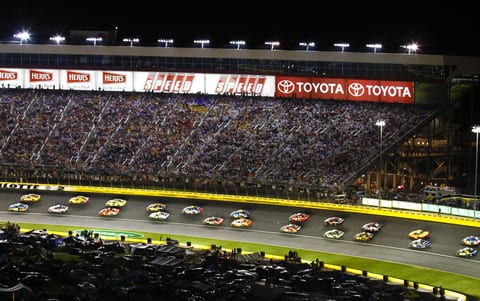
On July 17, 2012, The Taxpayers Protection Alliance was proud to support a bi-partisan amendment by Rep. Jack Kingston (R-Ga.) and Betty McCollum (D-Minn.) that would end sports sponsorships by the Department of Defense. According to a letter by Rep. McCollum, “I ask for your support of a bipartisan amendment that eliminates millions of taxpayer dollars we spend on sports sponsorships in the name of military recruitment. In this year alone, Pentagon plans to spend nearly $80 million dollars on sports sponsorships, including but limited to NASCAR, professional bass fishing, and mixed martial arts. At a time of fiscal crisis, wasting taxpayer dollars cannot be acceptable in the Pentagon or anywhere else in the federal government.” Taxpayers should be proud of their bi-partisan efforts to end these needless subsidies as Congress struggles to find spending cuts.

Continue ReadingTPA Supports Amendment to Cut Taxpayer-Funded Sports Sponsorships

Grant Recipients Continue to Break Law and Lobby With Taxpayer Funds

It’s bad enough when Washington spends your hard earned tax dollars on duplicative, ineffective and/or unnecessary programs. It’s even worse day when we learn that our money is being used to lobby for laws or regulations that will restrict consumer choice and promote nanny state policies that infringe on our freedoms. Unfortunately, that’s what appears to be occurring thanks to a Center for Disease Control and Prevention (CDC) grant program funded by the 2009 stimulus bill. The eye-catching lead sentence in an article from The Hill describes the matter succinctly: “Federal healthcare grants may have been illegally used for political lobbying.” As The Hill recently reported, Daniel Levinson, the Department of Health and Human Service’s Inspector General (IG) said nearly the exact same thing last week. The Hill obtained an “early alert” letter Levinson sent to CDC Director Thomas Friedman. In his correspondence, Levinson wrote that some documents and information the CDC provided to grant recipients “appear to authorize, or even encourage, grantees to use grant funds for impermissible lobbying.” And as disconcerting as this revelation is, it shouldn’t come as a surprise. In fact for well over a year, TPA has worked to bring more attention to this flagrant misuse of taxpayer money by writing letters to Congress and many blogs on this issue.

Continue ReadingGrant Recipients Continue to Break Law and Lobby With Taxpayer Funds

Maryland Residents Have Spoken: No Tax Breaks for Casinos at National Harbor

On Friday July 13, The Taxpayers Protection Alliance (TPA) announced the results of its phone survey on tax rates and building a casino at National Harbor in Maryland. The results showed that state residents remain skeptical about plans to build the casino and give tax breaks to out-of-state casino operators. The most common response to the question on how a respondent felt about the National Harbor proposal was “It is wrong to lower taxes on casinos while taxes on Maryland families are going up.” This corporate welfare debacle started in May when the state legislature passed a massive income tax increase that will hit many families that are far from “rich.” The new, top state-local income rate will rise to 8.95 percent -- the fourth-highest rate in the nation. This hike will not just affect individuals and couples; small business owners’ profits are taxed as personal income. Additionally, the state increased the marriage penalty for working couples, which will significantly hit families with children, and also shifted pension obligations from the state to localities. Since then, Governor O’Malley has been trying to convene a special session to work out a plan to give a tax break for casinos, particularly a casino at National Harbor. The plan calls for reducing the tax rate on gambling revenue from 67 percent to about 52 percent.

Continue ReadingMaryland Residents Have Spoken: No Tax Breaks for Casinos at National Harbor

No More Solyndras Act a Step in the Right Direction

Earlier this week, Congressmen Fred Upton (R-Mich.) and Cliff Stearns (R-Fla.) introduced a bill, the “No More Solyndras Act,” which is intended to ensure that taxpayers’ money will never again be jeopardized because of poor decision making on part of the government. Specifically their bill, according to POLITICO’s Morning Energy, “would bar any subordination of taxpayer interests, require DOE to consult with Treasury on applications submitted before this year and block DOE from finalizing new deals under the 1703 program for applications submitted this year. The introduction of such a piece of legislation is long overdue and should be welcomed and encouraged since members of Congress have proposed a way to protect taxpayers in this way. While this is a very significant step forward, Congress still has quite a challenge in front of them.

Continue ReadingNo More Solyndras Act a Step in the Right Direction

TPA Extends Radio Ad Opposing Gaming Special Session in Maryland: It’s A Question of Basic Fairness

The Taxpayers Protection Alliance (TPA) will continue running state-wide radio ads in opposition to any plans to lower tax rates for casino operators. TPA is not opposed to gaming. TPA is opposed to is giving tax breaks to casino operators while increasing taxes on hard-working and hard-pressed Marylanders to pay for it. Despite Governor O'Malley's announcement that there will be no special session this week, he continues to leave the door open for future consideration of this measure. We will continue to keep highlighting the flaws of this proposal. Any future special sessions would not allow the legislature to act in "regular order" with appropriate committee hearings, allowing citizens a chance to weigh in, or allowing ample time for public comment in Prince George's county or elsewhere. It is inconceivable that the Governor felt this plan to build a casino was enough of an emergency to consider convening a special session of the state legislature. This will not help create jobs in Garrett or Wicomico counties. This special session will not come up with a comprehensive plan to help small businesses begin and grow. And, it will not deal with some natural disaster. Real solutions are needed to address Maryland's long-term problems and business climate that is driving people out of the state.

Continue ReadingTPA Extends Radio Ad Opposing Gaming Special Session in Maryland: It’s A Question of Basic Fairness