Congressional Trade Dithering Costing US Jobs

This article originally appeared in Inside Sources on May 15, 2014 The latest data continues to indicate that the U.S. economy is still struggling to get back on its feet. Though the most recent jobs report from the Bureau of Labor Statistics told us that the unemployment rate has decreased, the reason behind this is hardly cause for optimism. The labor force participation rate (LFPR) has dropped to its lowest levels since the 1970s, which means that many Americans have simply given up looking for work. More than 800,000 Americans left the labor force last month, a troubling sign for any economy. Even more intriguing is the recently-released data on international trade. U.S. exports and imports both increased in March, a late surge that could be encouraging. Total exports for March came to $193.9 billion, up 2.1 percent from February. Imports jumped 1.1 percent to $234.3 billion, the highest level seen since 2012. All told, the U.S. trade deficit fell 3.6 percent and now hovers at $40.4 billion. More trade means more economic activity which benefits taxpayers and consumers.

Continue ReadingCongressional Trade Dithering Costing US Jobs

(UPDATED) TPA Releases Analysis of Amendments to National Defense Authorization Act (NDAA)

Yesterday, Taxpayers Protection Alliance put out a list of amendments that were being considered for H.R. 4435, the National Defense Authorization Act for Fiscal Year 2015. TPA provided members of Congress and all Americans with a guide on specific amendments and how members of Congress should vote. Just now, the House concluded their business regarding these offered amendments and will move forward with passage likely of the NDAA sometime this afternoon. Now that amendments have been debated and selected, TPA wanted to update readers on where there were victories for taxpayers, and where there were defeats. The debate on the NDAA will shift to the Senate and TPA will watch to see what the bill will look like after they complete their process, although unfortunately in that chamber of Congress, there is a lack of transparency in how they proceed on the NDAA, as TPA has noted recently. Regardless, it is time for Congress to take steps to ensure that the Department of Defense (DoD) is given the necessary tools to defend the nation while not using this legislation as yet another way to waste taxpayer dollars. Click 'read more' below to see the updated list!

Continue Reading(UPDATED) TPA Releases Analysis of Amendments to National Defense Authorization Act (NDAA)

TPA Releases Analysis of Amendments to National Defense Authorization Act (NDAA)

The House of Representatives is debating H.R. 4435, the National Defense Authorization Act for Fiscal Year 2015, and the Taxpayers Protection Alliance (TPA) is providing members of Congress and all Americans with a guide on specific amendments and how members of Congress should vote. The guide is simple: the amendment number; the sponsor(s) of the amendment; a description of the amendment (text was taken directly from the House of Representatives website); and the correct way to vote. As an added feature, TPA has flagged some of the amendments with “Vote No! (Earmark Alert)” as potential earmarks. TPA takes a clear stand on these proposed amendments and makes clear whether they are beneficial to taxpayers or not. It is time for Congress to take steps to ensure that the Department of Defense (DoD) is given the necessary tools to defend the nation and not use this legislation yet another means to waste taxpayer money. TPA will continue to monitor these amendments as the bill makes its way through the House, Senate, and eventually conference committee. click 'read more' below to see the list of amendments

Continue ReadingTPA Releases Analysis of Amendments to National Defense Authorization Act (NDAA)

FCC Plays Favorites Setting Rules for Spectrum Auction

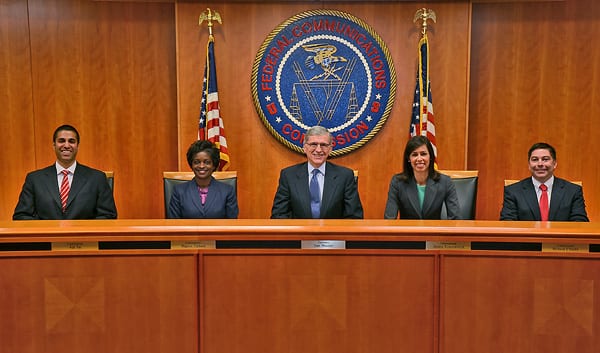
FCC Commissioners (L-R: Ajit Pai, Mignon Clyburn, Chairman Tom Wheeler, Jessica Rosenworcel & Michael O’Rielly) Last week, the Federal Communications Commission (FCC) held an open meeting and made news by voting to move forward on a proposal for Net Neutrality that opens the door to a government-regulated Internet. The proposed rules risk harming innovation and incentives that have helped the web thrive for nearly two decades. Unfortunately, the new proposal on regulating the Internet wasn’t the only poor decision to come out of the FCC’s open meeting last Thursday. The rules for the upcoming spectrum incentive auction were voted on, and in another 3-2 decision the vote could not have been worse for those hoping the FCC would take a free-market approach regarding the auction because the FCC limited who could bid for what spectrum. Any spectrum auction should be open to all who want to bid and the spectrum should go to the highest bidder so taxpayers can reap the biggest benefit from the sale. The Taxpayers Protection Alliance (TPA) has been examining the issue of wireless spectrum for some time. The underlying fact about spectrum is that the government owns most of the wireless spectrum that is available right now, and they really don’t need to have as much as they do for public safety and emergency purposes. TPA has always recognized the role that the FCC and the Congress must play when it comes to wireless spectrum and how it would be best made available to consumers in order to service wireless customers better, encourage growth in business, and ultimately benefit taxpayers when the spectrum is sold in auction. Just last month, TPA submitted acomment to the House Energy & Commerce Committee discussing these very concerns.

Continue ReadingFCC Plays Favorites Setting Rules for Spectrum Auction

NDAA Watch: TPA Sends Coalition Letter to House Urging Support of BRAC Amendment

The Taxpayers Protection Alliance has been keeping a close eye on Congress as the process for the National Defense Authorization Act (NDAA) begins to move at a faster pace. This week, the House of Representatives is likely to file amendments, set rules for debate, and ultimately vote on an NDAA bill before adjourning for the Memorial Day weekend. One amendment that TPA and other groups are supportive of comes from House Armed Services Committee Ranking Member Adam Smith (D-Wash.), the amendment to the FY2015 National Defense Authorization Act is designed to allow the Department of Defense to find savings through the consolidation and closure of domestic military facilities via the Base Realignment and Closure (BRAC) process. Finding cost savings within defense spending is crucial at a time when the national debt is over $17 trillion and opportunities to cut cost are there for the taking. Click read more below to see the full letter

Continue ReadingNDAA Watch: TPA Sends Coalition Letter to House Urging Support of BRAC Amendment

In Australia, Plain Packaging Rules Harm IP, and Taxpayers

Intellectual Property (IP) issues have been getting more and more attention in recent years and there are plenty of aspects to consider when looking at IP in the totality of today’s overall economy. The foundations of some of the guiding principles of our nation recognize the importance of intellectual property and that shouldn’t be lost in any debate or discussion related to IP. The free market thrives best when IP is recognized and not infringed upon by those eager to regulate. IP has become one of the most crucial factors to driving innovation in a time when our commerce is operating on a global scale in a 24/7 environment. A recent National Review article highlighted why IP rights are so important in this age of innovation. One battle that has implications for IP is the alarming trend of the public sector dictating how products can be marketed to the public. Recent news abroad in Australia, Ireland and the United Kingdom that relate to plain packaging of tobacco should cause alarm for those concerned with IP rights, as overreach becomes more and more common. Tobacco has been a popular target for excessive taxation and now plain packaging. In the United States, elected officials are constantly trying to find ways to go after tobacco a means to generate increased revenue and aim at deterring smoking. However, these types of misguided policy initiatives are not strictly limited to just a domestic problem, there are international governments who are using their power to go after tobacco as a means of revenue generation while also looking to cut down on use. The problem is that neither happens, the revenue tends to be Fool’s Gold and tobacco use is not impacted.

Continue ReadingIn Australia, Plain Packaging Rules Harm IP, and Taxpayers

FCC’s “New Rules” for Net Neutrality Still Harmful Like the Old Ones

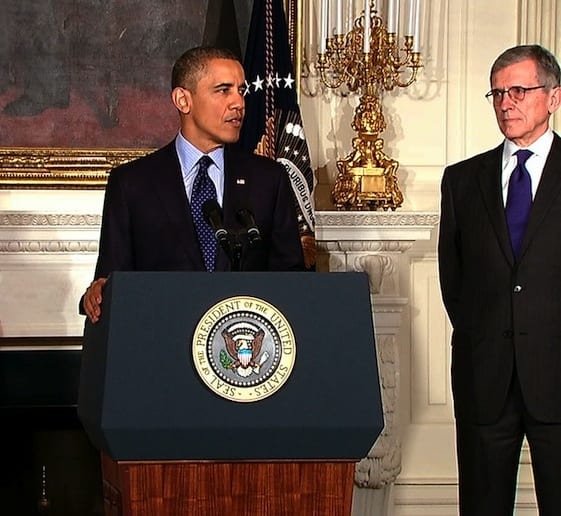
President Obama announces nomination of Tom Wheeler to run the FCC The Taxpayers Protection Alliance (TPA) has warned against ‘net neutrality’ and increased regulatory measures on the Internet and stressed the point that the Internet has continued to thrive as government has kept a light regulatory touch on the Internet. Quick reacting business and free market forces will continue to keep the Internet thriving, and slow unresponsive government bureaucracies are clearly not the way forward as innovation continues to be a hallmark of the Internet. A new regulatory regime for the Internet would stifle that innovation and cost taxpayers millions of dollars tied up in a newly-created bureaucracy. With the abysmal failure of the federal government to create one website for Obamacare, there is no reason why taxpayers should think that the federal government would do any better regulating the whole Internet, that currently has more than 800 million websites. Just a few months ago, TPA applauded major parts of a D.C. Circuit Court of Appeals decision in Verizon vs. the FCC, which threw out the net neutrality rules imposed by the Obama Administration. Unfortunately, it appears the Federal Communications Commission (FCC) and the Obama Administration were not going to give up on net neutrality simply because they lost in the courts. The current chairman of the FCC, Tom Wheeler, recently announced that he is drafting a new set of rules for net neutrality and is seeking approval from commissioners and comments from the public, all while promising that these new rules will pass the test in the judicial system.

Continue ReadingFCC’s “New Rules” for Net Neutrality Still Harmful Like the Old Ones

It’s Time to Audit the Pentagon

Last week, the Taxpayers Protection Alliance (TPA) highlighted how transparency should play a key a role in the markup of the upcoming National Defense Authorization Act (NDAA), and how such efforts to make the markup process more open would help make legislation better for taxpayers. With those same concerns for transparency in mind, the Pentagon should take a serious look at reforming the ways in which they manage their own finances and seriously cut down on the taxpayer money that is predominantly wasted at the Department of Defense. Auditing the Pentagon is a reasonable request, and considering the agency hasn’t had an official audit in more than a decade, it would stand to reason that the time has come for those handing the accounting at DoD need to seriously consider ways in which the trillions of dollars, yes trillions, can be carefully examined so that all citizens can see where the money is going. The Pentagon, like any federal agency, only exists with the taxpayer money appropriated to it. The problem however, is that there has been no accurate accounting of how the money has been spent and that is why there is need for improvements and why those improvements must really take hold. Any entity that is not held to rudimentary standards when it comes to financial record keeping is essentially risking all the money it has been given. A lack of accountability leads to money being wasted, and since the derelict bookkeeping is an epidemic at DoD, quite a bit of taxpayer money is at risk.

Continue ReadingIt’s Time to Audit the Pentagon

Congress Watch: Keystone Pipeline and the Obstructionist Senate

The purpose, consistency, rules, and roles of the United States Senate and House of Representatives are different for a reason. When each body works in the ways intended by the Founding Fathers, Congress can get things done. Last week was a great example of what happens when both bodies attempt to operate under the rules of the House of Representatives. The House consists of 435 members. Each is elected every two years by constituents limited to a specific geographic space. The majority of these constituents share interests and ideology, thus narrowing the diversity of opinion within individual districts. Members of the House of Representatives are supposed to be closer to the people and more apt to be inflamed by political passions. Its internal rules reflect this purpose while bending to practicality. Without a rigid set of rules and a top down power structure, it would be difficult to get anything done. Acting more like a House Speaker than Senate Majority Leader, Senator Harry Reid (D-Nevada) used procedural maneuvers to block Senators from offering any amendments to the energy bill. In exchange for agreeing to forego the opportunity to offer amendments on the first energy bill considered by the Senate in seven years, the Majority Leader proposed allowing a vote to mandate construction of the Keystone XL Pipeline. Republicans refused, insisting that they be allowed to offer five energy-related amendments to the underlying bill. Unmoved, Majority Leader Reid has scheduled a cloture vote for this afternoon on the energy efficiency bill. It is possible, but unlikely, that cloture will be invoked.

Continue ReadingCongress Watch: Keystone Pipeline and the Obstructionist Senate

Obama Must Push Senate Dems on Free Trade

This article originally appeared in Townhall.com on April 30, 2014 As President Obama concludes his tour of Asia, one of the most pressing issues he discussed with his counterparts is the Trans-Pacific Partnership (TPP), a trade agreement currently under negotiation between the United States and eleven other nations on both sides of the Pacific Ocean. Two of these countries – Japan and Malaysia – are stops on the President’s tour, and his visit to the region is a sign of how important the Trans-Pacific Partnership is to American trade policy and our overall foreign policy. TPP is also critical to jump-start a lagging U.S. economy. The Asia-Pacific region is already home to some of our biggest trading partners, including President Obama’s first stop in Japan, our fourth-largest partner. On the other side of the Pacific, Canada and Mexico are first and third respectively. While the United States already holds individual Free Trade Agreements (FTAs) with several countries that would become part of the Trans-Pacific Partnership, signing the agreement would open up exciting new markets like Japan, Malaysia and Brunei to the top-notch goods and services provided by American workers.

Continue ReadingObama Must Push Senate Dems on Free Trade