
Pennsylvania Should Act on Online Gaming Before Congress Takes Away its Right to Choose

This article originally appeared on Pennlive.com on June 12, 2014 Fiscally responsible states look for ways to balance their budget without raising taxes. With Pennsylvania struggling to make its budgets balance, the state Legislature's consideration of a proposal to legalize online poker in the state has been welcomed by many residents who see it as a way of funding key priorities without raising taxes. The Legislature is expected to make a decision by the end of the month, but if some in Congress have their way, Pennsylvania could be stripped of the right to make this decision for itself. Federal legislation has been introduced at the behest of Las Vegas casino mogul Sheldon Adelson that would outlaw all online gaming in America. The bill is an egregious overreach of federal authority that would trample states' rights, setting a dangerous precedent that would block important consumer protections and choices. Adelson, a Nevada resident, doesn't think that Pennsylvania has the right to govern itself and make its own decisions. Powers that are not expressly granted to the federal government in the Constitution are reserved for the states. The regulation of gaming is not a federally enumerated right, leaving each state to make its own determination about and to regulate gaming within its own borders. This has long been the case for brick and mortar casinos and online gaming should be no different.

Continue ReadingPennsylvania Should Act on Online Gaming Before Congress Takes Away its Right to Choose

TPA Joins Coalition Urging Crop Insurance Reform in Agriculture Appropriations Bill

The appropriations process is moving fast in Washington, DC with several pieces of legislation being voted on over the next few weeks. There are important amendments being submitted by members of Congress who are doing their part to protect taxpayers and in H.R. 4800, the Agriculture, Rural Development, Food and Drug Administration, and Related Agencies Appropriations Act of 2015, there are two amendments that TPA felt needed the support of members of Congress. That’s why today, in an effort led by the R Street Institute, TPA joined with Americans for Tax Reform, Campaign for Liberty, Center for Individual Freedom, ConservAmerica, Cost of Government Center, Less Government, and National Taxpayers Union sending a letter urging support two amendments that are aimed at reforming the wasteful, costly and inefficient Crop Insurance program. These two amendments would bring us that much closer to the goals of transparency and accountability that are imperative when taxpayer money is being spent. Click 'read more' below to see the full letter

Continue ReadingTPA Joins Coalition Urging Crop Insurance Reform in Agriculture Appropriations Bill

Reform National Disaster Policy Before the Next Sandy Strikes

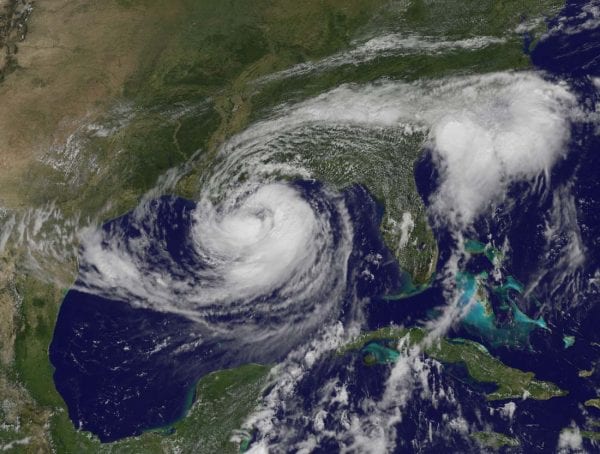
This article originally appeared in Roll Call on June 5, 2014 As we mark the start of Atlantic hurricane season, it is more critical than ever that Congress start developing a national strategy to mitigate the impact of storms. Today, we consistently respond to the last disaster, rather than planning for the next one. As storms, floods and other disasters grow more potent with the onset of climate change, reactive policy is simply not sustainable. Experience has shown that lack of preparedness comes at too high a cost. Once-in-a-century hurricanes such as Katrina and Sandy are growing more common, leaving an ever-greater financial and human toll in their wake. It is past time for us to formulate a meaningful plan to respond to these worsening storms, before we are caught unaware yet again. A national plan would focus squarely on preparation, rather than on post-disaster relief. For too long, disaster aid has been doled out after a storm has rolled through. This ad-hoc, post-facto approach only drives up costs and leaves vulnerable areas open to destruction. Worsening coastal flooding will put even more lives and property at risk. The Multihazard Mitigation Council has found that mitigation, on the other hand, saves $4 for every dollar spent on recovery and relief and has saved more than 200 lives from 1993 to 2003.

Continue ReadingReform National Disaster Policy Before the Next Sandy Strikes

TPA Joins Coalition Urging Action on Smarter Sentencing Act

The government continues to spend and collect taxpayer money at record levels, and the national debt continues to rise. Reform can be key when it comes to finding ways to get spending under control. Spending cuts are important, but in many cases there are programs, agencies, and systems that need structural reform in order to truly realize savings in the long-run. The United States Criminal Justice system is one of the prime examples where spending cuts are just not enough to solve the problem. The Department of Justice’s allotment for the prison system in their budget consumes about 30% today, and taxpayer money continues to be spent while reform continues to linger in Congress. Today, in the Senate, the Smarter Sentencing Act (SSA) can be put up for consideration. SSA is a modest approach to reform that would affect nonviolent drug offenses. The SSA would reduce the length of mandatory minimum sentences for nonviolent drug offenses by half and in the long run would reduce the cost and growth of prisons to reasonably manageable levels. SSA ensures that any drug offenses resulting in serious bodily injury or death are not impacted, while giving judges “limited, clearly-defined discretion to sentence low-level, nonviolent drug offenders with negligible criminal records below the mandatory minimum term.” Last week, TPA and several other groups including Coalition to Reduce Spending, National Association of Evangelicals, R Street Institute, Heritage Action for America, and Americans for Tax Reform signed a letter urging the Senate to move on the Smarter Sentencing Act. Click 'read more' below to the see the full letter

Continue ReadingTPA Joins Coalition Urging Action on Smarter Sentencing Act

Our Broken Tax Code Shouldn't Fix Our Broken Infrastructure

A crowning achievement of President Dwight D. Eisenhower’s legacy was the 47,000 mile Interstate Highway System. The system revolutionized America’s economic and social structure. As Eisenhower noted, the 1956 Highway Revenue Act united a country that existed as an “alliance of many separate parts” and “its impact on the economy…was beyond calculation.” Even though there have been some bumps in the road with congressional earmarking and other questionable policy decisions, for more than sixty years the Highway Trust Fund has financed the maintenance and repair of America’s highways. The trust fund is set to run out of money by August, not good news for the nation’s infrastructure. The current 18.4-cent-per-gallon gasoline tax and 24.4-cent-per-gallon diesel fuel tax will no longer sustain the Fund, which has a projected shortfall of $172 billion over the next ten years. If the Fund fails, more than 700,000 Americans will lose jobs, more than 112,000 projects will stop, and our nation’s deteriorating infrastructure will continue to crumble.

Continue ReadingOur Broken Tax Code Shouldn't Fix Our Broken Infrastructure

Congress Watch: Congress Should Fix the VA, Not Help Themselves

Members of Congress are particularly adept at two things: business as usual and over-reaching in response to scandal. If the past is an accurate indicator of things to come, the scandal at the Department of Veterans Affairs will provide an excellent example of Congressional over-reach. Most Americans were outraged more than a month ago when it was alleged that up to 40 Veterans died while waiting for months to see a doctor at a VA facility in Phoenix, AZ. The Department generally requires that its hospitals see patients within two to four weeks of the time an appointment is requested. Many of the 40 Veterans who died, were placed on a secret waiting list in a scheme to cover up the actual time it took to get an appointment for medical care. Over time, more reports about waiting times and secret lists came to light, and it became clear that the situation in Phoenix was not an isolated incident. As is typical, soon after the initial reports, the finger pointing began. The left insists the problem was President Bush’s fault. The right says that President Obama has known about the problems since 2008 and allowed the condition to fester. Senate Republicans said that the Veterans Affairs Committee did not hold enough oversight hearings. And, for his part, Senator Bernie Sanders (I-VT), Chairman of the Senate Veterans Affairs Committee, blamed it all on the Koch brothers.

Continue ReadingCongress Watch: Congress Should Fix the VA, Not Help Themselves

New Obama Energy Regulations Are a Bad Idea in an Already Weak Economy

Today the Obama Administration proposed a new rule from the Environmental Protection Agency (EPA) about greenhouse gases from existing power plants. Taxpayers and consumers should be concerned that these new, intrusive regulations would serve only to hinder the production of energy here in the United States and weaken an already vulnerable economy. The Taxpayers Protection Alliance warned about the harmful impact of new regulations last month in an op-ed when we wrote, “President Obama has broken many promises during his first and second terms in office. But, in a sad twist of irony for taxpayers and energy production, the president is intent on keeping one of his 2008 campaign promises, to bankrupt coal plants and force electricity prices to “necessarily skyrocket.” After legislative attempts to pass cap-and-trade failed in the Democrat-controlled Congress in 2009, the president made clear that “cap-and-trade was just one way to skin the cat.” The other way: have unelected bureaucrats and attorneys at the Environmental Protection Agency (EPA) regulate coal out of business. The EPA has since taken measures to stop coal plant production by requiring new plants to use cost-prohibitive carbon capture and storage (CCS) technology – tech that is only affordable with large taxpayer subsidies. The only plant currently under construction with CCS will receive $400 million in grants and federal tax credits to offset the more than $1 billion price tag for what is unproven technology. That model is unsustainable.”

Continue ReadingNew Obama Energy Regulations Are a Bad Idea in an Already Weak Economy

TPA Signs Letter Urging Congress Rein in FCC on Net Neutrality Push

The FCC recently held an open meeting and The Taxpayers Protection Alliance (TPA) reiterated our problems with ‘net neutrality’ and increased regulatory measures on the Internet in a post you can read here. One point that TPA continues to focus on is that the Internet has continued to thrive as government has kept a light regulatory touch on the Internet. Keeping that concern in mind, TPA signed onto a coalition letter sent by Americans for Tax Reform and signed by American Commitment, American Conservative Union, Americans for Prosperity, Competitive Enterprise Institute, Center for Individual Freedom, Digital Liberty, FreedomWorks, Institute for Liberty, Institute for Policy Innovation, Less Government, MediaFreedom, National Taxpayers Union, and NetCompetition urging Congress to do their part in making sure the FCC not rush any new proposals on Net Neutrality going forward. As the failure of just one website was the crowning achievement of the federal government’s work on Obamacare, it is frightening to think what the government could do with regulatory power over an entire Internet complete with over 800 million working websites. Click 'read more' below to read the letter

Continue ReadingTPA Signs Letter Urging Congress Rein in FCC on Net Neutrality Push

Utah's UTOPIA Broadband Network No Utopia for Taxpayers

The government has a nasty habit of unnecessarily getting involved in private sector industries that have a track record of consumer satisfaction and exponential innovation over time. Municipal broadband is one of the many examples where there is a wide gap between innovation between the slow unresponsive government and the private sector that is always looking to innovate. While it would be ideal if the government would learn from the failed examples of Tennessee and Louisiana (read here, and here), there is another broadband network funded by taxpayers to add to the list of busts: Utah’s UTOPIA. UTOPIA (Utah Telecommunication Open Infrastructure Agency) is Utah’s version of municipal broadband. With the goal of providing more access at reasonable costs, the more than decade-old project is just like many of the other taxpayer-subsidized municipal broadband programs that fail to deliver on its promises. The problems that plague municipal broadband are usually due to the fundamental fact that government can’t do a better job than those businesses that are already providing the service; and that inefficiency will lead to wasted taxpayer dollars. UTOPIA has been no exception, and the warning signs have been there from the beginning. Just this month, Kuper Jones with Americans for Prosperity discussed the latest municipal broadband boondoggle, and how taxpayers could really get left holding the bill even if the government moves UTOPIA to the private sector.

Continue ReadingUtah's UTOPIA Broadband Network No Utopia for Taxpayers

E-Cigarettes are the New Target for Tax Increases in New Jersey

The fight against new and higher taxes is one that never seems to stop. The Taxpayers Protection Alliance (TPA) fights tax increases at the federal and state level to ensure that elected officials aren’t given more money to waste. States and the federal government should cut wasteful spending to balance their budgets, not increase taxes. Tobacco has been a favorite tax increase for many states to generate revenue. The problem is that the revenue generated tends to be Fool’s Gold, not bringing in the expected revenue. In New Jersey, Republican Governor Chris Christie wants to tax e-cigarettes, the alternative to traditional cigarettes. E-cigarettes provide a legitimate alternative to traditional cigarettes providing the user with nicotine without the burning of tobacco. The New Jersey state Senate is using Governor Christie’s attempt at an increase on e-cigarettes to try and implement a slew of new tax increases on tobacco. The New Jersey Star Ledger details Senate Bill 1867 (which just passed the Senate Health, Human Services and Senior Citizens Committee) and the additional tax increases. TPA has written how selectively targeting tobacco harms consumers and taxpayers, and gets politicians nowhere on fixing real financial problems a state may face. One instance with e-cigarette taxation has already shown how these new revenue streams can dry up in just a matter of time.

Continue ReadingE-Cigarettes are the New Target for Tax Increases in New Jersey