Lack of Transparency in the Obama Administration is Very Transparent

At a February 2010 New Hampshire Town Hall meeting President Obama famously boasted that independent reports rated his administration as the “most transparent in the modern era.” Oh what a difference four years makes. Taxpayers continue to see Washington waste money and hide behind archaic rules that enable all sorts of ways to conceal and obfuscate exactly what elected officials are doing. The biggest roadblock to transparency has been the Obama administration. This is ironic considering that President Obama often criticized the lack of transparency in previous administrations throughout the 2008 presidential campaign. The promises made nearly six years ago as President Obama began his transition into the White House were supposed to usher in a new and sweeping change of course for a city that thrived on working in secret. Today, there are reports of secrecy, stonewalling, corruption, and even abuses of power that reach into various federal agencies all under the Obama Administration.

Continue ReadingLack of Transparency in the Obama Administration is Very Transparent

SUMMER READING: CORPORATE TAX REFORM

The Taxpayers Protection Alliance (TPA) continues its Summer Reading series with yet another issue that Congress should address when they return from their month-long recess, reforming the corporate tax structure. Corporate tax reform is an issue where there is unique bipartisan, bi-cameral, and multi-branch agreement in Washington. The reason for this unprecedented agreement is that the United States, with a 39 percent corporate tax rate, has the highest corporate tax rate among Organization for Economic Co-operation and Development (OECD) countries. It is long past due that Congress and the White House come together and fix what has become a major ailment to a still struggling economy. Corporate tax reform has taken on a great deal of importance in the last several months. The economic driver, corporate investment, has taken a hit and our high corporate tax rate is responsible for much of that burden. In the spring of this year, retiring House Ways and Means Chairman Rep. Dave Camp (R-Mich.) put forth his plan for overhauling the tax code, which included lowering the corporate tax rate from 35 percent to 25 percent, something that would be welcome news for small businesses all over the country. TPA supported Congressman Camp’s efforts to even take this issue on at a time when not much of anything is getting done in Washington.

Continue ReadingSUMMER READING: CORPORATE TAX REFORM

Operation Choke Point is an Abuse of Power

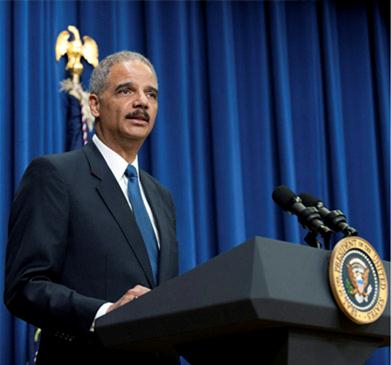
This article orginally appeared on Inside Sources, August 14, 2014 Americans have discovered that even though President Obama vowed to have “the most transparent administration in history,” that pledge has fallen short. As scandal has piled upon scandal, Americans have gotten a decidedly different picture of the Obama administration – that the Obama administration will stop at nothing (certainly not the Constitution) to do what it wants to do. The latest example of the blatant disregard for transparency and the Constitution is the Department of Justice’s (DOJ) “Operation Choke Point.” Originally created to prevent fraud, Operation Choke Point has turned into a political weapon. In a joint effort with banking regulators, the DOJ, led by Attorney General Eric Holder, has begun systematically targeting businesses (like payday loans, firearm and ammunition sales, home-based charities, and pornography) through Operation Choke Point that the Administration apparently finds distasteful. The fact that the companies targeted by the DOJ haven’t violated any laws is unsettling enough, but it’s the way the feds have gone after them that raises the eyebrow of anybody who has even a passing familiarity with the Bill of Rights.

Continue ReadingOperation Choke Point is an Abuse of Power

Elected Officials Flying High on The Taxpayer Dime

Former Secretary of State Clinton still traveling on taxpayer dime (Wikimedia) As Labor Day approaches, folks across the United States prepare to to take that one last vacation before the end of summer. Whether it’s planning a road trip in the car or flying to their vacation spot, Americans carefully plan the financial logistics of where to go and what they can afford. A new report by the non-partisan Sunlight Foundation shows that current and former federal agency officials and senators don’t have those financial worries as they use taxpayer money to fund their personal travel. According to data complied by the Sunlight Foundation, nearly 25 percent of the 100 member U.S. Senate spent $1 million in taxpayer money on chartered flights in 2013.

Continue ReadingElected Officials Flying High on The Taxpayer Dime

Export-Import Bank Awash in Taxpayer Money and Corruption

This article originally appeared in The Hill on August 12, 2014 The Export-Import Bank of the United States has been having a rough few weeks and it doesn’t look like things will get any easier. In late July, the bank scrambled to halt their dealings with Russian companies, a week after the awkward news that the Obama administration had sanctioned some of the Bank’s previous Russian “customers” with close ties to Vladimir Putin. Around the same time, the bank’s president, Fred Hochberg, was hauled before Congress to address concerns about rampant fraud at his institution after three employees were dismissed following allegations of corruption. Also called to testify was Johnny Gutierrez, himself one of the recently-dismissed bank officials. Gutierrez pled the Fifth Amendment and Hochberg’s testimony was less than illuminating. In addition, a recent report in The Daily Caller found several instances of conflicts of interest among members of the bank’s own advisory committee.

Continue ReadingExport-Import Bank Awash in Taxpayer Money and Corruption

SUMMER READING: DEATH TAX REPEAL

Last week, the Taxpayers Protection Alliance (TPA) began the Congressional recess Summer Reading series with an update on internet access taxes and what Congress (specifically the Senate) must do when they return from vacation and prevent tax increases on millions of Americans across the country. This week, the Death Tax takes center stage and there’s much work for Congress to do. The good news is the momentum is building for some positive developments that could occur in a matter of weeks. The first time the government imposed a form of the Death Tax was back in the late 1700s with the Stamp Act. Then the tax was used to help finance the Civil War (as an inheritance tax). And then again in 1916 when the Revenue Act became law (ushering in income tax), the estate tax came with it. Like before, when conflict arose in World War I (WWI), the tax became the vehicle for revenue generation. However unlike the previous two, the post –WWI Death tax was not repealed and is the foundation for what is in the current tax code. Today, per the fiscal cliff deal, the federal estate tax exemption is $5 million per person ($5.34 million in 2014), and the 40 percent tax rate applies to any amount over the exemption.

Continue ReadingSUMMER READING: DEATH TAX REPEAL

Transparency Website Fails to Track Spending

Sens. Coburn and Obama discussing transparency website legislation (credit: Wikimedia Commons) If messing up websites was a profession, the federal government would be considered an expert. Last year Healthcare.gov failed to launch amidst great fanfare and promise. And, just last month, the FCC showed exactly why they shouldn’t be taking control of the internet after problems they had on their own web page caused the website to crash. Now, a government website dedicated to providing greater transparency for spending of taxpayer money is proving once again how inefficient the public sector can be when it comes to basic management. According to a Government Accountability Office (GAO) report, the USASpending.gov site is riddled with problems with both missing data and inaccuracies of data collected. And, it appears that the Obama Administration may be the key reason for the problems. Stephen Dinan of The Washington Times detailed the news that should alarm taxpayers and anyone concerned with accountability in government.

Continue ReadingTransparency Website Fails to Track Spending

TPA Signs Letter Urging Department of Education to Reconsider New Rule Proposal

Taxpayers Protection Alliance (TPA) is always concerned when government agencies begin proposing new rules and regulations. Whether it’s energy, telecommunications, or many of the other issues TPA is involved in; there should always be caution when news of increased regulatory authority is announced. Recently, Department of Education Secretary Arne Duncan announced that the Gainful Employment regulation was being drafted for private-sector colleges and universities and the new regulations are not welcome news for low-income and minority students. When looking at how to evaluate which schools will qualify for program opportunities under the Gainful Employment rule, the new regulation would use the amount of debt the average student incurs, compared to their income. TPA signed onto a letter sent by the Hispanic Leadership Fund urging DOE to rethink the rule because it “is not a fair measure of a program's worth, especially given that colleges do not control the amount of debt students undertake.” The letter was also cosigned by Americans for Limited Government, Independent Women's Forum, American Commitment, Frontiers of Freedom, Business Coalition for Fair Competition, Americans for Tax Reform, Center for Individual Freedom, and the Cost of Government Center. Click 'read more' below to read the full letter

Continue ReadingTPA Signs Letter Urging Department of Education to Reconsider New Rule Proposal

SUMMER READING: INTERNET ACCESS TAXES

When school ends for many children, their teachers assign summer reading to help them to be prepared for the next school year. In that spirit, the Taxpayers Protection Alliance (TPA) will be assigning crucial summer reading for Congress so that they are prepared when they return from their five-week summer recess. With not much time left between now and the November midterm elections (less so this year since Congress is only scheduled to be in session from September 8 to September 23), the clock is even more limited than usual. The first installment of our ‘Summer Reading’ series centers on internet access taxes. Congress took a major step earlier this year in making sure that internet access taxes would end for good when they passed the Permanent Internet Tax Freedom Act (view the House bill here) on a voice vote. TPA urged every member of the House of Representatives to vote YES on the legislation. The passage of the legislation was a welcome development in what has been a very long battle. However, the work is only halfway done as now the Senate must take action and pass their version (view the Senate bill here).

Continue ReadingSUMMER READING: INTERNET ACCESS TAXES