Importance of Copyright and Intellectual Property Rights Highlight Recent Debate

At a recent debate on Capitol Hill sponsored by America's Future Foundation, an interesting question was put to two right-of-center thinkers: Is Copyright a Property Right? The Taxpayers Protection Alliance (TPA) had a front row seat for the event and there were some interesting observations that definitely merit highlighting to our readers. TPA supports strong IP protections so we were keenly interested in the debate. There are several things that stood out during this back and forth discussion and debate on how to properly define copyright when looking at the issue of intellectual property and what the true meaning is for both concepts. The two sides immediately agreed that copyright and intellectual property are property rights. IP has a role to play in today’s global economy. Intellectual Property is a key driving force behind innovation and global commerce. As technologies continue to evolve and countries continue to advance economically, there should be greater focus on preserving the best standards for IP not just here in the United States, but all around the world. A 2012 report from U.S. Chamber of Commerce’s Global Intellectual Property Center (GIPC) entitled IP Creates Jobs for America highlighted specific metrics showing the importance of IP to economic growth.

Continue ReadingImportance of Copyright and Intellectual Property Rights Highlight Recent Debate

Congress Shouldn't Use New International Threats to Avoid Cutting Wasteful Spending

There is no doubt that there must be a priority to make sure that our nation is protected and our interests at home and abroad are secured, but that’s not an excuse to continue wasteful and unnecessary Defense spending. One member of Congress, Rep. Mac Thornberry (R-Texas), believes that sequestration, the automatic cuts Congress and the President agreed to in the Budget Control Act of 2011, may have to be halted due to new potential threats to America.

Continue ReadingCongress Shouldn't Use New International Threats to Avoid Cutting Wasteful Spending

Why Does President Obama Think Aiding Repressive African Regimes Is A Good Thing?

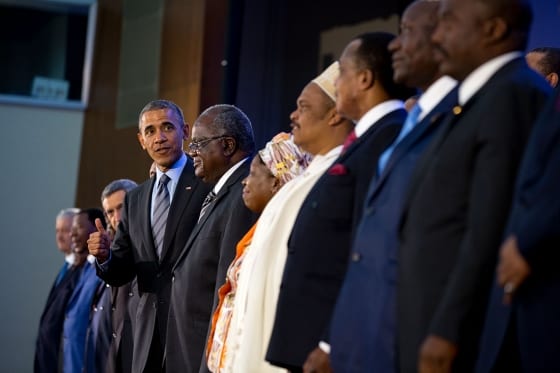
This article originally appeared in The Daily Caller on September 2, 2014 Last month President Barack Obama hosted the U.S.-Africa leaders summit in Washington, D.C. Beneath the fanfare of goodwill, the summit saw three of Africa’s longest serving autocrats Teodoro Obiang Nguema Mbasogo, Yahya Jammeh and Paul Biya – the presidents of Equatorial Guinea, Gambia and Cameroon, respectively, all with decidedly checkered human rights records – be honored guests of America at a state dinner held during the summit. President Obama also saw the summit as an effort to paint the Export-Import (Ex-Im) Bank as Africa’s new best friend. Two big mistakes in one summit. The first criticism was leveled at the Obama administration from across the political spectrum over the wisdom of feting some of these men. After all, Gambia’s Jammeh has threatened to “cut off the head” of gay people in his country. Obiang has ruled Equatorial Guinea since overthrowing his own uncle in a coup in 1979 and the U.S. Department of State has accused his government of everything from “unlawful killings” to “corruption” to “suspected trafficking in persons.” Questions about why the United States Government saw fit to wine and dine these individuals are entirely valid, but they only scratch the surface. A few taxpayer-funded bottles of pinot noir are nothing compared to the billions of dollars heading for Africa from the U.S. Export-Import Bank of the United States, many of them destined for countries run by similarly suspect leaders.

Continue ReadingWhy Does President Obama Think Aiding Repressive African Regimes Is A Good Thing?

TPA Joins Broad Coalition Urging Senate to Stop Internet Access Taxes

The clock is ticking for taxpayers as there are only slightly more than 53 days left until the moratorium on Internet access taxes expires, and Taxpayers Protection Alliance (TPA) is helping to keep the focus on making sure the moratorium is extended permanently. Congress returns to Washington, D.C. after a more than month-long recess and this issue is something that they must address in the limited working time they have remaining this session. Last week, Americans for Tax Reform and Digital Liberty sent a coalition letter to the hill urging Congress act and imploring the Senate to follow the lead of the House and pass a bill that will extend the moratorium on Internet access taxes. In the letter, TPA, along with many state and national organizations praise the House for passing H.R. 3086, the Permanent Internet Tax Freedom Act (PITFA); and urges the Senate to pass S. 1432, the Internet Tax Freedom Forever Act (ITFFA), sponsored by Senators John Thune (R-S.D.) and Ron Wyden (D-Ore.). TPA hopes the Senate will act soon so that millions of Americans can continue to utilize the web without the threat of added Internet taxes looming over them. Click 'read more' below to see the full letter

Continue ReadingTPA Joins Broad Coalition Urging Senate to Stop Internet Access Taxes

SUMMER READING: DEFENSE AUTHORIZATION

Congress is set to return to Washington D.C. this coming Monday after a month-long recess and the Taxpayers Protection Alliance (TPA) has been giving members some tips on what they need to work on when they come back with our Summer Reading series. Today, the final part of the series focuses on the National Defense Authorization Act (NDAA), which has yet to make its way completely through both chambers of Congress. In May the House passed the NDAA by a large bipartisan majority vote of 325-98, but the Senate (in familiar fashion) failed to move on their version leaving the Department of Defense (DoD) in limbo regarding how much and what they’ll be able to spend for fiscal year (FY) 2015. The most important thing for taxpayers to know about the NDAA is that there is a major difference in terms of how each chamber has proceeded when moving the legislation through from debate to passage. In the House, the process is open (at a limited level) to allow for a large number of amendments to be offered and ultimately voted on before final passage. TPA was very active during the House debate over the NDAA, releasing a detailed analysis of amendments offered and classifying them as ones that should or should not be included in the final bill. There were victories and losses for taxpayers and advocates of reduced bureaucracy and spending at DoD, but the House ultimately allowed for such victories to be possible, which in and of itself was a win.

Continue ReadingSUMMER READING: DEFENSE AUTHORIZATION

The Federal Government Should Keep It's Hands and Taxes Off the Internet

This article orginally appeared in Townhall.com on August 28, 2014 Most people don't associate the concept of restraint with a federal government that's spending taxpayer dollars at a rate of $7 million a minute and passing so many new regulations that the Code of Federal Regulations is now over 175,000 pages, and growing. But give credit where credit is due. The Feds have shown remarkable restraint and foresight when it comes to not burdening the Internet with unnecessary regulations and taxes. Ever since the Internet emerged as a consumer tool in the early 1990s, politicians and regulators recognized that the technology was developing in ways they couldn't predict. Instead of legislating yesterday’s Internet, they decided to let it evolve with minimal government intrusion into the Internet we have today. Washington has held to this "light touch" approach and the benefits speak for themselves: the web has transformed the way we live, work, and play. America is the undisputed Internet creativity capital of the world with companies like Facebook, Google, and Twitter being household names the world over.

Continue ReadingThe Federal Government Should Keep It's Hands and Taxes Off the Internet

US Postal Service Still Losing, and Costing Billions

Efficiency is a key goal for any for any federal agency, or at the very least it should be. When there is a deficiency in efficiency, serious questions need to be asked, and tough choices need to be made. The United States Postal Service (USPS) is no exception, and it’s long overdue for a serious review and possible overhaul as the USPS keeps losing money. The USPS recently posted their quarterly losses, and it wasn’t pretty, as the Wall Street Journal reported last month. One of the biggest hurdles for USPS in getting the budget out of the red is the cost of health care. Congress has required USPS to pre fund their health care for 75 years in only 10 years. This means billions of dollars are needed each year to fund retiree benefits.

Continue ReadingUS Postal Service Still Losing, and Costing Billions

TPA Releases Report on Congressional Pay and Benefits

This week the Taxpayers Protection Alliance (TPA), in partnership with Our Generation, released a report detailing the costs of congressional compensation and the sobering figures of how much the taxpayer is paying when it comes to pay, and benefits for elected officials. The report, “Are Members of Congress Overpaid? An Analysis of Congressional Compensation” (which you can read here) shows that in addition to a salary of $174,000 per year, which by itself puts DC representatives among the highest-paid 5 percent of US workers, members of Congress also receive more generous benefits than typical employees, with total congressional compensation including benefits adding up to $286,000 per year. The report also reveals that members of Congress make 3.2 times more than the average full-time American worker. With a $17.7 trillion debt and budget deadlines nearing, there is something to be said about the quality of work being done by Congress in comparison to their compensation. The report details specific attempts made in the past year to scale-back pay for Congress, even as some members say they are “underpaid.” TPA encourages everyone to take a look at the report so that more attention can be brought to this very underreported issue.

Continue ReadingTPA Releases Report on Congressional Pay and Benefits

SUMMER READING: EXPORT-IMPORT BANK

The Taxpayers Protection Alliance (TPA) has been keeping busy this August recess (unlike Congress) and for the last few weeks our Friday Summer Reading series has focused on issues that Congress must do more work on when they return for the brief time they have left this session. This week however, we’re switching things up by first featuring our Summer Reading a day early and secondly with a plea to Congress to do what they do best, nothing. The issue is the Export-Import (Ex-Im) Bank and if Congress does nothing the authorization for the Ex-Im Bank will expire.

Continue ReadingSUMMER READING: EXPORT-IMPORT BANK

TPA Releases Report on Congressional Pay and Benefits

This morning the Taxpayers Protection Alliance (TPA), in partnership with Our Gerneration, released a report detailing the costs of congressional compensation and the sobering figures of how much the taxpayer is paying when it comes to pay, and benefits for elected officials. The report, “Are Members of Congress Overpaid? An Analysis of Congressional Compensation” (which you can read here) shows that in addition to a salary of $174,000 per year, which by itself puts DC representatives among the highest-paid 5 percent of US workers, members of Congress also receive more generous benefits than typical employees, with total congressional compensation including benefits adding up to $286,000 per year. The report also reveals that members of Congress make 3.2 times more than the average full-time American worker. With a $17.7 trillion debt and budget deadlines nearing, there is something to be said about the quality of work being done by Congress in comparison to their compensation. The report details specific attempts made in the past year to scale-back pay for Congress, even as some members say they are “underpaid.” TPA encourages everyone to take a look at the report so that more attention can be brought to this very underreported issue. Click 'read more' below to read the full report

Continue ReadingTPA Releases Report on Congressional Pay and Benefits