TPA Joins Coalition Urging Senate to Reject Online Sales Tax Legislation

This week a group of bipartisan Senators reintroduced the poorly named Marketplace Fairness Act (MFA), better known as the Online Sales Tax, in yet another attempt to get this terrible legislation through Congress. In 2013, the Marketplace Fairness Act passed the Senate in bipartisan fashion but the House wisely left the legislation dead on the floor. Toward the end of 2014, attempts were made to shove the bill into the Cromnibus although thankfully it did not happen. House Speaker John Boehner has said the measure is going nowhere in the House, but that didn’t stop the group of Senators from reviving it a few days ago. Keeping that in mind, TPA signed onto a letter to the Senate led by the R Street Institute and co-signed by American Commitment, Americans for Tax Reform, Campaign for Liberty, Center for Freedom and Prosperity, Center for Individual Freedom, Competitive Enterprise Institute, Council for Citizens Against Government Waste, Digital Liberty, FreedomWorks, Generation Opportunity, The Heartland Institute, Heritage Action for America, Institute for Policy Innovation, Less Government, National Taxpayers Union, and Rio Grande Foundation urging Senators to reject MFA and protect taxpayers from a massive tax increase that will do great harm to the internet economy, which accounts for billions of dollars on Cyber Monday (largest online shopping holiday each year, the Monday after Thanksgiving) alone. Click 'read more' below to read the full letter

Continue ReadingTPA Joins Coalition Urging Senate to Reject Online Sales Tax Legislation

The Rubio-Lee Plan Is A Positive Step Forward On Tax Reform

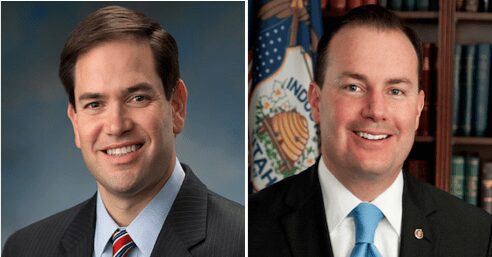
Sen. Marco Rubio (R-Fl.) Sen. Mike Lee (R-Utah) One of the most important issues facing the country right now is the need for real and comprehensive tax reform. The tax code is excruciatingly complicated and Congress must act in way that will help to grow investment for American businesses, but also positively impact working families. Last week, a step in the right direction occurred when Senators Marco Rubio (R-Fl.) and Mike Lee (R-Utah) released their plan for comprehensive tax reform, the Economic Growth And Family Fairness Tax Reform Plan, or as it is becoming known as, the Rubio-Lee plan. The Taxpayers Protection Alliance (TPA) welcomes the Rubio-Lee plan and would like to see Congress take steps to working on making these reforms a reality.

Continue ReadingThe Rubio-Lee Plan Is A Positive Step Forward On Tax Reform

Demanding Answers from the Postal Service

The Taxpayers Protection Alliance (TPA) has been a major advocate of reforming the practices of federal agencies that are wasting taxpayer money on wasteful projects and endeavors, and the United States Postal Service (USPS) has been a major concern as they continue to lose billions and yet keep expanding into services they have no business at even attempting. TPA also released a video in December of 2014 highlighting these issues (watch here). Now, with Postal Regulatory Commission’s (PRC) open docket to consider the U.S. Postal Service’s Proposal Thirteen regarding the City Carrier Street Time Model (Docket No. RM2015-7), TPA is weighing in calling for transparency and full accounting of how the agency is working to do their best to ensure that the best service at the greatest value to taxpayers is being provided.

Continue ReadingDemanding Answers from the Postal Service

TPA Signs Coalition Letter Urging Adherence to BCA Spending Levels

It’s budget season in Washington D.C. and that means elected officials will be looking at another attempt to break the spending levels that have been set into law by the Budget Control Act (BCA) of 2011, which ultimately led to sequestration. One of the biggest challenges seems to be Pentagon spending due to the continued calls for increased spending and ending of sequestration by some of the most influential members in Congress. Recently, the Chairman of both the House and Senate Armed Services Committees Rep. Mac Thornberry (R-Texas) and Sen. John McCain (R-Ariz) called for defense spending levels over that which President Obama requested. Keeping that in mind, TPA singed onto a letter sent by Taxpayers for Common Sense, cosigned by Americans for Tax Reform, Campaign for Liberty, Coalition to Reduce Spending, Council for Citizens Against Government Waste, National Taxpayers Union, Niskanen Center, and the R Street Institute to House Budget Committee Chairman Rep. Tom Price (R-Ga.) calling on Congress to ensure that any budget/spending legislation maintain the spending levels set forth by law. Click 'read more' below to see the letter

Continue ReadingTPA Signs Coalition Letter Urging Adherence to BCA Spending Levels

Tennessee Should Look to West Virginia on How to Bypass Harmful EPA Regulations

Environmental Protection Agency HQ (Washington, D.C.) States are often burdened by the federal government with crippling regulations that usually come in any number of disguises, including public health and safety. Newly-proposed 111(d) regulations from the Environmental Protection Agency (EPA) regarding greenhouse gases from existing power plants are the new battleground for states’ rights. The regulation would use the outdated Clean Air Act in order to force states into compliance with the new rules, in turn harming local economies through potential tax increases. This has spurred action by state legislatures and governors who knew that if they didn’t act, these regulations could be damaging to taxpayers statewide. Last week, West Virginia Governor Earl Ray Tomblin (D) showed his leadership by signing HB 2004, which would shift authority over submission of compliance plans with EPA regulations. The legislation stated that, “The new bill, HB 2004, amends the existing law to make the DEP [Department of Environmental Protection], as a state agency, unable to submit the state's compliance plan to the EPA. Instead, the plan would first have to be submitted to the Legislature for approval.” Following in the footsteps of West Virginia, legislation introduced by Tennessee State Rep. Kelly Keisling (R), TN HB 0868, would ensure that any plans for compliance with the new EPA rules would be subject to approval of the state legislature. In short, Tennessee would have more authority on how they implement energy policy, not the EPA.

Continue ReadingTennessee Should Look to West Virginia on How to Bypass Harmful EPA Regulations

Washington and Alabama Repeating Mistaken Record of Costly Tax Increases on Tobacco

The more things change, the more they stay the same. This is an oft-repeated line, especially when it comes to elected officials and policy prescriptions. Over the years taxpayers have been subject to policies that have robbed their wallets, while doing little to address the real concerns of working families. This logic is especially true for Washington and Alabama considering that the Governors of those respective states have called for an increase in tobacco taxes. Lavendrick Smith at The Olympian outlined details of the proposal from Washington Governor Jay Inslee (D). The Washington State Senate has introduced legislation, Senate Bills 5729 and 5808, which would impose higher taxes on cigarettes and create new taxes on E-cigarettes. This would be a costly reality for taxpayers, while doing little to address the problems that Gov. Inslee is looking to fix. The increase would push the state’s tax to $3.53 per pack, making it the second highest only to New York’s $4.35 tax per pack. It is unfathomable that Gov. Inslee would lean on old failed policies that will disproportionately harm the working class, and would in turn breaking pledges made when first running for the office he now holds.

Continue ReadingWashington and Alabama Repeating Mistaken Record of Costly Tax Increases on Tobacco

House Bill Would Provide Certainty on Gift Tax Exemptions for Donations to Non-Profit Organizations

There are still many questions to be answered from the Internal Revenue Service (IRS) e-mail scandals from 2010 and 2013. But, as the investigation continues, there are other remedies being put in place to stop political targeting at the IRS. On February 26, 2015, Rep. Peter Roskam (R-Il.) did his part to curb IRS abuses by introducing H.R. 1104, the Fair Treatment for All Donations Act. This legislation will help stop the targeting of nonprofits by the IRS in the future by clarifying IRS law that any gift over $14,000 would not be subject to the gift tax. Currently, any gift that is more than $14,000 is subject to the gift tax, except donations to nonprofit organizations. These types of donations have been classified as tax free but in recent years the IRS has threatened to change that classification so that gifts to non- profit organizations classified as a 501 (c) (4), 501 (c) (5), or 501 (c) (6) would be subject to the gift tax. Roskam’s legislation would provide clarity and certainty so that the donations remained gift-tax free.

Continue ReadingHouse Bill Would Provide Certainty on Gift Tax Exemptions for Donations to Non-Profit Organizations

Florida Governor Rick Scott Seeks Relief for Wireless Consumers

A number of states around the country have begun legislative work for the calendar year. While each state has different priorities as well as different challenges, what they have in common is that taxpayers are in need of serious relief. One state where taxpayers could soon see some good news is Florida, where a new proposal to cut taxes has emerged that could benefit wireless consumers statewide who are feeling the pain of high excise taxes on their cell phone bill. Sunshine State Governor Rick Scott is pushing a massive tax cut that will include a lowering of the state’s wireless tax rate for all cell phone users. Wireless consumers are burdened every month with a slew of taxes that provide little explanation but heavy weight to their bill. Last October, a report from the Tax Foundation found that the average taxes on wireless combining state/federal/local are just over 17 percent. The report also showed the size and scale of just how many individuals were impacted by wireless taxes noting that 90 percent of adult Americans have a cellphone, and 58 percent of adult Americans have a smartphone. Those in Florida who are a part of that overall 90 percent are now faced with the real possibility that rates could be lowered on that monthly bill, and this is welcome news that Taxpayers Protection Alliance (TPA) supports.

Continue ReadingFlorida Governor Rick Scott Seeks Relief for Wireless Consumers

TPA Reacts to FCC Votes on Net Neutrality and Government Broadband

National Taxpayer Group Slams FCC for Net Neutrality and Municipal Broadband Vote WASHINGTON, D.C.- The Taxpayers Protection Alliance (TPA), a national taxpayer watchdog group representing concerned citizens all across the country, was disappointed and shocked by the Federal Communications Commission’s (FCC) vote to reclassify Broadband Internet service under Title II regulation. The FCC also decided to let municipal broadband projects like Chattanooga EPB expand beyond their borders. EPB has been the poster child for government waste and overreach. TPA submitted extensive comments to the FCC in September of 2014 as to why Chattanooga EPB has been a failure and how they used intimidation tactics to thwart transparency (see full comments here). This overly aggressive regulatory approach is completely unnecessary and undermines the very foundation the Internet has been built on since its conception over 20 years ago. Title II reclassification threatens to suppress innovation and commerce, while harming taxpayers and consumers. The FCC choosing to reclassify the Internet under Title II will create an environment that could lead to new taxes for consumers and businesses in the already heavily taxed telecommunications marketplace. This would prove disastrous for the economy. Click 'read more' below to see the full reaction from TPA

Continue ReadingTPA Reacts to FCC Votes on Net Neutrality and Government Broadband