Drive to Modernize the Copyright Office Gets Boost with New Draft Plan

The Library of Congress, which houses the U.S. Copyright Office It has been more than two years since the House Judiciary Committee, led by Rep. Bob Goodlatte (R-Va.), has been analyzing copyright laws. One of the conclusions from that work is that the United States Copyright Office is long overdue for an update to bring its technology into the 21st Century. The Taxpayers Protection Alliance (TPA) has been a vocal advocate for modernizing the Copyright Office and now the possibility of achieving that goal is closer. Last week, Reps. Tom Marino (R-Penn.) and Judy Chu (D-Calif.) introduced a discussion draft of legislation that would finally modernize the U.S. Copyright Office.

Continue ReadingDrive to Modernize the Copyright Office Gets Boost with New Draft Plan

TPA Signs Coalition Letter Rejecting Calls for Extension of CBM Program

Reforming the guidelines for our Patent system in the United States is one of the key goals that Taxpayers Protection Alliance has pressed Congress on for a number of years. Right now so called ‘patent trolls’ (instances in which patents are obtained purely for the purposes of clogging up the courts and making profit off that logjam) are harming innovation and competition. There are other components of reforming the patent system that are key to encouraging more investment and innovation into the economy and one relates to the Transitional Covered Business Method (CBM) Review Program. The CBM program “was created specifically to help financial services companies challenge a wave of low-quality patents (known as business method patents) issued prior to a Supreme Court decision that essentially ended the ability to get those patents.” The program was set up as a temporary one in 2012 and is set to expire in 2020, but now there are calls for extending it. TPA rejects that idea and signed a coalition letter to leadership in the House and Senate Judiciary Committees expressing opposition to any calls in Congress to extend CBM. Click 'read more' below to see the full letter

Continue ReadingTPA Signs Coalition Letter Rejecting Calls for Extension of CBM Program

Last-Ditch Efforts by Senators to Save the Crony Capitalist Bank

This article originally appeared in Inside Sources on June 3, 2015 In a desperate, last-ditch effort to save the Export-Import (Ex-Im) Bank of the United States in all of its crony-capitalist glory, a group of U.S. Senators attempted to tie its reauthorization to one of President Obama’s major agenda items this year: the much-disputed (and needed) trade promotion authority (TPA) bill. Adding reauthorization of the bank, which is set to expire on June 30, would have been a poison pill to TPA, likely tanking a vote on granting Obama fast-track trade authority. The Export-Import Bank is an 80-year-old institution, born out of New Deal era policies, that subsidizes loans to help foreign companies buy U.S. goods. However, the bank picks winners and losers, allocating the vast majority of its financing to deep-pocketed Big Business and special interests. These aren’t small businesses obtaining assistance loans in order to competitively export their products abroad, but are instead some of America’s largest corporations, the top three recipients of which are Boeing, General Electric and Caterpillar. America has finally wised up to this corporate welfare scheme, however, and the outrage has been loud and clear. With a significant loss of congressional support, proponents of the bank are getting desperate. Sens. Lindsey Graham (R-S.C.), Maria Cantwell (D-Wash.), and Heidi Heitkamp (D-N.D.) attempted to obstruct a final vote on TPA and other major legislation until they secured a vote on the reauthorization of Ex-Im.

Continue ReadingLast-Ditch Efforts by Senators to Save the Crony Capitalist Bank

TPA Slams Elon Musk on Comments about Solar Subsidies

Billionaire Subsidy King Elon Musk Poses Alongside A Tesla TPA Blasts Crony Capitalist Elon Musk for Receiving Billions of Dollars in Taxpayer Subsidies Musk Admits He Doesn’t Need Handouts WASHINGTON, D.C. – The Taxpayers Protection Alliance (TPA) today criticized Elon Musk for defending his taxpayer-subsidized businesses of SpaceX, Tesla and SolarCity. In response to a Los Angeles Times article noting Musk’s $4.9 billion in taxpayer subsidies, Musk defended his subsidies to CNBC when he noted that, "none of the incentives are necessary, but they are all helpful."

Continue ReadingTPA Slams Elon Musk on Comments about Solar Subsidies

New Study Reinforces Value of Wireless Spectrum

The Taxpayers Protection Alliance (TPA) has been a proponent of releasing as much government held wireless spectrum as possible without hindering the abilities of the federal, state, and local agencies to do their job. To understand spectrum and why it’s important, is to think of spectrum like lanes on a highway system with wireless devices being the vehicles using that highway. The more cars on the highway the more crowded the highway is. The government owns large amounts of spectrum and while they need to keep some for security purposes and other operating needs, there is no doubt that more spectrum is needed in marketplace so that consumers can benefit from businesses who can use it to provide better and more efficient wireless service. Selling spectrum to the private sector could make wireless devices quicker and bring in billions of dollars toward deficit reduction. The issue of making spectrum more available has been addressed in Congressional inquiries, but now there is more recent information just recently released that provides greater proof as to just how key spectrum is to telecommunications.

Continue ReadingNew Study Reinforces Value of Wireless Spectrum

Corporate Tax Reform Could Give Energy Sector Big Boost

Time is running out for this current session of Congress to address many issues. While there has been some positive movement on important legislation dealing with trade and the budget, there are several issues outstanding that elected officials need to address before the end of the year. Corporate tax reform is one of the easiest and most important of the unresolved issues facing Congress. Tax reform is critical and corporate tax reform could be the key to unleashing a major boost in energy production. The United States has had the corporate tax rate the world since April 1, 2012. This is not something to be proud of and it is the reason businesses are fleeing the country at a disturbing pace.

Continue ReadingCorporate Tax Reform Could Give Energy Sector Big Boost

Bipartisan Coalition Tells Senate Not to Weaken FOIA Process in NDAA

Earlier this week TPA discussed the House passage of the National Defense Authorization Act (NDAA) for FY2016, and how the Senate should now approach the legislation. Citing concerns on spending and process transparency, the post (which you can read here) included a coalition letter from a wide array of groups urging Congress to use the NDAA to bring down wasteful spending in the Overseas Contingency Operations (OCO) account, along with some specific amendment requests. This week Taxpayers Protection Alliance signed a coalition letter on NDAA urging the Senate not to adopt language that would harm the process for obtaining Freedom of Information Act (FOIA) requests from the Department of Defense (DOD). FOIA’s are critical to keeping an eye on what government is doing, and TPA was pleased to sign the letter. Next week the House will hold a hearing on the FOIA process, and TPA has submitted information to staff on the House Committee on Oversight & Government Reform on the matter. Click 'read more' below to see the full letter

Continue ReadingBipartisan Coalition Tells Senate Not to Weaken FOIA Process in NDAA

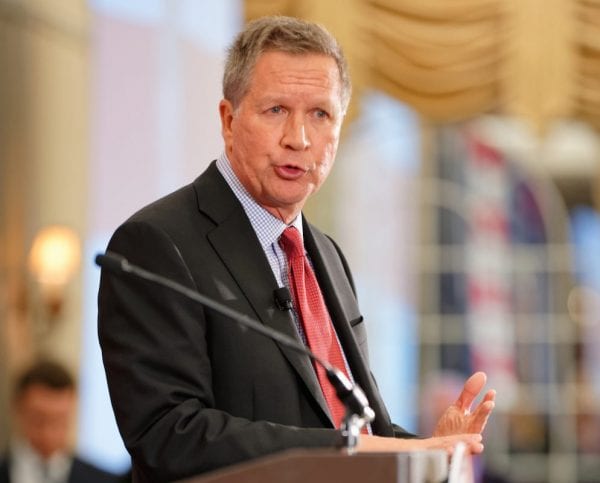
A Taxing Problem for John Kasich in Ohio

John Kasich was a member of Congress that conservatives could trust when it came to fiscal issues. His co-sponsorship of the Penny/Kasich plan (named after former Democrat Tim Penny from Minnesota and John Kasich), which would have cut spending and eliminated the deficit, showed that he understood spending. Unfortunately, his recent actions as Governor may be a sign that he may need a refresher course on tax policy. In February, Gov. Kasich delivered his fiscal year 2016 budget to the Ohio legislature. In the State of the State Address, he described the proposal as “a message to job creators around the state, around the country and around the globe that Ohio is open for business.” Unfortunately, the $5.2 billion increase in sales, commercial activity, and energy and tobacco taxes packaged in the plan is hardly a welcome mat for economic growth. Not surprisingly, the plan drew immediate and acute criticism.

Continue ReadingA Taxing Problem for John Kasich in Ohio

Trade Promotion Authority Passes Senate, House Must Do the Same

The Senate voted 62-37 last Friday to approve S. 995, the Bipartisan Congressional Trade Priorities and Accountability Act of 2015, aka Trade Promotion Authority (TPA). Final passage came after a great deal of dramatics from alleged “free trade” Democrats who had acted earlier in the week to block a final vote on the legislation. TPA is a necessary tool to not only give the Executive Branch the authority it needs to negotiate and finalize trade agreements, but also to ensure that the legislative branch has the power of oversight that comes with any trade deal struck between the US and other nations. TPA now it will make its way over to the House for what promises to be as crucial a fight and vote as it was in the Senate last week.The battle over approving what is known as “fast track” authority managed to pit the President against some of the highest profile members of his own party.

Continue ReadingTrade Promotion Authority Passes Senate, House Must Do the Same

House Passes NDAA, Senate to Move Next Amid Concerns Over Spending and Transparency

Earlier this month, the U.S. House of Representatives passed the National Defense Authorization Act (NDAA) for fiscal year (FY) 2016 by a vote of 269-151. TPA continues to be encouraged by the open process the House uses in markup and on amendments because it is important for taxpayers to see what Congress is doing when it comes to spending their hard earned money, while preserving the importance of national security concerns that come with the NDAA. While TPA has continued to praise the open process, there are still issues with spending, which were addressed in a recent coalition letter (below) from groups across the ideological spectrum. As the NDAA moves to the Senate, TPA is hopeful that concerns on spending can be addressed. Unfortunately, the concerns that groups have on transparency will not be satisfied, as Senate Armed Services Chairman Sen. John McCain (R-Ariz.) has made clear that the committee will continue the long-standing tradition of keeping the process closed. As we start a new week just after the Memorial Day holiday, it is imortant to keep in mind the sacrifices made by those who have fought to defend our freedoms. TPA will continue to press for action on greater transparency and more responsible spending when it comes to defense, because spending taxpayer money wisely can be one of the most effective tools utilized not just by the Pentagon, but all federal agencies. Click 'read more' below to see the coalition letter

Continue ReadingHouse Passes NDAA, Senate to Move Next Amid Concerns Over Spending and Transparency