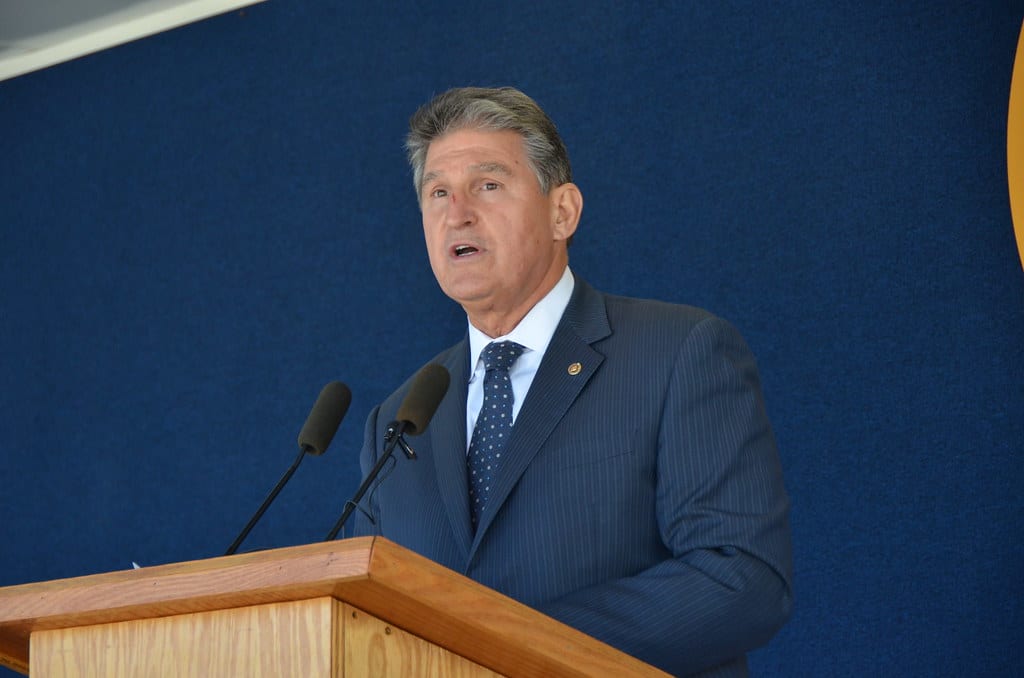
Profile in Courage: Sen. Joe Manchin III (D-W.Va.)

In today’s hyper charged political environment, it’s almost unheard-of for a prominent politician to regularly take on his or her own party. Yet, Sen. Joe Manchin (D-W.V.) does it every day, placing a higher value on pursuing sound public policies rather than toeing the party line. In defying the Democratic disposition toward onerous regulations and high minimum wages, Sen. Manchin has made plenty of enemies during his time in Washington, D.C. But he’s also no Republican in disguise and has challenged GOP lawmakers to defy partisanship and work together on key pressing issues. Too often, policymakers will trade in their independent thinking for brazen self-interest once they become powerful enough. But even as “the most powerful man in Washington,” Sen. Manchin sticks to his guns and demands the very best of both parties. And for rising above the fray even when the going gets rough, Sen. Joe Manchin is a Profile in Courage.

Continue ReadingProfile in Courage: Sen. Joe Manchin III (D-W.Va.)

Watchdog Calls for Continued Reform as Postmaster General DeJoy Testifies Before Congress

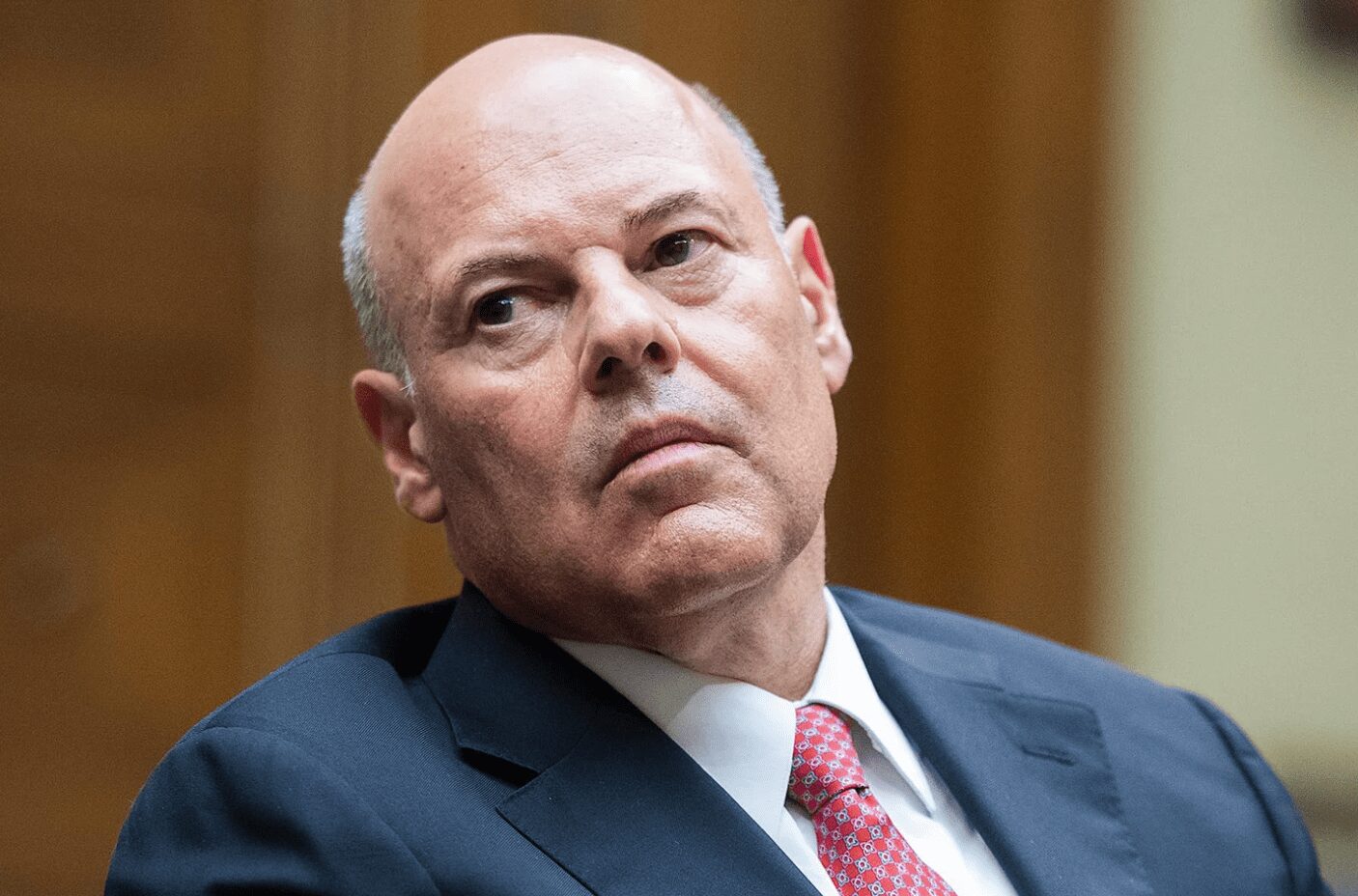
WASHINGTON, D.C. – Today, the Taxpayers Protection Alliance (TPA) called for significant reform at the United States Postal Service (USPS) as Postmaster General (PMG) Louis DeJoy and other top USPS officials testify before the House Committee on Oversight and Reform. Despite pursuing cost-cutting reforms at the agency and shoring up the USPS’ fiscal position, PMG DeJoy has been repeatedly accused by lawmakers and President Biden of undermining America’s mail carrier. At the hearing today DeJoy is expected to correct the record and provide the latest mail service performance data. PMG DeJoy is also likely to detail future organizational reform efforts by the struggling agency.

Continue ReadingWatchdog Calls for Continued Reform as Postmaster General DeJoy Testifies Before Congress

Biden Administration Must Pursue Regulatory Reform

The vast thicket of federal (and state) rules holding back the economy is costlier than ever before. Even before the pandemic, estimates outlined by the Competitive Enterprise Institute suggest that Washington, D.C. mandates cost consumers nearly $2 trillion per year, or approximately $15,000 for every household. And now, regulations exact an even greater toll as red tape makes beating the pandemic all the more difficult. President Biden has a unique opportunity to roll back the restrictions hobbling the recovery effort. But this feat can only be accomplished by reaching across the aisle and rejecting the economic orthodoxy of his own party. The 46th president can, and must, be a deregulator-in-chief.

Continue ReadingBiden Administration Must Pursue Regulatory Reform

President Biden Should End His Misguided Assault On Private Prisons

President Joe Biden has garnered much media attention with his calls to improve the deeply dysfunctional criminal justice system. Unfortunately, his recent executive order scaling back the use of private prisons is anything but unifying and could mean more people incarcerated. Despite receiving a perpetually poor rap in the news, private prisons can improve inmates’ lives and deliver justice at a lower cost than the broken status-quo. It’s time for Biden to make private prisons part of the conversation on criminal justice reform.

Continue ReadingPresident Biden Should End His Misguided Assault On Private Prisons

Testimony before the Minnesota House Committee on Taxes Regarding Increasing the Tax on Tobacco and Vapor Products

An increase on tobacco and vapor products would unfairly burden lower income Minnesotans. Excise taxes are inherently regressive and tend to burden lower income persons. For example, a Cato Journal article found from 2010 to 2011, “smokers earning less than $30,000 per year spent 14.2 percent of their household income on cigarettes, compared to 4.3 percent for smokers earning between $30,000 and $59,999 and 2 percent for smokers earning more than $60,000.”[v] In Minnesota, among current adult smokers, 27.3 percent reported annual incomes of less than $15,000 and 23.5 percent of current smokers reported earning between $15,000 and $24,999 per year.[vi] Despite four different tax increases, the percentage of smokers earning incomes of $24,999 or less has remained relatively stable. Indeed, among adult Minnesotan smokers with incomes of less than $15,000 per year, smoking actually increased by 2.2 percent from 1995, when 26.7 percent of current smokers earning less than $15,000. Indeed, higher incomes were associated with greater declines in smoking rates. For example, smoking rates among Minnesotan adults earning $50,000 or more decreased by 34.8 percent, from 16.1 percent of smokers in 1995 to 10.5 percent in 2019.

Continue ReadingTestimony before the Minnesota House Committee on Taxes Regarding Increasing the Tax on Tobacco and Vapor Products

Lawmakers Learned All the Wrong Lessons from GameStop Gambit

Sir Isaac Newton’s third law of physics states that for every action, there is an equal, opposite reaction. In Washington, D.C., however, it seems that for every action there is a sadly predictable government over-reaction. Last month’s hysteria over GameStop’s stock price and the ability of a group of trolls on Reddit to over-inflate its value has been no exception to this rule. Policymakers in Washington are learning the wrong lessons from this affair and will cause more pain in the economy if these misconceptions turn to action. And, it looks like Sens. Elizabeth Warren (D-MA) and Bernie Sanders (I-VT) and Rep. Alexandria Ocasio-Cortez (D-NY) are taking the wrong message and could end up hurting lower and middle income folks with unnecessary regulation and legislation.

Continue ReadingLawmakers Learned All the Wrong Lessons from GameStop Gambit

Testimony before the Minnesota House Preventative Health Policy Division Committee Regarding Prohibiting the Sale of Flavored Tobacco and Vapor Products

As lawmakers attempt to address youth use of age- restricted products, including electronic cigarettes and vapor products, some policymakers are seeking to ban sales of flavored tobacco and vapor products. Although addressing youth use is laudable, policymakers should refrain from policies that would restrict adult access to tobacco harm reduction products, as well as implementing policies that further subvert adult choices, such as is the case with the proposal to ban flavors in tobacco and vapor products.

Continue ReadingTestimony before the Minnesota House Preventative Health Policy Division Committee Regarding Prohibiting the Sale of Flavored Tobacco and Vapor Products
Read more about the article Op-Ed: Small business, The Dinner Club, Thrives Thanks to Facebook and Big Tech
CHIANG MAI, THAILAND - MAR 28, 2018: Man holding HUAWEI with icons of social media on screen. Social media are most popular tool. Smartphone lifestyle. Starting social media app.

Op-Ed: Small business, The Dinner Club, Thrives Thanks to Facebook and Big Tech

Like many, Cindy Bielik had to make adjustments to her small family business quickly when the COVID-19 pandemic hit. Facebook gave them the tools to adjust to the new COVID world.

Continue ReadingOp-Ed: Small business, The Dinner Club, Thrives Thanks to Facebook and Big Tech

Op-Ed: Congress Must Account for Unused COVID Funds

Lawmakers and a new administration are once again at odds over how best to continue the coronavirus relief effort. Congressional Republicans and President Joe Biden don’t see eye to eye on Biden’s proposed $1.9 trillion in COVID-19 related relief. Lawmakers are understandably reluctant to saddle each household with nearly $15,000 in added debt during a uniquely difficult time in U.S. history.

Continue ReadingOp-Ed: Congress Must Account for Unused COVID Funds