TPA Launches "Tax Day 2016: Watch Your Assets" Campaign

Taxpayers Protection Alliance Launches “Tax Day 2016: Watch Your Assets” Campaign Man on the Street Style Videos Ask People About Taxes and Their Preferred Policies (Washington, D.C.)—On Monday, April 11th, the Taxpayers Protection Alliance (TPA) launched a Tax Day 2016 campaign aimed at Capitol Hill and members of Congress in order to keep comprehensive tax reform a priority for policymakers. The campaign, “Tax Day 2016: Watch Your Assets,” will run from April 11 through tax day and feature man on the street style videos, share graphics and targeted emails to members of Congress and Hill staff. The last time there was comprehensive tax reform was 1986. A lot has changed since 1986, why hasn't the tax code? “Many of the Presidential candidates have said that tax reform will be a priority if they are elected,” said David Williams, President of the Taxpayers Protection Alliance. “But Congress has the ability to act now. This is a bipartisan issue, where both Republicans and Democrats agree that our outdated and cumbersome tax code needs to be reformed now. Taxpayers are sick of being in a time warp where yet another tax day comes and goes and nothing has changed. We need tax reform done in 2016.”

Continue ReadingTPA Launches "Tax Day 2016: Watch Your Assets" Campaign

Oklahomans Latest Victims of Targeted Cigarette Tax Hike Campaign

Miriam Roff is the State Affairs Coordinator at Americans for Tax Reform, this piece orginally appeared on ATR.org The purported “popularity” of a particular piece of public policy should not be the end-all justification for its passage. Such is certainly the case with efforts to raise taxes on tobacco products. Many state lawmakers have labeled these tax hikes as a win-win for taxpayers and the government because they have bought into the fallacy, perpetuated by organizations like the American Cancer Society Cancer Action Network, that the state revenue impact and affect on consumer behavior justify the targeting of low-income taxpayers with regressive tax hikes. These proponents are wrong. Oklahomans are the latest victims in the targeted campaign to address a state overspending problem with a cigarette tax hike. And academics have been called in to help make the case for big government legislators. A Northeastern University professor of economics released a misguided report earlier this month bolstering Gov. Mary Fallin’s (R- Okla.) proposed $1.50-per-pack cigarette tax hike. Although the report insists that cigarette tax revenue increases with each hike and remains relatively stagnant in the following years, it fails to address and expand upon all of the consequences that come with tobacco tax increases.

Continue ReadingOklahomans Latest Victims of Targeted Cigarette Tax Hike Campaign

Principled Leadership Needed at the US Postal Service

This article appeared in Inside Sources on April 4, 2016 The United States Postal Service (USPS) is in trouble. The USPS has lost $35.6 billion in the last four years, their unfunded liabilities equal $114 billion, and a report released this week showed that the mail is late more often today than it has been at any point in the last 5 years. More specifically, in the first half of 2015 late mail rose 48 percent compared to the previous year. Postal Service leadership needs to provide better financial oversight and hold management accountable. As a leading government watchdog organization, the Taxpayers Protection Alliance (TPA) launched a new website, PostalReformforUS.org, to help the USPS find their way through these turbulent times. TPA has partnered with Americans for Tax Reform, National Taxpayers Union, and R Street, who all have similar concerns about the USPS’ future.

Continue ReadingPrincipled Leadership Needed at the US Postal Service

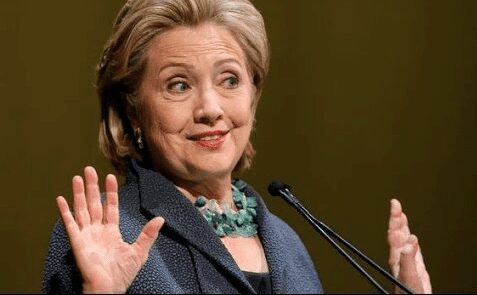
Hillary Clinton's Attacks on Business are Harmful, Hollow, and Political

The 2016 Presidential contest is in full swing as the party primaries enter the final stages before the summer conventions. The Taxpayers Protection Alliance (TPA) believes that all candidates should be talking about comprehensive tax reform, reducing spending, reforming the Pentagon, and fixing the broken process on how spending is authorized in Washington. The lack of regular order has led to billions in earmarks (which are technically illegal), and continuous stopgap measures to fund the government. Unfortunately, much of this discussion is missing real substance. One candidate in particular, Hillary Clinton, has been taking a harsh tone on the private sector, going so far as to single out specific companies purely for political points. Former First Lady, New York Senator, Secretary of State, and current Democrat frontrunner for her party’s nomination Hillary Clinton has been increasingly using her campaign to level dishonest attacks on the business community. The tactics from Sec. Clinton show a clear unnerving by her campaign, which continues to fend off the insurgent campaign of Vermont’s Socialist Senator Bernie Sanders. Her campaign is struggling not just because her lack of energy, her attacks on the private sector are full of hypocrisy and dishonesty. The specific issue here is the current talks between Johnson Controls, Inc. and TYCO as they move towards a merger that could be beneficial to consumers, employees, and shareholders of the two companies. Sec. Clinton asserts that the merger is nothing more than greedy corporate America hurting the middle class.

Continue ReadingHillary Clinton's Attacks on Business are Harmful, Hollow, and Political

Coalition to Congress: No Tax Extenders in FAA Reauthorization Bill

Congress has a great deal to get done before they take their extended vacation in the summer, seven weeks as opposed to the usual six. The House is in recess right now, but the Senate is in session and moving towards another last minute deal that could cost taxpayers billions. At issue is the inclusion of tax extenders as part of S. 2658, the Federal Aviation Administration Reauthorization Act of 2016. Congress has already addressed the issue of tax extenders, and now they want to retroactively include additional provisions that amount to little more than cronyism and corporate welfare. The Senate should reject this approach and the House should follow suit as they take up their own legislation on FAA reauthorization. TPA recently signed a letter sent by Americans for Prosperity calling on the Senate to oppose the inclusion of tax extenders in the FAA reauthorization bill. Click 'read more' below to see the letter

Continue ReadingCoalition to Congress: No Tax Extenders in FAA Reauthorization Bill

TPA Applauds Legislative Efforts to Reform FCC Lifeline Program

Some phones that might be included in a Lifeline plan The Federal Communications Commission (FCC) is one of the more active regulatory agencies under the Obama Administration and many times their actions have come at a price to taxpayers and consumers. Net neutrality and municipal broadband expansion are two very public battles that the agency has been at the center of, and the Taxpayers Protection Alliance (TPA) has been fighting them every step of the way. TPA has worked hard to ensure that the taxpayers’ voice is heard as FCC Chairman Tom Wheeler continues to expand the agency’s power through increased regulations. One program that has received some attention and notoriety is Lifeline. The program is part of the Universal Service Fund (USF), which is a tax on phone bills, provides a discount on phone service for qualifying low-income consumers. In 2005, the program expanded to pre-paid cellular phone services and now the FCC wants to expand the reach of the program to broadband services. The problem though is that the program is a mess, filled with rampant fraud and abuse.

Continue ReadingTPA Applauds Legislative Efforts to Reform FCC Lifeline Program

Taxpayers Deserve Answers from the IRS

This article originally appeared in Inside Sources on March 22, 2016 The most dreaded news a person or company can receive is that they are being audited by the Internal Revenue Service (IRS). Audits are a powerful tool at the government’s disposal that can be a frightening experience. Individual taxpayers and businesses are subject to audits every year and while there may very well be good reasons as to why the IRS chooses to audit someone, there are still rules that must be followed by the agency when conducting such an action. The Taxpayers Protection Alliance (TPA) has been working to shed light on the information and circumstances regarding an audit that the IRS conducted on Microsoft. The issue of concern is that the agency retained the services of outside counsel in order to conduct work on said audit. In short: the IRS contracted private firms to assist with an agency audit of a private corporation. Taxpayers fund the agency and that means taxpayer money was used to retain the services of outside counsel on the audit. There is a question of legality that is still being adjudicated in the courts. What is not in dispute is that the agency did hire multiple firms to do work related to the audit.

Continue ReadingTaxpayers Deserve Answers from the IRS

Coalition to Congress: Enact a Regulatory Budget

Just weeks ago the House released a pair of budget proposals that put forth a path toward a balanced budget. Though each proposal was not perfect, particularly on Pentagon spending reform, the important work of getting a budget done is only helped by what the House Budget Committee and Republican Study Committee brought to the table. One way to make Congressional budgeting more effective for taxpayers is to implement a regulatory budget to address the costs of federal regulations. The impact of regulations on jobs and the economy has never been more apparent, and Congress can play a role in mitigating that impact or at least shedding more light on it. That’s why the Taxpayers Protection Alliance (TPA) joined a coalition effort led by the Competitive Enterprise Institute (CEI) signing this letter urging Congress to move forward with a regulatory budget. Click 'read more' below to see the full letter

Continue ReadingCoalition to Congress: Enact a Regulatory Budget

Puerto Rico's Toxic Landfills: Why Congress Must Act

Puerto Rico’s official tourism slogan is “Puerto Rico does it better!” But, with several House and Senate hearings recently on Puerto Rico’s fiscal crisis, which has spotlighted the Island’s disastrous economic and fiscal management, that slogan should be updated. Puerto Rico’s books aren’t the only example of poor governance. There is also the environmental disaster building up in its toxic landfills. This is personally troubling considering the 3 ½ years I lived on the Island. The media in Puerto Rico reports that 22 of the Island’s 27 municipal landfills are in violation of federal safety standards, and a cursory review of media reports shows that these landfills appear to have an unbroken record of violating safety rules since they were applied to Puerto Rico in 1994. The small number of landfills that have been consistently in compliance with federal rules are all privately owned and managed. Conversely, the long list of toxic landfills that have never managed to be in compliance are all owned by the Commonwealth of Puerto Rico, managed by municipalities with a green light from the Environmental Protection Agency (EPA) and funded by taxpayers. As background, when Subtitle D of the Resources Conservation and Recovery Act (RCRA) was applied to Puerto Rico in 1994, the Puerto Rico Environmental Quality Board (EQB) promised to close a majority of the landfills. Over the last 22 years, only three landfills have been shut down.

Continue ReadingPuerto Rico's Toxic Landfills: Why Congress Must Act

TPA Releases Second Joint Report on Costly and Questionable Animal Testing Studies

The Taxpayers Protection Alliance and the Animal Justice Project USA joined to release “Deadly Doses: Exposing the Federal Government's Funding of the Slaughter of Millions of Dollars and Countless Creatures,” which uncovers the improper use of tax dollars being spent conducting scientifically dubious experiments regarding the effects of recreational drugs and alcohol on animals. The report is the second in a series exposing examples of taxpayer-funded animal abuse, and is available here. The ten experiments featured in the report killed thousands of animals and wasted more than $78 million of taxpayers’ hard-earned money. These experiments, which often force animals to consume large amounts of drugs and alcohol, are largely worthless because they are rarely applicable to humans. UCLA, the University of California-Berkeley, Cal Tech and the University of Texas are among the prestigious universities and research centers engaging in these cruel and expensive studies. Animal Justice Project USA and the Taxpayers Protection are giving the public the ability to vote on the most outrageous and offensive example of taxpayer-funded animal abuse uncovered in the report. The poll is available here. Click 'read more' below to see the full release

Continue ReadingTPA Releases Second Joint Report on Costly and Questionable Animal Testing Studies