Watchdog Launches Government Antitrust Accountability Project

WASHINGTON, D.C. – Today, the Taxpayers Protection Alliance (TPA) announced the launch of a new campaign, the Government Antitrust Accountability Project. The goal of the project is to shed light on recent bipartisan efforts to misuse or expand antitrust enforcement into areas unrelated to preserving competition to the benefit of consumers.


Continue ReadingWatchdog Launches Government Antitrust Accountability Project

VICTORY! Citizens Defeat Taxpayer-Funded Broadband in Lucas, Texas

WASHINGTON, D.C. – On November 3, 2020, residents in Lucas, Texas defeated a ballot measure, Proposition B, that would have issued general obligation bonds for the “Lucas Broadband Project,” a government-owned broadband network (GON) for the city. The estimated cost for the project was more than $23 million, with general obligation bonds totaling more than $19 million. Residents in Lucas, Texas rejected Proposition B on Election Day with over 60 percent of the vote. TPA got involved with the ballot initiative after being contacted by a concerned citizen from Lucas.

Continue ReadingVICTORY! Citizens Defeat Taxpayer-Funded Broadband in Lucas, Texas

Taxpayer Watchdog Urges Fiscal and Regulatory Restraint Regardless of Election Results

The Taxpayers Protection Alliance (TPA), a leading national taxpayer watchdog organization, urged fiscal discipline and regulatory restraint from current and future members of Congress and the President as voters go to the polls today. Read TPA President David Williams' full statement.

Continue ReadingTaxpayer Watchdog Urges Fiscal and Regulatory Restraint Regardless of Election Results

Sen. Rubio Can – and Must – Stand up for Victims of Socialism

Since his election to the U.S. Senate in 2010, Sen. Marco Rubio (R-Fla.) has been a steadfast champion of private property rights. Driven by many of his constituents’ horrific experiences living under communism, Sen. Rubio has taken a strong stand against eminent domain, intellectual property infringement, and taxes and regulations that make it difficult for people to pursue their livelihoods and the American Dream. Now, by continuing his commendable stand for property rights by standing firm against Venezuela’s vile expropriation schemes, the lawmaker has a chance to help the victims of Venezuela’s socialist regime reclaim property that was stolen from them.

Continue ReadingSen. Rubio Can – and Must – Stand up for Victims of Socialism

TPA’s Tricks and Treats for 2020

We’ve all heard the campfire stories of a terrifying and invisible foe that feeds on fear and causes the hairs on the back of your neck to stand up. Yes, we’re talking about the coronavirus, which has caused households and policymakers no end of dread (but has at least spurred some interesting costume ideas). Hopefully, Americans will still be able to go trick or treating despite coronavirus restrictions and fears of microbes haunting your candy. But some of the worst tricks and best treats this year have already been delivered by the federal government. Below, the Taxpayers Protection Alliance (TPA) delivers some tricks and treats for this unusual Halloween:

Continue ReadingTPA’s Tricks and Treats for 2020

Government-Owned Networks (GONs): Myth vs. Reality

An increasing number of city leaders are considering building municipally-owned broadband networks, believing this is the only solution to sometimes slower or spottier internet service. But, once they build these networks, the resulting realities of high costs and poor consumer subscription rates are often vastly different from the promises of consultants. The Taxpayers Protection Alliance (TPA), which released the report “GON with the Wind: The Failed Promise of Government Owned Networks Across America” in May, wants to address some of the basic myths about GONs and provide a clearer picture of the struggles that cities often face when they decide to build taxpayer-funded internet systems.

Continue ReadingGovernment-Owned Networks (GONs): Myth vs. Reality

Profile in Courage: Daymond John

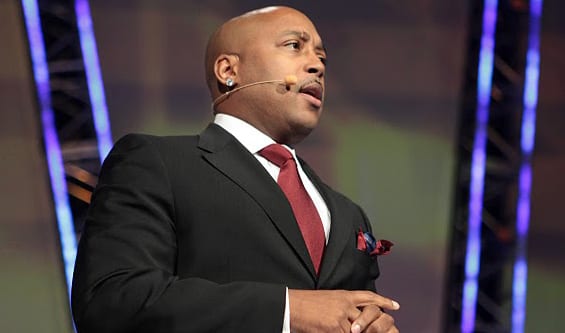
To the hundreds of inventors appearing on Shark Tank, businessman Daymond John offers a potential path to riches – with plenty of tough questions along the way. From Mo’s Bows to Bubba's-Q Boneless Ribs, he’s agreed to bankroll plenty of project proposals on the show. But most viewers of the hit television show likely aren’t aware of John’s initiatives to promote entrepreneurship. John has clearly seen significant success as a television personality and has chosen to pay it forward and give others a hand up. For playing such a pivotal role in fostering private sector entrepreneurship and offering alternatives to the politics of grievance and envy, Daymond John is absolutely a Profile in Courage.

Continue ReadingProfile in Courage: Daymond John

Watchdog Praises FCC on 5.9 GHz Wireless Spectrum Band

WASHINGTON, D.C. – The Taxpayers Protection Alliance (TPA) is praising the announcement by Federal Communications Commission (FCC) Chairman Ajit Pai regarding the 5.9 GHz band of spectrum. For more than two decades, this prime band of spectrum for Wifi has been dedicated to automotive safety technologies that have been largely abandoned by the auto industry. Chairman Pai is circulating an order to be voted on by the full commission next month to reallocate a significant chunk of the spectrum for unlicensed use.

Continue ReadingWatchdog Praises FCC on 5.9 GHz Wireless Spectrum Band

Watchdog Praises FCC for Taxpayer and Consumer Treats and No Tricks in Reaffirming Internet Open Order and Expanding White Spaces

WASHINGTON, D.C. –  Today, the Taxpayers Protection Alliance praised the Federal Communications Commission (FCC) for considering three issues related to the Restoring Internet Freedom (RIF) Order first passed in 2017 and the expanded use of white spaces during the October Open Meeting. The FCC discussed the RIF Order’s effect on public safety, on its ability to regulate pole attachments and on the Lifeline program’s ability to support broadband. After the FCC passed the RIF Order, a consortium of Democratic attorneys general sued the commission in an attempt to reverse the decision. The U.S. Court of Appeals for the District of Columbia Circuit upheld the vast majority of the FCC’s decision, but asked the commission to consider the order’s effect on those three narrow issues. The FCC also considered an order to make more precious electromagnetic spectrum available in what is known as television “white spaces” to provide additional wireless broadband coverage, while still protecting incumbent television broadcasters. White space channels are largely untapped gaps in low-band spectrum below 700 MHz, often between the spectrums of television stations. The FCC made these channels available for unlicensed public use in 2010.

Continue ReadingWatchdog Praises FCC for Taxpayer and Consumer Treats and No Tricks in Reaffirming Internet Open Order and Expanding White Spaces