
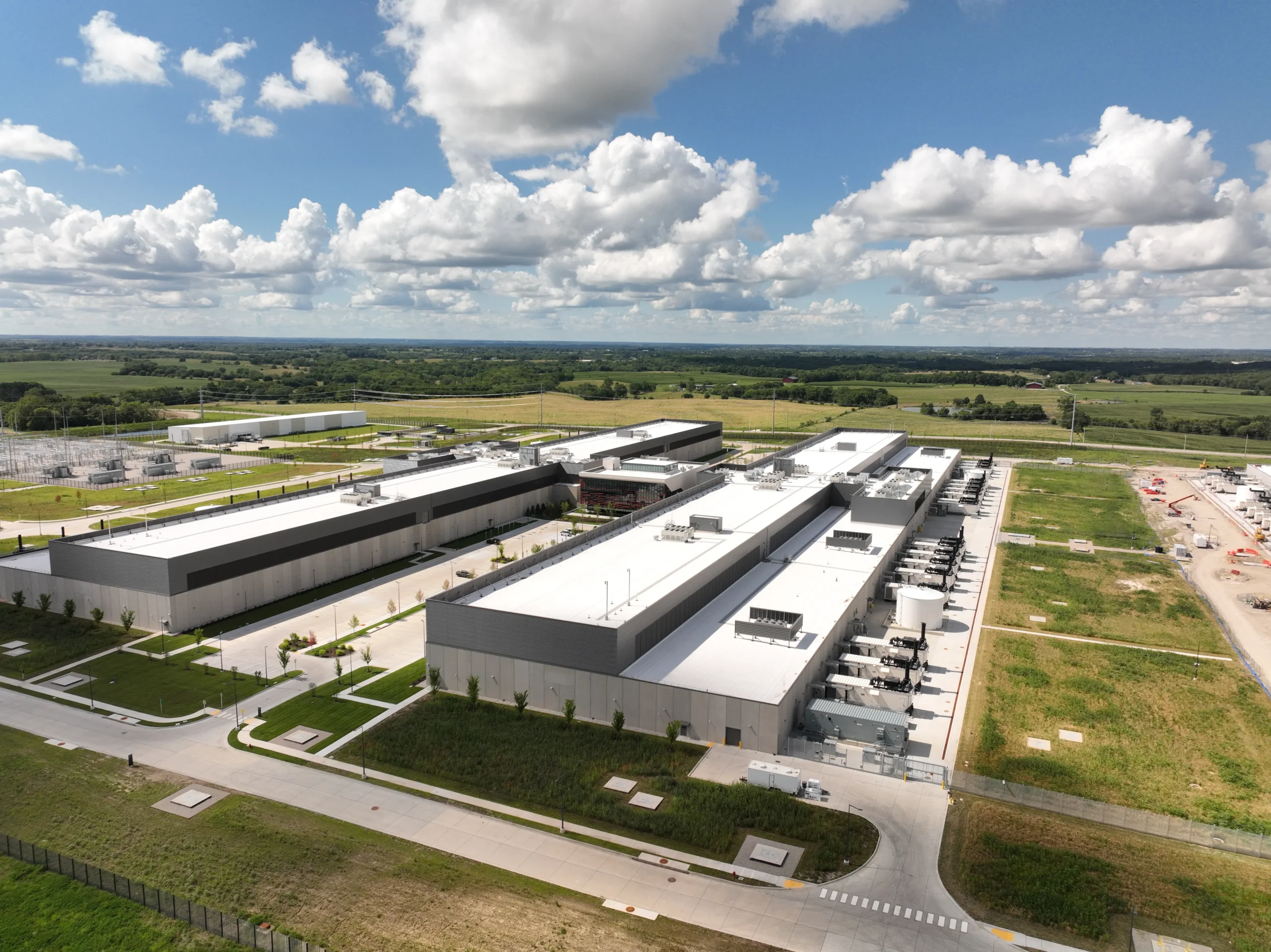
Everyone. Simply put, data centers are the physical infrastructure that makes nearly every modern internet service possible. Every time someone:
- Streams a movie on Netflix,
- Searches on Google,
- Shops on Amazon,
- Uses social media such as Meta platforms,
- Stores photos in the cloud,
- Participates in a video call,
- Uses online banking,
- Accesses electronic medical records,
- Interacts with artificial intelligence (AI) tools,
- Reads a FAQ,
their request is ultimately processed and stored in a data center somewhere. Virtually everyone who uses the internet benefits from data centers because they provide the storage, computing power, and connectivity that make online services possible. Without data centers, the modern internet would not function.
Data center use of water supplies is a small drop in the bucket compared to most other large-scale activities. As AI researcher and policy analyst Andy Masley notes, “On the national, local, and personal level, AI is barely using any water, and unless it grows 50 times faster than forecasts predict, this won’t change. … All U.S. data centers (which mostly support the internet, not AI) used 200–250 million gallons of freshwater daily in 2023. The U.S. consumes approximately 132 billion gallons of AsAfreshwater daily.” That translates to about 0.2 percent of freshwater supplies, a figure consistent with the Taxpayers Protection Alliance’s (TPA’s) current estimates for states such as Utah, California, Texas, and Pennsylvania. As noted by Reason’s Robby Soave, “California’s almond farms consume 4.2 billion gallons of waters per day, according to Reason’s Christian Britschgi. Data centers consume just 46 million gallons per day. … compared to all the other things that use water—golf courses account for 1.4 billion gallons per day—it’s just a drop in the bucket.”
A related concern is that extensive use of AI “wastes” vast amounts of water. This too is unfounded. For example, to match the water footprint of manufacturing one pair of jeans (3,000 to 4,000 liters of water), a user would need to interact extensively with an AI model, generating roughly 150,000 to 200,000 conversational prompts—even assuming high alarmist estimates of AI water consumption.
There is simply no evidence that data centers are increasing electricity prices. According to a comprehensive 2026 analysis by the Institute for Energy Research, the “number of data centers does not correlate with current electricity prices.” There is “a slightly positive but still statistically insignificant relationship between data centers and fast price increases,” meaning that any correlation is likely due to chance.
The reasoning behind this finding is fairly simple. Electric power systems require substantial upfront investments in generation facilities, transmission networks, and other infrastructure, along with long-term financial commitments that must be paid regardless of overall electricity consumption. TPA’s estimates indicate that data centers represent a relatively small share of overall electricity consumption across the states analyzed.
As the below chart shows, related concerns about AI using significant amounts of electricity are also unfounded—using a conservative figure of approximately 0.3 watt-hours (Wh) per typical AI text prompt.
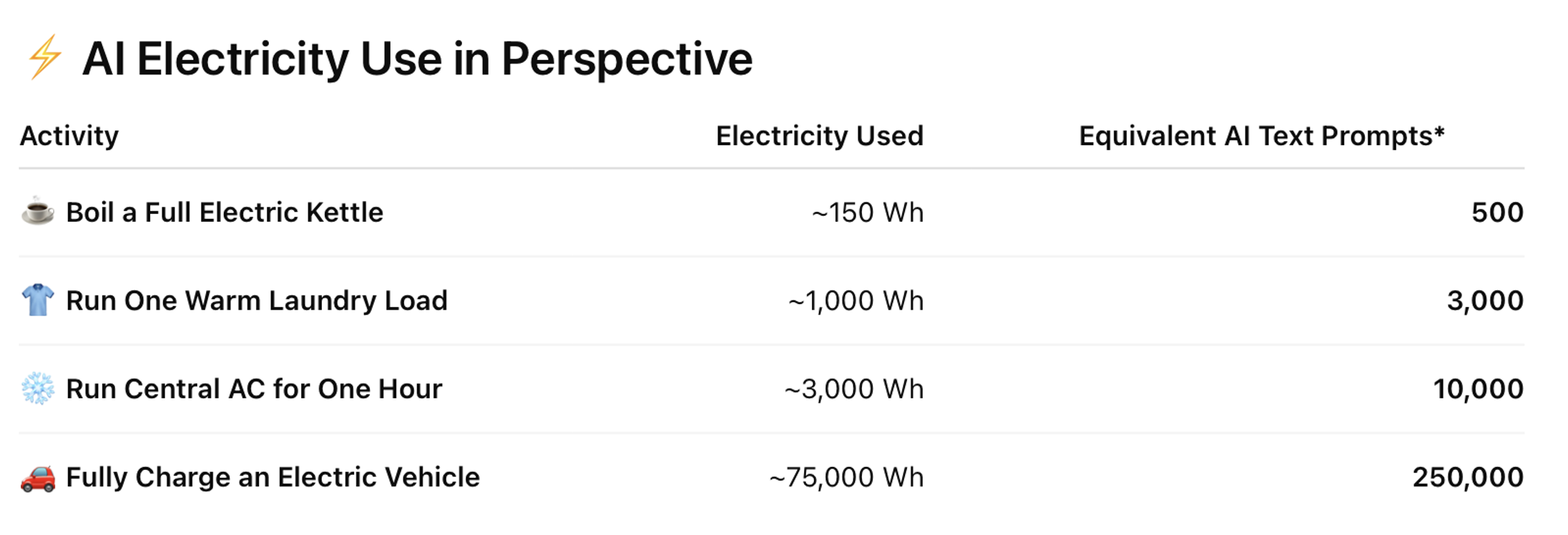
Source: TPA analysis of U.S. Department of Energy and the Energy Information Administration figures.
However, data centers’ small share of energy consumption could grow if states pursue restrictive policies limiting power generation. Through its project Consumers for Affordable Electricity, TPA proposes a light-touch approach that allows utilities to generate power. This will ensure abundant energy supply to meet growing demand.
Noise is one of the most common concerns raised about new data centers, but it is also one of the most misunderstood. Modern facilities are designed with advanced sound mitigation technologies and are typically much quieter than many people assume. Our latest brief, “Drowning Our the Noise on Data Centers,” examines the data behind common noise claims.
While many policymakers are concerned about growing data center resource demands, consumption may—depending on the pace of technological advancement—level off or even decline over the next ten to fifteen years because of a number of factors, including more efficient water and electricity usage. For example, at the silicon level, the integration of next-generation optical computing and neuromorphic chips may reduce the electrical power required per computation compared to traditional copper-based processors. This can result in an “order of magnitude” less energy being consumed.
Simultaneously, data centers are moving away from evaporative water cooling in favor of closed-loop liquid cooling, direct-to-chip microfluidics, and ambient air systems. By sealing water inside a continuous, recirculating loop or utilizing non-potable dielectric fluids, facilities can drop their operational water consumption significantly while handling the extreme heat rejection required by high-density artificial intelligence clusters.
However, estimating future water and electricity use is fraught with uncertainty, and it is possible that the increased prevalence of data center projects results in growing energy and natural resource use—even with technological change. Therefore, it is critical that public policy paves the way for abundant energy and empowers innovators to address any supply bottlenecks.
States and localities that embrace data center projects benefit from increased economic activity and, very often, surging tax revenue. According to a recent analysis by the National Conference of State Legislatures, “In Loudoun County, the center of Virginia’s so-called data center alley, data centers now pay enough in property taxes to fund the county’s entire general operations budget. A comprehensive 2024 data center study in Virginia found that data centers could bring significant benefits to localities in economically distressed areas of the state from increases in local tax revenue.”
Beyond direct taxes, developers frequently inject millions of dollars into communities upfront by completely financing major public utility upgrades, including rebuilding aging municipal water and sewer lines, upgrading local electrical grids, and expanding fiber-optic networks at no or very low cost to taxpayers.
Ensuring a resilient energy future requires dismantling structural market distortions that artificially suppress power supplies. The largest supply bottleneck can be found within the PJM Interconnection grid region, where soaring wholesale electricity prices are frequently blamed on rising data center demand. However, as TPA’s research demonstrates, the real culprit is a broken framework that prevents utilities from generating power. Decades ago, many states (primarily in the mid-Atlantic region) enacted ostensibly “deregulatory” policies that forced a separation of utilities, stripping them of their generation assets and barring them from directly competing with independent power producers. To resolve this and increase power supply, states must reverse this and permit genuine competition.
Additionally, policymakers should consider legalizing and expanding nuclear power, a safe andreliable source of electricity already being incorporated into data center plans. Reforming the federal regulatory bottleneck—primarily caused by the slow-moving Nuclear Regulatory Commission—and lifting state-level prohibitions against nuclear construction are vital to unleashing private investment. By treating nuclear energy as a foundational pillar of infrastructure rather than a regulatory hazard, policymakers can secure a steady and high-capacity power supply capable of anchoring the future economy. Fortunately, states such as Minnesota are reconsidering long-maintained bans on nuclear power.
Similarly, abundant future water supplies depend on comprehensive regulatory reform. Outdated permitting processes under the Clean Water Act frequently stall critical water treatment, storage, and distribution infrastructure for years. Codifying clear and predictable exclusions for water systems and establishing strict procedural guardrails on state water quality certifications will prevent environmental regulations from being used as tools for bureaucratic delay. Reining in these regulatory burdens will unleash the infrastructure investment needed to meet energy and water demand, which could certainly increase in the future.