TPA Tricks and Treats 2026
Taxpayers Protection Alliance
October 13, 2026
It’s that spooky time of year again, but nothing in Washington is quite as frightening as Capitol Hill’s grave spending habits. While trick-or-treaters are hunting for full-sized candy bars, lawmakers and federal bureaucrats have baked up a far scarier surprise for working families: a monstrous $40 trillion national debt that could haunt taxpayers for generations. From zombie spending programs that refuse to die to poltergeist projects haunting agency spreadsheets to regulations rising from the crypt, the government keeps finding new ways to scare taxpayers out of their hard-earned money. Grab a flashlight—and maybe a wooden stake—as the Taxpayers Protection Alliance (TPA) ventures into the darkest corners of Capitol Hill and beyond to unmask this year’s terrifying taxpayer tricks and celebrate the rare policy treats.


A Dreadful Delivery from Beyond the Grave
The recently-introduced Delivery Protection Act in New York City—and the legislation’s backing by Mayor Zohran Mamdani—threatens to haunt consumers and small businesses. This ghastly legislation will drag down delivery times and raise costs for everyday shoppers across the country. The proposal would needlessly require delivery companies such as Amazon and FedEx to employ “last-mile” delivery drivers directly instead of contracting with independent delivery services.
This would succeed in increasing the cost of business, and the impact of the proposal would extend not only the regulated firms, but their workers and customers. Amazon alone contracts with 40 last-mile deliverers, and a company spokeswoman warns that the act “threaten[s] the small businesses that deliver to customers, putting the jobs of more than 5,000 of their employees at risk and forcing us to consider relocating delivery operations outside of the city.” Other estimates suggest that the proposal endangers 10,000 jobs. Hopefully, this terrible proposal stays beyond the grave.
The Silence of the Servers
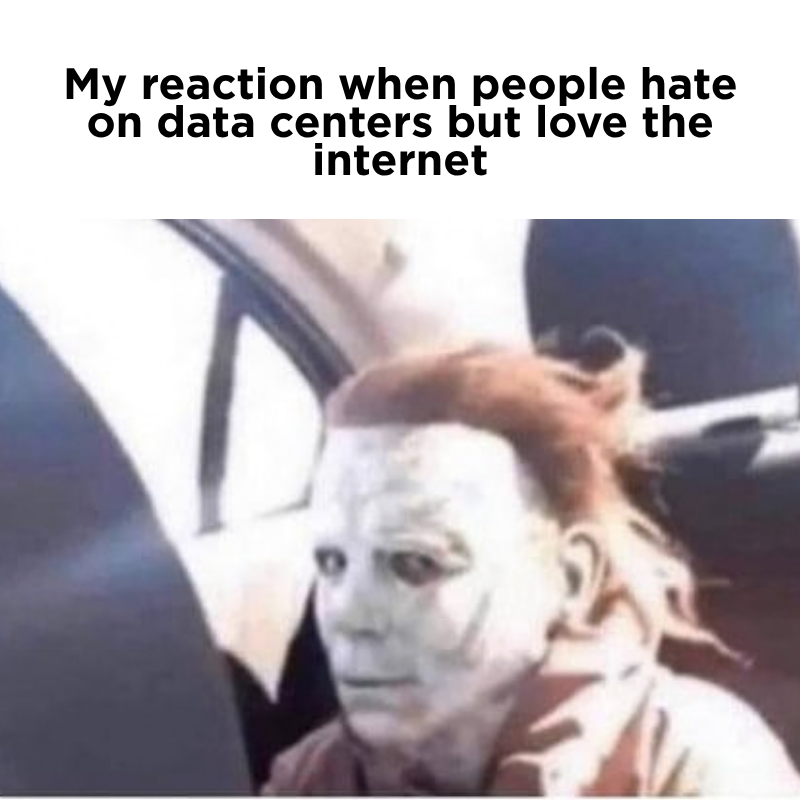
Data center moratoriums are creeping across the country, threatening to turn cutting-edge tech hubs into digital graveyards. Turning away data centers means turning away the infrastructure that nearly every modern internet service depends on. Every time someone streams a movie on Netflix, searches on Google, shops on Amazon, uses social media platforms like X and Facebook, or completes an online banking transaction, they are relying on data centers.
Despite claims by local leaders that data centers are consuming inordinate amounts of water, artificial intelligence (AI) researcher and policy analyst Andy Masley notes, “On the national, local, and personal level, AI is barely using any water, and unless it grows 50 times faster than forecasts predict, this won’t change. … All U.S. data centers (which mostly support the internet, not AI) used 200–250 million gallons of freshwater daily in 2023. The U.S. consumes approximately 132 billion gallons of freshwater daily.” In addition, there is simply no evidence that data centers are increasing electricity prices. According to a comprehensive 2026 analysis by the Institute for Energy Research, the “number of data centers does not correlate with current electricity prices.”
Halting this infrastructure saves minimal water or electricity, but it does freeze technological innovation and leave local economies in total darkness. Fortunately, TPA is fighting back against this braindead zombie attack on data centers with state-by-state myth busting analyses.
Lawmakers Pretend AI is Frankenstein’s Monster
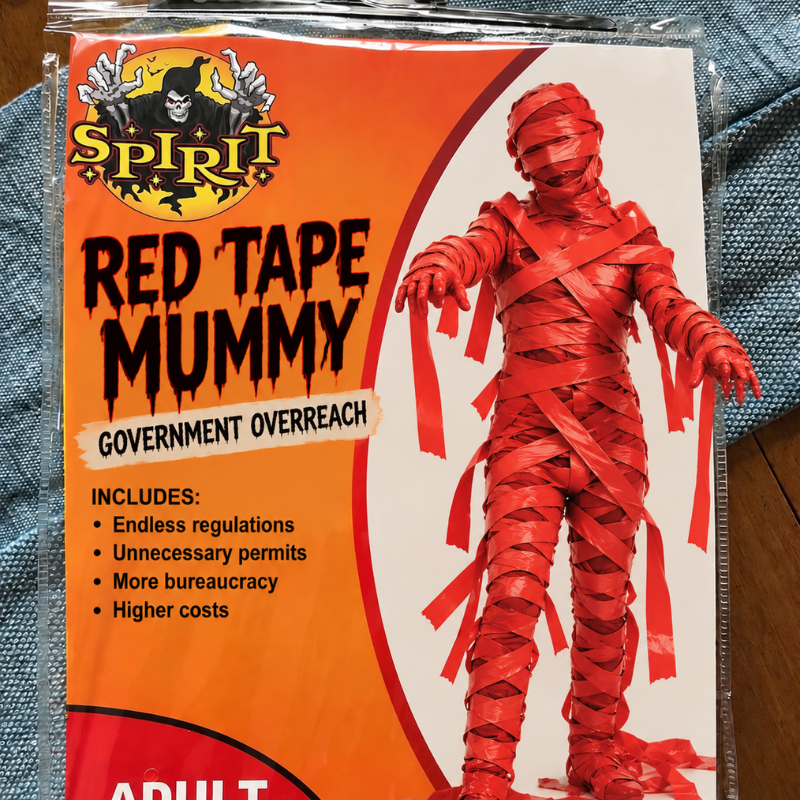
Heavy-handed AI legislation pushed by lawmakers such as Senators Mark Kelly (D-Ariz.) and Sanders (I-Vt.) treats emerging technology like a terrifying creature that must be chained at all costs. Instead of protecting the public, these overbearing regulations threaten to stifle American innovation and destroy tech progress in its tracks. For example, the Ban Artificial Superintelligence Act, introduced by Sen. Bernie Sanders (I-Vt.) and Rep. Greg Casar (D-Tx.), would bar the development and deployment of “artificial superintelligence”— and pause certain advanced AI development until a new regulatory body establishes a framework that ostensibly ensures safety. The bill would also establish a Department of Artificial Intelligence and give government the power to monitor frontier AI systems, remove supposedly dangerous capabilities, and supervise the destruction of AI systems.
One critical problem is with the bill’s definitions. “Human cognitive performance” across “most domains” might sound clear on paper, but it gets far less clear when someone must decide where that line actually falls. The bill also gives the AI Secretary the ability to adjust the computing threshold that triggers the pause each year. For researchers, startups, and investors, that makes it harder to know what they can build without running into a different set of rules every year.
Clearly, the real Frankenstein’s monster is out-of-control regulations emulating from Transylvania on the Potomac.
40 Trillion Reasons to Scream
The national debt careening past $40 trillion is ample cause for a blood-curdling scream from every man, woman, and child in America who will foot the bill. Without serious fiscal reforms, this monstrous tab will continue to haunt taxpayers for decades to come.
But don’t fear (too much); TPA’s recently released report Cutting the Tab: 40 Ways to Reduce America’s Debt analyzes 40 targeted reforms to rein in federal spending after the national debt surpassed the $40 trillion mark in early September. TPA identifies reforms across some of the federal government’s largest and most expensive budget items—including Agriculture, Defense, Medicaid, Medicare, Transportation, Social Security, and the federal workforce—with stand-alone ten-year savings estimates totaling more than $10 trillion.
The report’s largest savings proposals include replacing open-ended Medicaid matching with a zero-growth block grant, with a ten-year savings of $5 trillion. Another potential reform is reinstating and extending binding caps on non-defense discretionary spending, with a ten-year savings of $1.3 trillion. Hopefully, lawmakers implement some of these reforms and give taxpayers fewer reasons to scream.


Government Ghosts Trying to Take Away Halloween Candy
Trick-or-treaters ought to steer clear of overzealous regulators, who are proposing new definitions for “ultra-processed foods” (UPFs) that would banish everyone’s favorite candies. On August 3, the Department of Health and Human Services and the Food and Drug Administration (FDA) quietly submitted a “White Paper: Proposed Definition of Ultra-Processed Food” to the Office of Management and Budget (OMB) for review. While the document is not public nor is it open for comment, what is clear is that a federal UPF definition would open the door to federal and state labeling mandates and new restrictions on the foods that millions of Americans rely on every day.
A UPF definition would not only target Halloween candy, but almost certainly sweep up healthy and affordable grocery staples like whole-grain bread, yogurt, fortified cereals, and frozen chicken breasts into the same category as less healthy foods. By the FDA’s account, an estimated 70 percent of the U.S. food supply is comprised of foods commonly considered “ultra-processed.” Foods get swept into the category based on their ingredients (even if said ingredients are perfectly safe) or if they undergo any sort of processing, not their nutritional value. This is government overreach at its worst.
Last month, TPA joined 15 other watchdog and free-market organizations in a letter urging OMB Director Russell Vought to reject this ghoulish proposed UPF definition.
Meta’s Spooky Settlement Specter
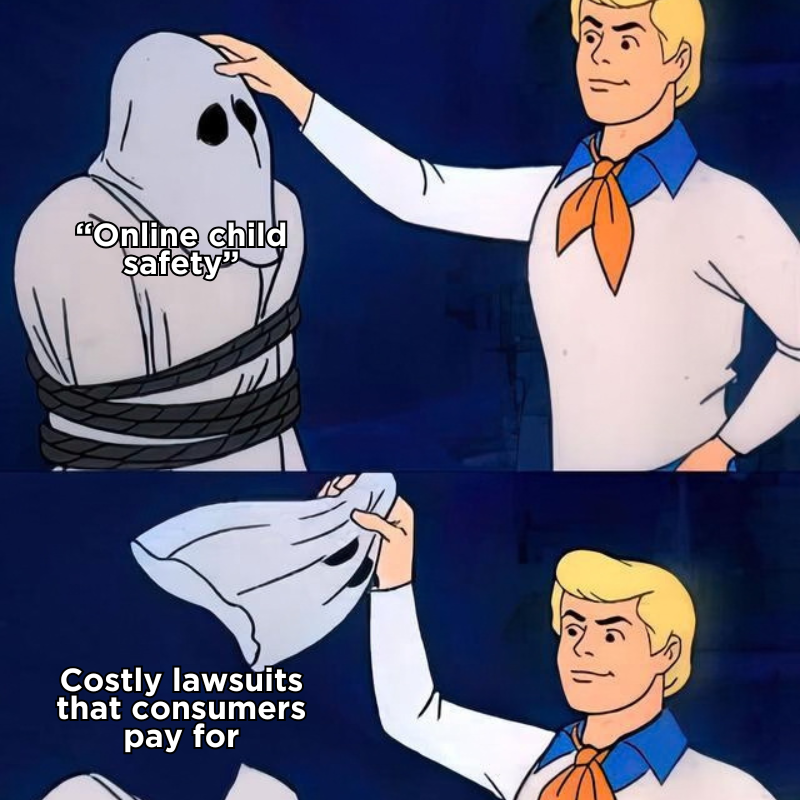
Meta is facing the chilling reality of a massive settlement that will almost certainly set a dangerous and costly precedent for tech platforms. The real boogeymen are 47 states, the District of Columbia and U.S. territories that took to court to hold Meta liable over completely unfounded accusations that Meta harmed children. The federal trial in the U.S. Northern District of California in Oakland effectively ended in August, when Meta reached a settlement with the states, district, and territories. According to a report in The New York Times, “the owner of Facebook and Instagram agreed to the financial penalties for violating federal child privacy and states’ consumer protection laws.” While Meta will pay about $12 billion initially, “[t]hat sum increases to $17.1 billion if Snap, TikTok and YouTube also settle with the states and agree to financial penalties and product changes.” Tobacco settlement dollars disappeared into a black hole of state finances. This settlement money will surely suffer the same fate.
Penalizing Meta for providing innovative services that connect billions of customers around the world should send a shiver down everyone’s spine. This massive multi-billion-dollar settlement is nothing short of a state-sanctioned shakedown, where aggressive attorneys general have targeted innovative platforms to score political points under the guise of children’s safety. Forcing tech giants into multi-billion-dollar payouts only hurts consumers by driving up costs across the digital ecosystem.
Taxing Tech: A Ghoulish Cash Grab
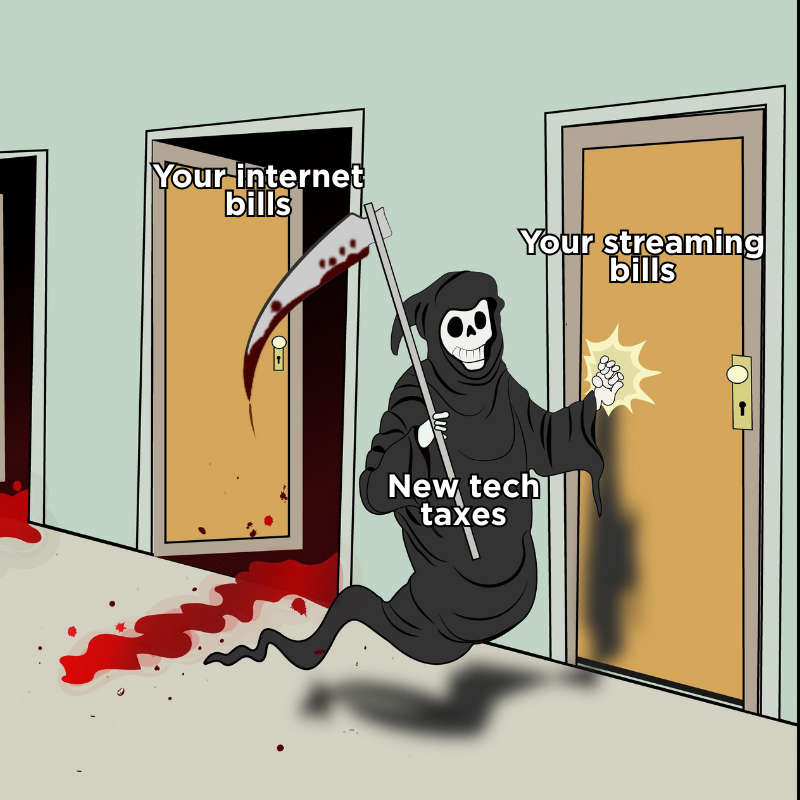
Talks of “reforming” the Universal Service Fund (USF) by introducing a tech tax to the program would be a Hellraiser for everyday internet users. Expanding the USF, which subsidizes broadband deployment and adoption, to tech and streaming services would almost assuredly raise prices and diminish innovation for consumers.
A 2025 report from the Computer & Communications Industry Association indicates that would be a bad idea, with U.S. gross domestic product dropping by an estimated $82 billion (to $207 billion annually) if a USF fee of 7 percent was implemented on cloud services. The study said imposing the fee would lead to higher prices and less cloud adoption, resulting in less innovation and more job losses.
Unfortunately, there are a lot of misconceptions about tech and streaming companies and their wider contributions to the digital domain. Critics say they are not paying their fair share to the USF, but those companies already contribute to the USF, both directly and indirectly. Companies pay into the fund directly if they offer a USF-assessable service. They pay into the fund indirectly if they purchase telecommunications from another company to operate their service. This can include such things as a content delivery network or internal corporate network. Because those telecommunications providers must contribute to the USF, the tech or streaming company must pay more to use their services. Therefore, a direct USF assessment on those companies would force them to contribute twice to the fund. This is a truly haunting prospect that must be avoided at all costs.
Kratom Crackdowns Create Black Market Horrors
State-level bans on 7-hydroxymitragynine (7-OH) kratom extracts are driving safe products straight into the spooky alleys where things go bump in the night. Unfortunately, Michigan may soon join the list of states choosing fear over science and reason. Introduced by Michigan State Senator John Cherry (D-Mich.), Michigan State Senate Bill SB 1181, the “Kratom Consumer Protection Act,” would significantly restrict 7-OH products by prohibiting kratom products— herbal preparations derived from the leaves of Mitragyna speciosa, a tropical tree native to Southeast Asia—in which 7-hydroxymitragynine exceeds 2 percent of the product’s total alkaloid composition. It would also prohibit synthetic 7-OH and require manufacturers to disclose the amount of 7-OH and mitragynine on product labels, limiting the sale of concentrated or synthetically enhanced 7-OH products.
As a result, SB 1181’s onerous regulatory requirements would restrict consumers from accessing life-saving harm reduction products and open the floodgates to dangerous black markets. Rather than protecting the public, these rigid prohibitions only spawn dangerous black markets where consumer safety goes to die.



Supreme Court Drives Wooden Stake Through (Some) Tariffs
In February, the Supreme Court delivered a welcome blow to President Trump’s vampiric trade policies that were (and unfortunately still are) sucking the blood out of the U.S. economy. In Learning Resources, Inc. v. Trump, SCOTUS ruled 6–3 that the International Emergency Economic Powers Act (IEEPA) does not give the president unilateral authority to impose tariffs. By declaring national emergencies under IEEPA, the administration had sought to impose broad import taxes, including worldwide “reciprocal” tariffs and targeted duties aimed at illicit drug flows. The Court emphasized that tariffs are an exercise of Congress’s constitutional taxing power and that the president has no inherent authority to impose them during peacetime; any presidential tariff authority therefore must come from Congress. It concluded that IEEPA’s authorization to regulate importation did not confer that power, particularly given Congress’s use of explicit tariff language and substantive limits when delegating tariff authority elsewhere.
While the ruling may have eliminated IEEPA as the legal basis for the administration’s reciprocal and drug-trafficking tariffs, the administration’s tariff policies are already (at least partly) back from the dead. It will take nothing less than an army of vampire hunters to keep import taxes at bay.
KOSA Banished Back to the Crypt
Late last month, Sen. Rand Paul (R-Ky.) successfully blocked an attempt to pass the Kids Online Safety Act (KOSA), a misguided internet censorship bill, by unanimous consent. As TPA and twelve other organizations noted in a June coalition letter, KOSA, “would substantially infringe on free speech, requiring online platforms to suppress certain kinds of content by enforcing an ill-defined ‘duty of care’ mandate. The bill would require online platforms to go to great lengths to protect youthful eyes from content designated as potentially harmful.”
The letter further noted that “the problem lies in the fact that the list of harms to be protected against is subjective, meaning that KOSA would effectively give regulators broad powers to suppress online content they personally define as harmful. While good in its intention, this bill would set a poor precedent that allows for government suppression of free speech.”
Thanks to Sen. Paul’s decisive action, this anti-First Amendment nightmare has been sent back to the shadows where it belongs.


Harm Reduction Products Are Back from the Dead
The Food and Drug Administration (FDA) is no longer haunted by former Commissioner Marty Makary, and the agency is finally approving more reduced-risk products. Reopening these authorization channels gives adult smokers safer alternatives and resurrects commonsense harm reduction policy.
On August 21, Reuters reported that the FDA “authorized 11 [ZYN] nicotine pouch products recently launched by Philip Morris, citing lower levels of harmful constituents compared with other oral and smokeless tobacco products.” The FDA noted that, in making its decision, it considered “the risks and benefits to the U.S. population as a whole — including the benefits to adults who currently use tobacco products and switch to a potentially lower-risk product, as well as the risks posed to youth and non-users of tobacco products.” Given that nicotine pouches are significantly less harmful than combustible tobacco products and are effective in helping smokers quit, the FDA’s decision was a sensible one.
The FDA is increasingly acknowledging the substantial body of evidence on pouches’ safety compared to cigarettes. In its June issuance of modified risk granted orders for 20 ZYN nicotine pouch products, the agency stated, “FDA’s review of modified risk products is intended to ensure that adult users have clear, science-based information about the relative harms of tobacco products, so they can make informed choices.” Let’s hope that the FDA continues to give these products—and millions of smokers—a second lease on life.
A Positive Omen for FirstNet
While FirstNet is not out of the haunted woods yet, expected reauthorization for the public-private program bodes well for the critical communication network relied upon by first responders. Speaking recently at the Technology Policy Institute’s forum in Aspen, Colorado, Johanna Thomas, senior Democratic counsel for the House Communications and Technology Subcommittee, said the reauthorization of the First Responder Network Authority that oversees FirstNet is “one of the biggest priorities of getting accomplished before the end of the year.”
FirstNet was first created in the wake of 9/11 to improve communications among first responders. AT&T, which was contracted to build the network, reports that it has more than 8 million subscribers from more than 30,000 agencies. Congress initially allocated $7 billion to pay for the network, those funds coming from Federal Communications Commission (FCC) spectrum auctions. AT&T agreed to invest $40 billion over the initial contract to build, operate, and maintain the network, making annual payments to the FirstNet Authority for usage of licensed spectrum in Band 14. As a result of private investments and user subscriptions, taxpayers do not have to pay for this innovative program.
Securing FirstNet would be great news for taxpayers and would ensure that emergency personnel won’t be left in the dark when crisis strikes.