
The Difficulties of the Debate Over Flock Cameras
David B McGarry
October 13, 2026
“And well may the Lawes of England be called Liberrates, quia liberos faciunt,” wrote Sir Edward Coke, the great English jurist. That is, the laws may be called liberties, because they make men free. The English legal system—and its child, the American system—rests on two propositions, the one in tension with the other. The law guarantees liberty; without it, the rule of Thrasymachus obtains, and the stronger dominates the weaker, heeding neither the latter’s interests nor his inherent rights. Liberty cannot be had without order; a free society must be policed. But law enforcement agencies often go too far, using their power to violate the very rights they are supposed to protect. Hence the development of restraints placed upon authority: there are certain acts and practices forbidden to the police—most significantly, “the due course, and processe of Law,” in Coke’s phrase. Law enforcement must be energetic but not domineering, effective but not tyrannical.
Innovation renders the tension more acute: as a government acquires ever more potent technologies, its own sphere expands and that of the free citizen contracts. A government possessed of advanced weaponry or surveillance technologies may apprehend more criminals or prevent altogether more crime, but there are some practices which, it is widely agreed, a free society cannot brook.
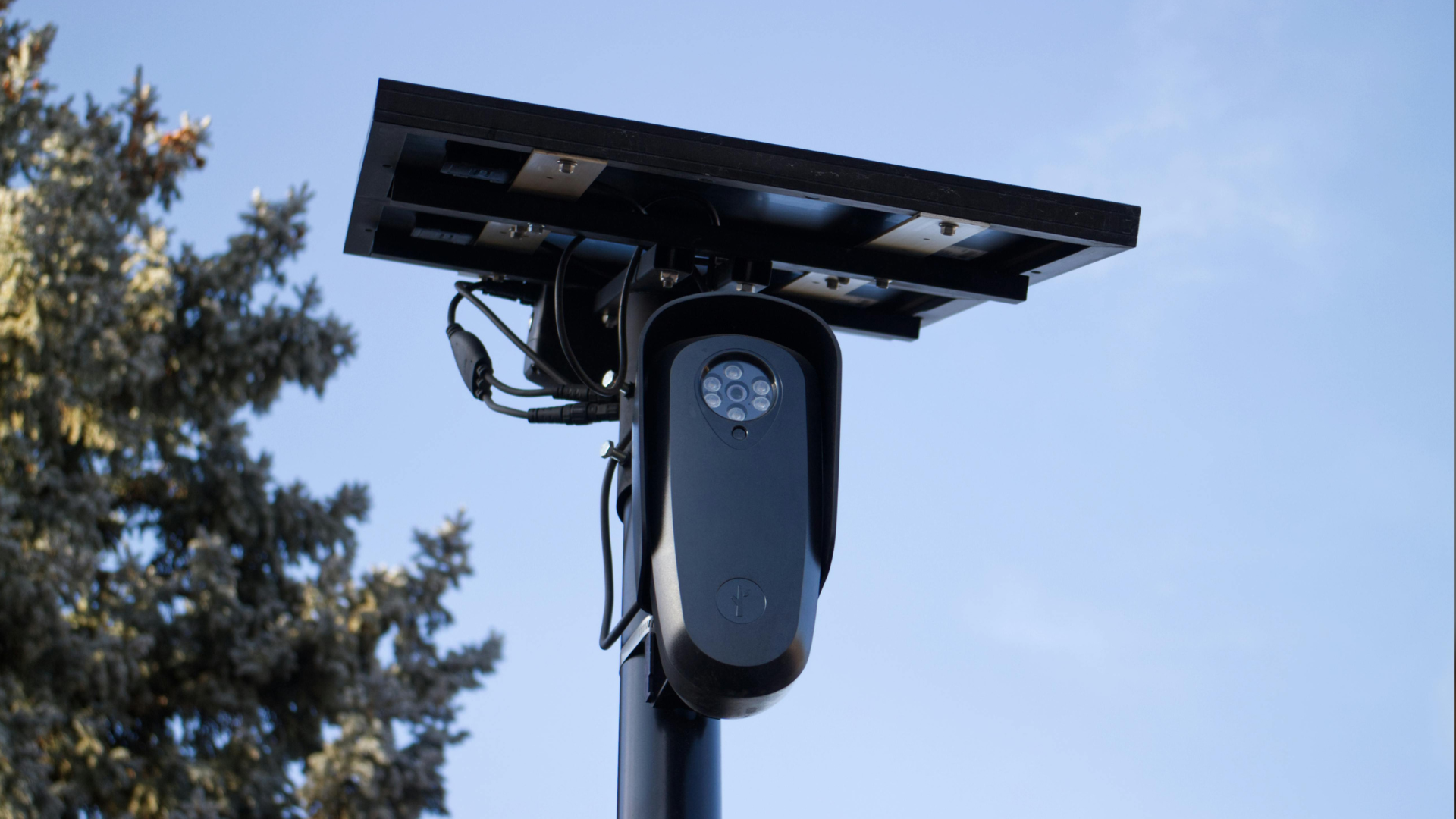
The word crisis, in its proper meaning, describes a decisive moment, a moment when one course or another must be chosen. And a crisis of ordered liberty is emerging as law enforcement introduce automated license plate readers (ALPRs). ALPRs—of which Flock Safety, the operator of 120,000 cameras (located in 49 states) is the most notable purveyor—grate against the libertarian instincts of the American people, inciting a rash of vandalism. According to an August NPR report, “at least 100 cities have deactivated the cameras or canceled their contracts.” Local police believe this new tool reduces crime; their angry constituents believe they have deployed Big Brother.
The Institute for Justice’s “Database of ALPR Abuse” contains 268 entries. A police chief in Sedgewick, Kansas, queried Flock’s database to surveil an ex-girlfriend and her new beau; a police lieutenant in Kechi, to surveil his estranged wife. After a “mix-up,” police in Milwaukee, guns drawn, accosted an innocent woman. Flock, after protesting that it did not divulge data to immigration agents, did just that. Garrett Langley, CEO of Flock Safety, suggested Americans must “compromise” on privacy.
Instances of abuses cannot alone conclude this debate. Policemen carry firearms and fire on citizens, including citizens who have done no wrong. It does not follow that the police ought to be disarmed. The question is one of tradeoffs, of costs and benefits. On the other hand, American common sense would not permit the implantation of location-tracking microchips in the flesh, and micro-cameras in the corneas, of every citizen—notwithstanding the fact that such a policy would likely put a stop to a vast share of crimes which are now unsolved. Short of that, Americans would not debase themselves to institute the surveillance policies of the Chinese Communist Party. And between such extremes—a zone which, it seems, sensibly regulated ALPRs occupy—judgment, measuring by the parameters of a free society, must discriminate permissible law enforcement practices from impermissible ones.
Charles Fain Lehman, a reasonable defender of ALPRs, posits that unintelligent regulation, and not the technology per se, is to blame. But to Lehman, the Cato Institute’s Mike Fox proposes a hypothetical: “To test Lehman’s thesis, one need only apply his logic to his own doorstep,” Fox writes. “Imagine if the local police department installed a high-resolution pole camera directed squarely at his front door. By his own logic, Lehman should be elated: The camera would deter prospective burglars and, should an intruder ignore it, capture their every movement in crisp detail to ensure swift apprehension.”
The point: liberty requires some modicum of privacy. The always-watched man is not perfectly free, no matter what the words of legislation facially permit. A swarm of eyes recording, dispatching the citizen’s every movement to a database to be searched by any number of law enforcement agencies, including, perhaps, the federales—such a system, apart from any misuse, was unknown, and would be unthinkable, to previous generations. Your license plate might not be retrieved from the database, but then again, perhaps it will be. Ought a law-abiding citizen, who committed no crime, care? We are not the Red Chinese.
The legality of ALPRs, like that of many new technologies, is uncertain. It still being decided in lower courts. A federal district judge earlier this month suppressed evidence garnered from Flock’s database, ruling that law enforcement’s activities had violated the Fourth Amendment. Three weeks before that decision, however, another federal judge held that queries of respective databases maintained by Flock and Motorola, another maker of ALPRs, did “not constitute searches for purposes of the Fourth Amendment.” The Supreme Court in recent years seems to have embarked on a determined course of limiting technology-related data collection utilized by police—these cases including United States v. Jones (2012), Carpenter v. United States (2018), and Chatrie v. United States (2026). The ultimate constitutional fate of ALPRs cannot be presaged at present.
Legal questions aside, the efficacy of ALPRs very often escapes questioning. It seems beyond doubt, facially, that ubiquitous cameras would aid officers of the law. One would suspect that ALPRs’ efficacy would be confirmed by empirical study, but this has, largely, failed to occur. Vittorio Nastasi of the Reason Foundation, examining the studies Lehman proffers, finds empirical ambiguity, not confirmation.
Just how great a “compromise” the use of ALPRs might enforce upon Americans with respect to privacy depends greatly on what constraints circumscribe law enforcement’s access to collected data. Warrant requirements, with sensible exceptions for emergencies, especially for those involving missing children, would do much—as would regulations barring law enforcement not located in the jurisdiction of the camera in question from accessing images the cameras capture without a court order. Regulations compelling officers to search only for images relating to a preexisting investigation of a crime—or, at least, to document the reason for the search—are likewise prudent; such conduct as driving a vehicle sporting out-of-state plates ought not alone to serve as cause for law enforcement to excavate weeks of travel records.
Ordered liberty is a unified project. It is, however, to adopt Frank Meyer’s phrase, a unity in tension. The tension is perpetual, yet it is to be litigated by groups of citizens, assembled into communities of townships and cities and states, who debate and vote among themselves—and then debate again and vote again as experience requires. The usefulness of ALPRs is not yet known in full; the issue resembles a mosaic lacking many pieces. And there a choice can be made that falls between outright bans and credulous permissiveness. Yet liberty must not give way blindly to order; the two depend upon one another, as the American experiment depends upon their union.