
Data Centers Aren’t the Burden Critics Make Them Out to Be
Ross Marchand
June 1, 2026
This op-ed was originally published in the Baltimore Sun.
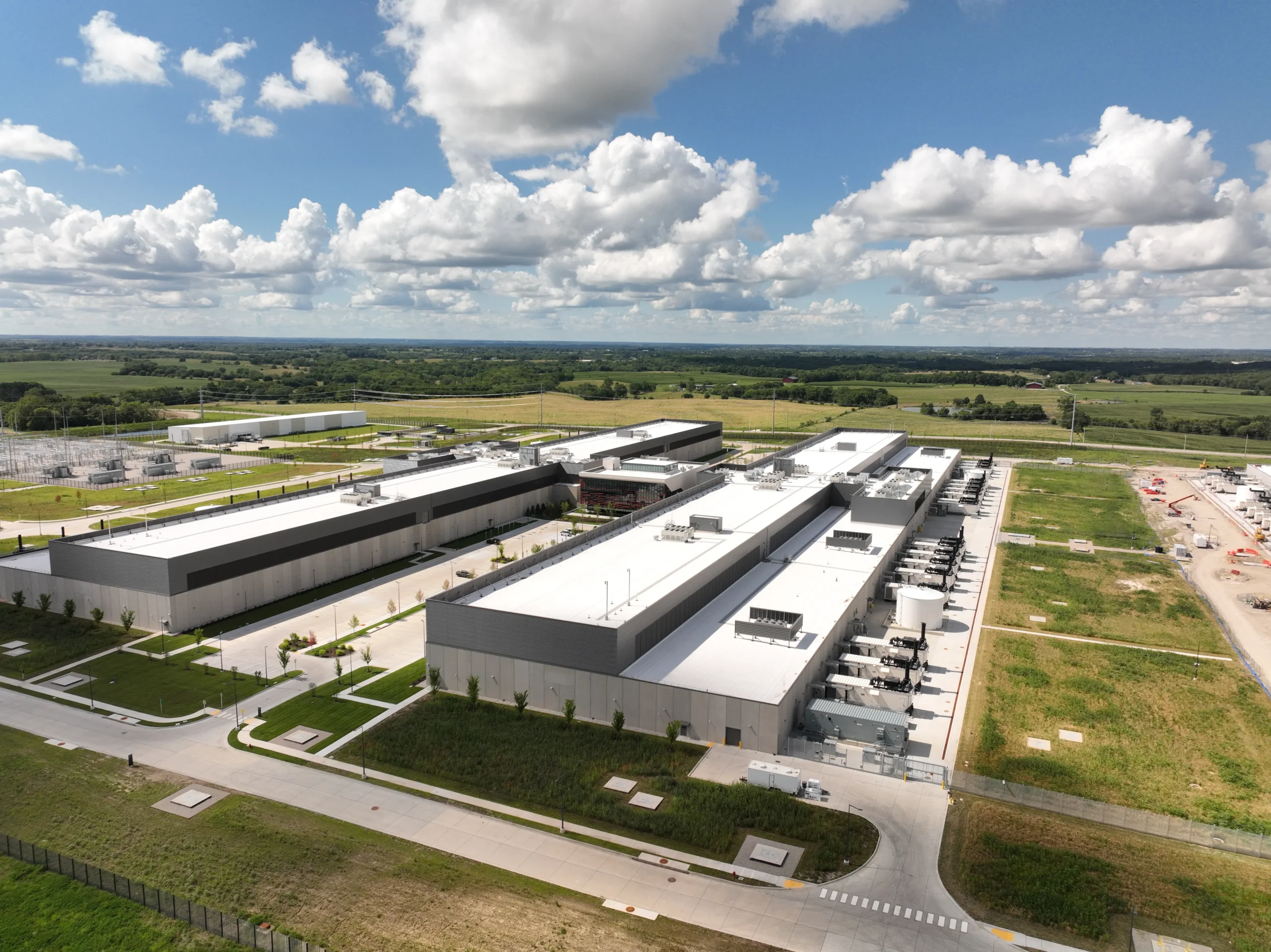
Data centers are indispensable to the digital domain, powering everything from texts to medical software to Claude queries. They’ve also been singled out for far more than their fair share of misinformation and mythmaking. Nowhere is this more apparent than in Maryland, where cities and counties are scrambling to bury data centers in new rules. The Taxpayers Protection Alliance (TPA) is responding to these efforts by highlighting state-specific water and electricity data and demonstrating just how small a footprint data centers make. Maryland can help lead the way in artificial intelligence deployment, but not if it kneecaps its digital infrastructure.
Prominent Maryland policymakers have claimed — without evidence — that data centers are depleting resources and increasing costs. For example, Maryland Senate President Bill Ferguson has been advocating for legislation he says will “advance protections against the worst impacts” of data centers “on our electric grid and communities.” Meanwhile, policymakers in Prince George’s County are concerned about the impact of data centers on the “regional water supply,” and local lawmakers will likely cave to a petition campaign that cites environmental fears. Similarly, Baltimore City’s recently passed one-year moratorium on data centers was borne out of water- and electricity-related panic. But, according to TPA’s analysis, data centers accounted for just 0.06% of all water consumption in Maryland in 2025. Furthermore, data centers accounted for only 2.5% of all Maryland electricity consumption in 2025.
This may sound surprising, but it really isn’t. As AI researcher and policy analyst Andy Masley notes, “in 2030, AI in data centers specifically will be using 0.08% of America’s freshwater. This means it will rise to the level of 5% of America’s current water used on golf courses, or 5% of U.S. steel production, or be about 173 square miles of irrigated corn farms.” Data centers’ share of U.S. annual electricity consumption is also low — less than 5% — and interestingly, states with high load growth are actually seeing power price declines in inflation-adjusted dollars. This counterintuitive trend is largely because the fixed costs of the infrastructure are being spread across more megawatt-hours sold.
While data centers aren’t harming society or the environment as detractors claim, banning them would certainly wreak havoc. Nearly every aspect of modern life depends on the digital infrastructure these facilities provide, from cloud computing and telemedicine to banking, logistics, streaming and emergency communications. The same critics who decry data centers often rely on them daily (e.g., through hyperbolic social media posts about data centers) without realizing it. Restricting or banning new facilities would not stop demand for digital services. Rather, it would only succeed in pushing development to unfriendly countries with fewer guardrails, such as China, weaken America’s technological leadership and strain the infrastructure that consumers and businesses already depend on.
Claims that data centers are uniquely destructive to the environment also ignore the industry’s rapid gains in efficiency and sustainability. Operators are investing in novel technologies such as advanced cooling systems and are even setting up micro-data centers in people’s homes that can help pay down mortgages while mitigating ecological issues. But even large, conventional data centers are far more energy-efficient than older commercial and industrial infrastructure, and their growth can help incentivize grid modernization and new power generation. Policymakers should focus on encouraging innovation and responsible development, not embracing alarmist rhetoric that treats every new project as an existential threat.
The economic consequences of anti-data-center policies would also be severe. Data centers create high-paying jobs, including $260,000 salaries for electricians. They also expand local tax bases. According to a recent analysis by the National Taxpayers Union, “Loudoun County, part of Virginia’s Data Center Alley, recently cut taxes in response to the magnitude of the property taxes collected from data centers. In 2025, 38% of the county’s revenue came from data centers. Projections for 2026 showed data centers would generate over $1.3 billion just in personal property tax on equipment.”
Restricting or banning data centers would mean sacrificing these economic gains with little to no upside for water and energy conservation. It’s time for Maryland to lead in data center and AI deployment and ditch the misinformation holding the state back.
Ross Marchand is the executive director of the Taxpayers Protection Alliance.