
Betting on the NCAA Tournament’s Final 16 Teams Isn’t So Sweet for Fans in Some States
Johnny Kampis
March 27, 2026
Thanks to the legalization of sports betting in most states in the past decade, most fans watching the men’s NCAA basketball tournament can safely and securely bet on their favorite team to make it past the Sweet Sixteen from the comfort of their couch. But fans of the Alabama Crimson Tide, Nebraska Cornhuskers, and Texas Longhorns must turn to black markets to enjoy the same access as fans of the other thirteen schools still alive in the tournament.
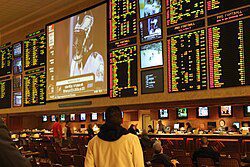
After the U.S. Supreme Court overturned the law that limited sports betting across the nation in 2018, 40 states and Washington, D.C. have now passed laws legalizing this form of gambling. No longer do most sports fans have to fly across the country to place bets in a Las Vegas sportsbook. Or worse, rely on unsafe offshore betting.
Some states have made it harder for their residents than other states. For example, Nebraska is one of eight states that allow only in-person sports betting, meaning that users must bet on-site at one of the state’s four licensed race tracks or casinos.
Recently, the Taxpayers Protection Alliance (TPA) urged a Washington State legislative committee to consider amendments that would allow their residents to bet online anywhere within state borders as it debated HB2205 this winter. That bill would have allowed mobile betting, but only at the state’s fifteen tribal casinos. Committee members did not appear to consider TPA’s suggestion as they also lamented the rise of prediction apps like Kalshi and Polymarket, which essentially function as gray markets for sports betting. Legalizing online sports betting would push more patrons away from gray and black markets and toward state-regulated legal markets.
Alabama and Texas are among the states where legal sports betting faces an uphill climb. Some lawmakers in Alabama have introduced sports betting legislation in recent years as part of a package that has included allowing lottery and casino options for placing bets. If passed, the bills would allow voters to OK those forms of gambling, but said efforts haven’t gotten much traction. Interestingly, Alabama authorized daily fantasy sports (DFS) in 2019, so while state residents can’t bet on NCAA basketball games, they can use players from teams playing in the tournament to craft fantasy lineups and compete for cash prizes.
Efforts at sports betting in Texas have also failed, also likely in part due to being packaged together with other forms of gambling, including legalizing casinos in the Lone Star State. Two-thirds of lawmakers would have to sign off on any such gambling effort before it’s sent to Texas voters for consideration. Much gambling in Texas operates in a gray area with DFS not being expressly legal. While poker games have operated in the state in private clubs for the better part of a decade, local authorities raided the largest of its kind, The Lodge in Round Rock, on March 10.
The encouraging news is that a majority of hoops fans can bet on their Cinderella team to win the Big Dance, even as lawmakers in some states are tossing bricks.