
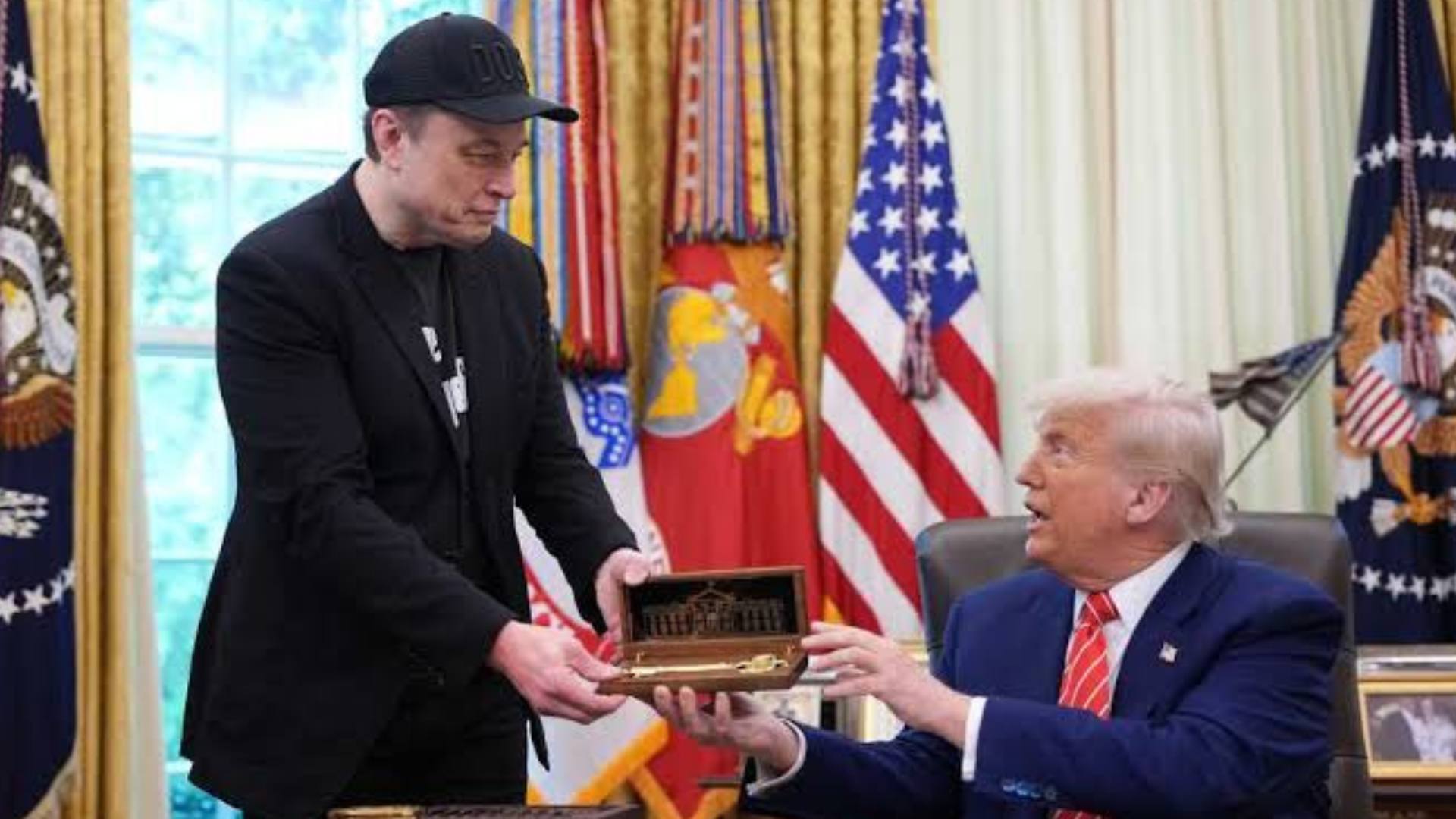
Why DOGE Failed to Cut Washington Down to Size
Vladlena Klymova
August 25, 2026
This op-ed was originally published in Real Clear Markets.
Established by President Trump on the first day of his second term to “dismantle Government Bureaucracy, slash excess regulations, cut wasteful expenditures, and restructure Federal Agencies,” the Department of Government Efficiency (DOGE) ended its operations on July 4. President Trump envisioned DOGE’s eventual accomplishments as “the perfect gift to America on the 250th Anniversary of The Declaration of Independence,” and DOGE itself asserts $215 billion in savings. However, an August report released by the Government Accountability Office (GAO) shows that DOGE’s eye-catching savings figures lose much of their luster on closer inspection.
“The data quality issues identified in this report limit the value of the Wall of Receipts [all the contracts, grants, and leases allegedly terminated by DOGE],” the GAO concluded. “As such, the amount of reported savings is likely misstated.” DOGE’s modest victories were eclipsed by its haphazard execution and shoddy accounting, which irreparably undermined its reputation. Having first set out to cut $2 trillion a year in waste, fraud, and abuse, and then tempering its ambitions to $1 trillion and eventually $150 billion, DOGE ultimately saved nowhere near that amount. In the end, although DOGE claimed to have saved $215 billion, the GAO reported that the entity did not provide enough information to substantiate 96 percent of reported savings from grant cancellations. Much of DOGE’s claimed savings from lease and contract suspensions seems to have been phantasmal.
Elon Musk had grandiose plans to transform the government, but only a sophomoric understanding of how to achieve them. “The federal bureaucracy situation is much worse than I realized,” he remarked upon leaving DOGE.
DOGE’s chief achievement was reducing the federal workforce, which shrank by nearly 256,000 employees—more than 11 percent—during 2025. Every agency downsized, most by more than 10 percent, and several by more than 30 percent. “A decline that large has not happened since the military demobilizations at the end of World War II and the Korean War,” according to the Cato Institute. But despite the workforce reduction, no commensurate reduction of the federal government ensued.
However, the same incompetence that led DOGE to erroneously claim multi-billion-dollar savings was manifest in DOGE-led indiscriminate firings. DOGE pushed agencies to fire the indispensable employees they later scrambled to rehire—e.g., workers responsible for America’s nuclear weapons and personnel responding to the bird-flu outbreak—not to mention dismissing inspectors general (IGs), personnel with the very expertise DOGE lacked.
Promising ambitious reforms of the federal bureaucracy—and trillions of dollars in possible savings—without Congress was quixotic from the start. DOGE’s proponents confused shrinking administrative staff with shrinking the administrative state––its regulations and the spending it controls. Even if DOGE had eliminated the entire executive-branch civilian workforce—which costs taxpayers roughly $383 billion in pay and benefits each year—the resulting savings would have been dwarfed by the roughly $1.2 trillion the government spends on major means-tested welfare programs or the roughly $3 trillion it pays out in Social Security and Medicare benefits annually. In fact, cutting the entire discretionary budget—roughly $1.9 trillion—would hardly be enough to eliminate federal deficits.
Likewise, dismissing federal employees did little to reduce the regulations they administered. Federal regulations now fill more than 190,000 pages and cost Americans an estimated $2.15 trillion. This is a far larger and more immediate problem than headcount. Any executive-led deregulatory effort—especially if it disregards laws passed by Congress and spurs a wave of protracted litigation, as DOGE did—cannot profoundly reform institutionalized bureaucracies.
Musk’s Procrustean “Move Fast and Break Things” approach functions well in private industry. But as Jessica Riedl explains, the approach fails when applied to “a $7 trillion entity with millions of employees serving 330 million citizens—[which] is unfathomably more complicated than a tech company.”
Vastly reducing federal spending, byzantine regulation, waste, fraud, and abuse takes time, patience, and a thorough and well-crafted plan. It requires tapping “into the existing industry of experts such as economists, public administrators, [GAO], congressional oversight committees, [IGs], and think tanks that have been building reform blueprints for decades,” as Riedl argues. The executive branch alone can put some of those blueprints into practice, as the Task Force to Eliminate Fraud is already demonstrating. But the authority of the executive is sharply circumscribed without action by the legislative branch. Above all, the legal powers necessary to accomplish durable and consequential reforms—most importantly, the power of the purse—belong with Congress.