Cutting the Corporate Tax Rate: How Low Can You Go? (VIDEO)

On Wednesday February 22, 2012, the Obama Administration announced its proposal to cut the corporate tax rate from 35 percent to 28 percent. This comes less than two months before Japan cuts its corporate tax rate (on April 1, 2012) to leave the United States with the highest corporate tax rate in the world. Cutting the rate from 35 percent to 28 percent is a good start, but since 1992, the average OECD combined statutory rate has been lower than America’s and it has continued to fall. Today, it is nearly 10 percent lower (25.1 percent) than America’s 35 percent. Add in the state and local taxes that U.S.-based companies pay and the gap widens even further. The appetite for corporate tax cuts may also be supported by a wide variety of folks and not just corporate big wigs. According to The Hill, “The Hill Poll also found that 73 percent of likely voters believe corporations should pay a lower rate than the current 35 percent, as both the White House and Republicans push plans to lower rates.”
Continue ReadingCutting the Corporate Tax Rate: How Low Can You Go? (VIDEO)

UNintended Consequences of an Internet Takeover and a New Tax

The United Nations has been very busy these days with talk of taking over the Internet and the World Health Organization (WHO) moving at lightning speed to implement new tobacco taxes. According to The Daily Caller, “On Feb. 27, a diplomatic process will begin in Geneva that could result in a new treaty giving the United Nations unprecedented powers over the Internet. Dozens of countries, including Russia and China, are pushing hard to reach this goal by year’s end. As Russian Prime Minister Vladimir Putin said last June, his goal and that of his allies is to establish ‘international control over the Internet’ through the International Telecommunication Union (ITU), a treaty-based organization under U.N. auspices.” The WHO describes its new tax regime, The Solidarity Tobacco Contribution (STC) as "a novel approach developed by the World Health Organization (WHO) in response to the recommendation made by the High-Level Taskforce on Innovative Financing for Health Systems to ‘expand the mandatory solidarity levy on airline tickets and explore the technical viability of other solidarity levies on tobacco and currency transactions.’” Both actions could mean bad news for consumers and taxpayers.

Continue ReadingUNintended Consequences of an Internet Takeover and a New Tax

Make Up Your Mind President Obama

In a recent visit to a Washington Boeing plant, while touting their planes, President Obama asked Congress to continue to fund the Export-Import Bank (Ex-Im), the poster child for taxpayer-funded corporate welfare. The setting of the Boeing plant was no accident considering that Boeing has been a major recipient of Ex-Im Bank funds for years. This comes on the heels of the Obama-backed National Labor Relations Board (NLRB) trying to stop Boeing from moving its plant to South Carolina and the expiration of a tax credit for jet sales.

Continue ReadingMake Up Your Mind President Obama

Seattle Should Turn the Page on The New Phone Book Fee

A battle has been brewing in Seattle, Washington and it doesn’t involve over-priced coffee or lattes. This lawsuit involves a fee that is being charged to Yellow Page companies. Yes, that’s right, the Yellow Pages. According to a February 1, 2012 story in the Seattle Times, “Despite a federal lawsuit, the Seattle City Council on Monday voted to stick with a 14-cent fee it plans to charge Yellow Pages distributors for every book that lands on Seattle residents' doorsteps.” While most people thought the Yellow Pages were a relic of the past, it is still a popular way for people to find businesses. Beneath the surface of Seattle’s fee (read: tax) is the claim of helping the citizens of Seattle. Across the country consumers have seen plastic bag taxes as cities and municipalities mask these fees as a way to serve their communities. The reality is that these money raised by these “fees” just goes to serve bloated inefficient governments.

Continue ReadingSeattle Should Turn the Page on The New Phone Book Fee

With Shrinking Defense Dollars Missile System Should be Scrapped

The release of the President’s budget this week showed a shrinking Defense budget. This economic reality has once again sparked a conversation about the controversial and expensive Medium Extended Air Defense System (MEADS). Originally conceived as the replacement to the Patriot missile system, MEADS is being jointly built by the United States, Italy, and Germany with the Americans shouldering more than 50 percent of the cost. Even though the Army doesn’t want the project, there was an additional $800 million allocated for the project through 2013 ($400 million in President Obama’s latest budget). Taxpayer groups have expressed their opposition to funding the program over the past years. Now, according to the Washington Business Journal (WBJ), “Defense officials are expressing doubts about the department's ability to meet its obligations to help fund an international missile defense system, despite President Barack Obama's support of the program in the fiscal 2013 budget proposal.”

Continue ReadingWith Shrinking Defense Dollars Missile System Should be Scrapped

Taxpayers Get Whacked at New Mob Museum and Can’t Fuggedaboutit

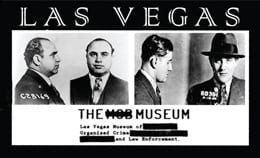
On February 14, 2012 (the 83rd anniversary of the St. Valentines Day Massacre), the National Museum of Organized Crime and Law Enforcement -- better known as "The Mob Museum" -- opened its doors in Las Vegas. The museum will function as a shrine to two of the most shameful blemishes on America: organized crime and government waste. The museum's focus on the mafia and law enforcement agencies that brought them down is obvious. What isn't evident at the glitzy new museum is the fact that hard-working taxpayers were shaken down to fund the tourist trap. In total, politicians devoured $42 million in local, state and federal tax money to build The Mob Museum. The Taxpayers Protection Alliance (TPA) held a press conference with the Nevada Policy Research Institute (NPRI) at 11:00 am PT to question the more than $40 million in taxpayer funds used to create the Museum (see full press release here).

Continue ReadingTaxpayers Get Whacked at New Mob Museum and Can’t Fuggedaboutit

Obama Budget, More of the Same, Including Disappointment for Taxpayers

In 2011, taxpayers sent a clear signal to all Washington politicians that politics (and especially spending) as usual just won’t be tolerated anymore. Today President Obama unveiled his FY 2013 budget with little or no recognition that he understands the frustration of taxpayers. The budget shows that taxpayers have little to be excited about, especially since the budget deficit will top $900 billion. Here is the quick and dirty. According to CNN money, “President Obama unveiled a $3.8 trillion budget request Monday that hikes taxes on the rich, spends new money on infrastructure and education, but does little to reform the entitlement programs that pose the biggest long-term threat to the federal budget. . . . The administration is proposing a series of investments focused on infrastructure, education and domestic manufacturing, including old favorites like $30 billion to modernize schools and an additional $30 billion to retain and hire teachers and first responders. One key element of that plan is a six-year proposal to spend $476 billion on surface transportation, a big increase from current levels, and much more than other proposals lawmakers are considering.”

Continue ReadingObama Budget, More of the Same, Including Disappointment for Taxpayers

Time to Eliminate Improper Payments

Trying to cut government spending is the easiest and toughest thing to do. Many good government groups and internal watchdogs have submitted ideas on how and where to cut spending but members of Congress refuse to seriously cut spending. On February 7, 2012, the Government Accountability Office (GAO) released a report, “Improper Payments: Moving Forward with Governmentwide Reduction Strategies,” which identifies $115 billion in improper payments by the federal government. This comes on the heels of many ideas to cut spending such as The National Commission on Fiscal Responsibility and Reform, the Congressional Budget Office’s “Reducing the Deficit: Spending and Revenue Options.” In addition President Obama’s fiscal year (FY) 2012 budget included his Fiscal Year 2012 Terminations, Reductions, and Savings list which outlines $33 billion in potential spending cuts. Obama’s 2013 budget should have a similar list. GAO has a long history of exposing waste, fraud, and abuse so their latest report on improper payments should come as no surprise. According to the report, “The $115.3 billion estimate was attributable to 79 programs spread among 17 agencies. Ten programs accounted for about $107 billion or 93 percent of the total estimated improper payments agencies reported for fiscal year 2011…The federal government continues to face challenges in determining the full extent of improper payments…Internal control weaknesses continue to exist, heightening the risk of improper payments.”

Continue ReadingTime to Eliminate Improper Payments

Washington’s Dirty Little Secret – Earmarks are Still Alive

On December 20, 2011 the Taxpayers Protection Alliance (TPA) uncovered $3 billion in earmarks in the Defense appropriations bill (see full list here). Last week, legislation (S. 1930, The Earmark Elimination Act) sponsored by Sens. Claire McCaskill (D-Mo.) and Pat Toomey (R-Pa.) failed in the Senate. Now, today, the Washington Post reports that, “Thirty-three members of Congress have directed more than $300 million in earmarks and other spending provisions to dozens of public projects that are next to or within about two miles of the lawmakers’ own property, according to a Washington Post investigation. Under the ethics rules Congress has written for itself, this is both legal and undisclosed.” Even though most of the earmarks reported by the Washington Post were requested before the self-imposed moratorium in 2010, it shows a lack of understanding of how much taxpayers became frustrated with earmarks after the Bridge to Nowhere became a symbol of earmark largess in 2005. Some analysts even believe that the Bridge to Nowhere and the increase in earmarks from 1995 to 2006 was a contributing factor to Republicans losing control of the House of Representatives in 2006.

Continue ReadingWashington’s Dirty Little Secret – Earmarks are Still Alive

No Budget? No Pay!

In real life when an employee doesn’t do their job there are financial repercussions. When a member of Congress (employed and paid for by taxpayers) doesn’t do their job (such as passing a budget or appropriations bills on time) they go on recess and ask to be re-elected to the job they failed to do. If Rep. Paul Broun (R-Ga.) has his way, there may be real financial consequences if members of Congress don’t do the most important part of their job, pass a budget. Rep. Broun introduced H.R. 3883, the “Budget or Bust Act,” to provide some linkage of job performance to pay. According to wnd.com, “HR 3883 says in part: ‘If on or before April 1 of any year Congress does not adopt a concurrent resolution on the budget for the fiscal year that begins on October 1 of that year, the Secretary of the Treasury shall deposit all payments otherwise required to be made for the compensation of members of Congress in an escrow account, and shall release such payments to the members only upon the adoption by Congress of a concurrent resolution on the budget for that fiscal year.’” Last year when Our Generation and the Taxpayers Protection Alliance released “Are Taxpayers Getting Their Money’s Worth? An Analysis of Congressional Compensation,” (read full report here) taxpayers were shocked to find out just how much members of Congress make with a base salary of $174,000 per year ($285,000 per year when benefits are calculated).

Continue ReadingNo Budget? No Pay!