Washington Post Gets It Wrong On Plain Packaging

The free market is most effective when consumers are allowed to make choices for themselves and businesses are not burdened by onerous regulatory measures designed to harm sales of legal merchandise. When government steps in and increases taxes and/or adds needless regulations, the market suffers and in turn, consumers and businesses do too. The plain packaging initiatives for tobacco like the one in Australia are a case study in what not to do. It is has been more than a year since plain packaging rules were instituted and the results have been bad for taxpayers and businesses. The new rules also represent a serious infringement of Intellectual Property (IP) rights. Unfortunately the impact of plain packaging is being misconstrued by those who are pushing the counterproductive initiative; and now even media in the United States is picking up the narrative. Last week the Washington Post praised the effects of plain packaging down under. But, a closer look reveals just how bad plain packaging is for consumers, businesses, and taxpayers.

Continue ReadingWashington Post Gets It Wrong On Plain Packaging

A Return of Earmarks? Not So Fast

This article originally appeared in The Daily Caller on November 14, 2014 For many years, earmarks were business as usual in Washington, D.C. That changed in 2006 when Republicans lost control of the House of Representatives partly due to their excessive spending on earmarks. Responding to that voter pressure, Congress instituted transparency rules for earmarks starting in 2008 and then in 2010, the House and Senate agreed to a two-year moratorium. The moratorium was extended and most earmarks disappeared, except for the defense spending bill. In fact, TPA uncovered 186 earmarks worth $7 billion (click here to see the full list) in the Defense Appropriations Bill that was part of H.R. 3547, the 2014 Consolidated Appropriations Act, aka the Omnibus appropriations bill. One member of Congress tried to unsuccessfully bring back earmarks. A post from Redstate.com on November 14 noted that Rep. Mike Rogers (R-AL) tried to introduce an amendment to House rules that “would allow an exception to the earmarks ban for ‘State, locality (including county and city governments), or a public utility or other public entity.’”

Continue ReadingA Return of Earmarks? Not So Fast

Time for the Ex-Im Bank to Fade Away into the Dust Heap of History

This article originally appeared in Townhall.com on November 7, 2014 The Export-Import (Ex-Im) Bank of the United States may have finally admitted to themselves what a broad swath of voices have been saying for months: they are an unnecessary institution. After fighting for their very existence against a skeptical Congress, the Ex-Im Bank might have just proven the point that American exporters could very well survive their dissolution. The final showdown over the eventual fate of the Bank was recently deferred to next summer by a temporary government funding measure, after their charter was originally set to expire on September 30. This followed a significant legislative battle in which a number of voices from all over the political spectrum spoke out critically against this institution, calling it the poster-child for crony capitalism – not a difficult case to make considering ten major corporations scoop up about 60 percent of Ex-Im financing. The leader of the Congressional assault was Rep. Jeb Hensarling (R-Texas), chairman of the House Financial Services Committee and a noted member of the Republican conference’s conservative wing. House Majority Leader Kevin McCarthy (R-Calif.) also voiced his opposition to the Bank, as did liberal Democratic Representative Alan Grayson (D-Fla.). A long-time champion of eliminating corporate welfare programs, Ralph Nader, has also surfaced to argue for Ex-Im’s demise.

Continue ReadingTime for the Ex-Im Bank to Fade Away into the Dust Heap of History

Bolstering IP, New Website Promotes Locations for Legal Content

Intellectual Property (IP) continues to be a major factor in helping to drive today’s global economy. Innovation and economic expansion are buoyed as IP is strengthened, as shown by a recent report from the US Chamber of Commerce. Though Congress has been quiet since early summer on this issue, there is hope the new Congress will pick up where this Congress (now a Lame Duck) left off. There’s no question that as technologies change it becomes increasingly important to keep up with those changes and make sure that consumers and businesses have the tools they need in order to enjoy the content in the digital marketplace that they most enjoy. Just this week a new tool for helping to find and locate legal content online was launched. Todd Spangler of the Variety reported.

Continue ReadingBolstering IP, New Website Promotes Locations for Legal Content

More Government Broadband Expansion as Yellowstone Considers Fiber

Just when you think it couldn’t get any worse for taxpayers, along comes another way for government to waste money, broadband in national parks. The Taxpayers Protection Alliance (TPA) has documented the lousy track record the public sector has when it comes to government broadband and with examples like the ones in Tennessee, Louisiana and Utah (read here, here, and here), it defies logic why more attempts would be made. Just last week, reports surfaced about another proposed expansion of government broadband, but this time in national parks. For example, Yellowstone National Park is on the verge of adding to an already established broadband apparatus as part of the “Go Digital” campaign. This proposal comes at the same time that Yellowstone is in the midst of considering a fee increase that would hit the millions of annual visitors to the park. Taxpayers should not be on the hook for providing broadband in the national parks. A trip to a national park should be spent enjoying the natural beauty of nature, not posting nature “selfies” to social media.

Continue ReadingMore Government Broadband Expansion as Yellowstone Considers Fiber

TPA Reacts to President Obama Statement Calling for Net Neutrality

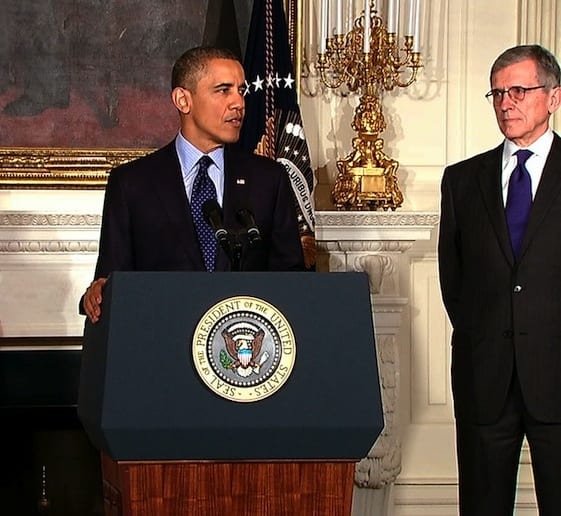
The Taxpayers Protection Alliance (TPA), a national taxpayer watchdog group representing concerned citizens all across the country, is deeply troubled by statements made from President Obama today that call on the Federal Communications Commission (FCC) to move forward with new rule making regarding net neutrality and reclassification under Title II. The fundamental debate about the best public policy to ensure that the Internet remains open is extremely important. The White House and FCC Chairman Wheeler continue to get it wrong. There is no justification to adopt an aggressive regulatory approach to keep the Internet open. Of late, the country has seen an unprecedented amount of innovation and investment from the private sector. In fact, a report out early last year by Charles Davidson and Michael Santorelli at the New York University Law School noted that, “Broadband providers have invested more than $1 trillion in broadband between 1996 and 2010, and $66 billion in 2011.” Any reclassification of the Internet could open the flood gates for new taxes. If the FCC decided to regulate broadband as a Title II telecommunications service, customers would see the Universal Service Fund (USF) contribution fee assessed on broadband bills. Telecommunications taxes are already too high and consumers can’t afford to be burdened with more taxes. click 'read more' below to see the full statement form TPA

Continue ReadingTPA Reacts to President Obama Statement Calling for Net Neutrality
Read more about the article Report Reveals Which Governors Are Fiscally Responsible and Which Are Reckless Tax and Spenders
Sunday, February 23, 2014 NGA Winter Meetings 2014 Washington DC JW Marriott, February 21-24 2014

Report Reveals Which Governors Are Fiscally Responsible and Which Are Reckless Tax and Spenders

National Governors Association 2014 Winter Meeting Stephen Adkins is a research fellow at the Taxpayers Protection Alliance. Which governors do best at protecting taxpayers’ money and controlling state spending? That’s the questions answered by the Cato Institute’s 12th biennial “Fiscal Policy Report Card on America’s Governors.” Residents of North Carolina, Kansas, Maine, and Indiana are in good hands, according to the report card. The study finds that, while some state executives responded to widespread upticks in state revenues by lowering tax burdens on their constituents, others, predictably, have decided to go on spending sprees.

Continue ReadingReport Reveals Which Governors Are Fiscally Responsible and Which Are Reckless Tax and Spenders

Lifting Crude Oil Export Ban Would Boost Economy, Jobs, and Security

This article appeared in Inside Sources on November 5, 2014 Gas prices are the lowest Americans have seen in quite some time. This is partly due to the basic principle that as supplies rise prices fall. And in the past few years we have seen supplies of both oil and gas increase substantially in this country, as we are using new technology to reach energy resources that were previously unavailable to us. Add in discoveries in shale formations across the country and we can see how truly blessed we are. What many may not know is that America recently became the world’s top producer of natural gas, and soon the U.S. may pass Saudi Arabia in oil production. This is a significant turn of events that very few people could have imagined over the past 40 years. During the oil crisis of the 1970s, we found out just how dependent we were on foreign oil. Americans lined up at gas stations, canceled vacations and watched gas prices rise, along with the cost of just about every product that required transportation or depended upon petroleum. Yet now with low prices and abundant resources, our policies should reflect this changing landscape of energy development. A positive step is that just last week, Senate Finance Committee Chairman Sen. Ron Wyden (D-Ore.) wrote in a letter to Secretary of Energy Ernest Moniz that “some policy provisions put in place as recently as 2007 are now at best irrelevant, or at worst detrimental, to national environmental and economic goals.”

Continue ReadingLifting Crude Oil Export Ban Would Boost Economy, Jobs, and Security

White House Still Wrong on Corporate Tax Reform

The midterm elections took place this week and with the lame duck session of Congress coming next week (click here to see TPA’s wish list for that session) there are already warning signs of troubling policy initiatives that taxpayers may get from these rushed remaining congressional working days of the year. For example, tomorrow the White House will be meeting with Senate and House leaders to discuss the long-term agenda for the new Congress, but also the short-term agenda for the lame duck. There is already word on a move with corporate taxes that will be bad for taxpayers and small businesses. Speaking yesterday in his first press conference since the midterm elections, President Obama once again called for a transportation bill that would be paid for by corporate tax reform.

Continue ReadingWhite House Still Wrong on Corporate Tax Reform

A Short Agenda for Congress During the Lame Duck Session

After last night’s election the country is preparing for a lame duck session of Congress. Interestingly enough, the term “lame duck” came about in the 18th century as it referred to bankrupt businessmen, who were thought of as "lame" in the sense that their powers were diminished, which left them vulnerable. A fitting definition considering the country is $17 trillion in debt and very vulnerable financially. In U.S. politics, a lame duck session refers to the legislative session between the election and swearing in of a new Congress. In reality, a lame duck session means that members of Congress who lost their re-election bid or are retiring will be able to vote on legislation despite the fact that they won’t be held accountable for their votes after the new term begins, which in this case is January 3, 2015. There will be a temptation to pursue an aggressive agenda during the lame duck session because there is quite a bit of work to do on a number of policy areas. But, the truth is that Congress should take a deep breath and limit their action to three items; passing a continuing resolution to keep the government functioning, passing Defense authorization, and passing a permanent extension of the Internet access tax moratorium.

Continue ReadingA Short Agenda for Congress During the Lame Duck Session