
America Needs All-of-the-Above Approach to Energy
Ross Marchand
March 4, 2026
For years, Americans have been told by their politicians that only a handful of energy sources were needed to make America “energy independent” and power the country. Synthetic fuels were all the rage in Washington, D.C. during the 1970s energy crisis, until it became clear that the entire “synfuels” program was a multi-billion-dollar boondoggle. Just as synfuel’s backers demonized gasoline, and environmental groups—along with the occasional lawmaker—have baselessly labeled hydrogen fuel as dirty, some politicians and pundits are all-too-eager to bash solar power and label it an expensive and unreliable pipedream.
The truth is that, when not subsidized by taxpayers and consumers, solar is an increasingly affordable energy source and has an important role to play in America’s power portfolio. It’s time for lawmakers to embrace an all-of-the-above energy approach that relies on unbridled markets and innovation.
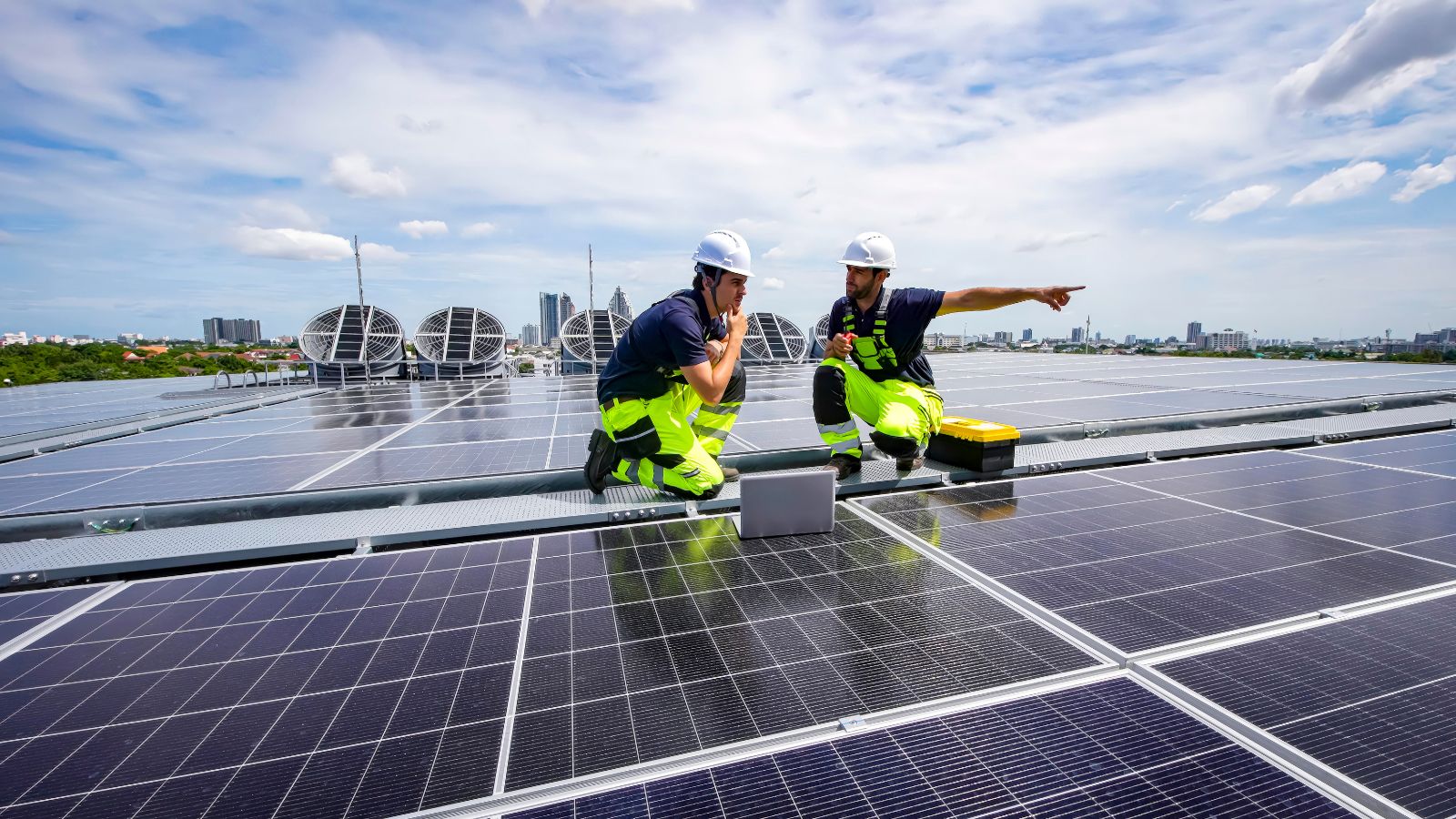
Solar projects—and in particular large-scale utility endeavors—have fallen significantly in price over the past two decades. According to the National Renewable Energy Laboratory (the Department of Energy’s national laboratory), the levelized cost of energy—the average, net present cost of electricity generation for a power plant over its lifetime—for large-scale utility photovoltaic systems decreased 86 percent “from 34.9 cents/kWh in 2010 to 4.8 cents/kWh in 2024. This happened largely due to the development of high-efficiency modules, single-axis tracking, and optimized system designs, including advanced power electronics and higher ILRs. The cost trajectory highlights significant economies of scale and reduced BOS [balance of system] costs over time. In 2022, PV became the largest source of capacity added to U.S. electricity grids.”
These dramatic cost declines in solar energy have been driven by global manufacturing scale, technological learning, and private-sector competition—not by U.S. taxpayer subsidies. The steep drop in photovoltaic module prices over the past two decades closely tracks global production expansion, particularly in Asia, where intense price competition and vertical integration reduced manufacturing costs irrespective of the shortsighted schemes cooked up on Capitol Hill. Innovations in polysilicon purification, wafer thinning, cell efficiency, and supply-chain logistics have followed classic “learning curve” dynamics that we’d expect to see with any innovation; as cumulative production doubles, per-unit costs fall. These reductions would likely have occurred—even absent U.S. subsidies—because they are rooted in engineering refinement and economies of scale operating in a dynamic global market.
As Our World in Data’s Hannah Ritchie notes, “Solar panel prices have fallen by around 20% every time global capacity doubled”—largely irrespective of presidential administration or level of subsidization. And support for continued solar use and availability transcends usual party politics. According to a February 2026 survey of more than 1,000 registered and likely voters in Arizona, Florida, Indiana, Ohio, and Texas, three-quarters of Trump voters agree that solar energy should be deployed in the U.S. to bolster America’s energy supply.
The polling memo concludes that “solar energy enjoys broad, durable, and increasingly intense public support.” Summarizing the poll results, Breitbart reporter Jasmyn Jordan notes, “Sixty-one percent of respondents said they worry their state may not have enough power to meet demand for homes, businesses, schools, and hospitals. Sixty-nine percent expressed concern about their local electric bill, including 34 percent who described themselves as very concerned.”
In other words, more power is sorely needed, whether solar or more conventional alternatives are doing the heavy lifting. Federal, state, and local governments should get out of the way, zero out subsidies, and let solar and other energy sources compete on an open marketplace. Taxpayers and consumers deserve affordable and reliable alternatives to power their lives.