
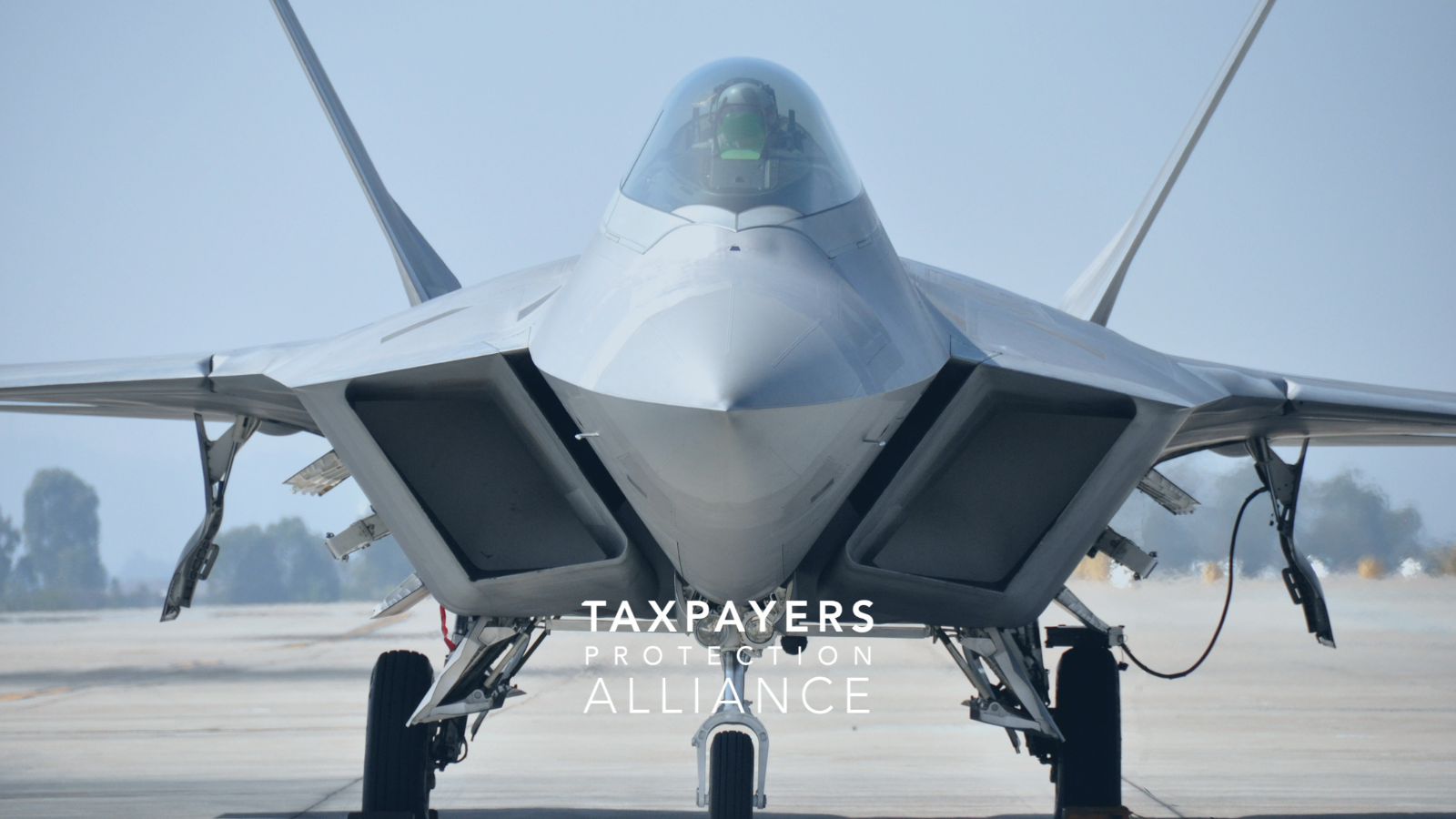
F-35’s Recent Success Does Not Overshadow Years of Failure
Dan Savickas
January 28, 2026
This op-ed was originally published in The Well News.
The F-35 has had a significant start to 2026. Regardless of one’s thoughts on the wisdom or constitutionality of foreign intervention, the fighter jet reportedly played a key role in the successful raid to apprehend Venezuelan President Nicolás Maduro. Saudi Arabia announced this month their desire to purchase 48 of the jets from the U.S., and Qatar has also expressed interest in a multibillion-dollar investment. And Turkish President Tayyip Erdoğan is clamoring to have Turkey readmitted to the F-35 program.
Lockheed Martin just announced they had delivered a record 191 jets to the U.S. in 2025 compared to the 110 delivered in 2024. But given the many issues past and present plaguing the F-35 program, it is hard to feel any sort of optimism going forward.
Policymakers ought to heed the lessons of the past before being lulled into a false sense of security by recent news.
Information released just a few months ago casts significant doubt on the wisdom of the F-35 program. A recent Government Accountability Office report concluded that the program would need to “reduce the scope” of current work in order to “deliver capabilities to the warfighter at a more predictable pace than in the past.” In other words, the GAO has tacitly admitted the F-35 will not meet stated expectations.
While Lockheed may be delivering jets at a much faster pace, they will be delivering jets at a quality below previously stated expectations — at an astonishing cost to taxpayers.
This recommendation follows the same report’s finding that the program’s electronic warfare system improvements would be $6 billion over budget. That was paired with a GAO assessment that such changes would be ready in 2031, not this year, as was previously promised.
In 2024, all of the 110 aircraft delivered were behind schedule. Not only were these aircraft delivered late, but production deliveries missed their deadlines by an average of 238 days. For reference, the same deliveries were an average of 61 days late the year before, in 2023.
The turnaround regarding 2025 deliveries does not mean the program is suddenly punching above its weight. It means it may finally be clawing its way back to simply meeting ever-decreasing expectations.
In the midst of all this failure, policymakers attempted to add yet another wrinkle to the program’s already-immense complexities. Until recently, the Air Force was pushing for a whole new adaptive engine transition program, which would have updated the existing F135 engine. However, the change would only have come to Air Force jets and would have required either more costly changes for the other branches, or the creation of an entirely separate supply line for just the Air Force. This would have added to the program’s costs and created challenges for their practical use in the field.
Thankfully, the Air Force seems to have abandoned this foolish push. However, it is critical that lawmakers remain on their guard.
Given just a short spate of positive updates, the ambitions for this program will almost certainly be renewed in the not-so-distant future. The Adaptive Engine Transition Program was recognized as nonsensical once before. A few deployments in the field do not suddenly make it a wise investment of time, effort or taxpayer dollars.
It is also worth noting the overall cost of the program since its inception.
The F-35 program is slated to run until 2088 — a 94-year life cycle in total. As recently as 2018, the GAO estimated the total cost of the program would come out to $1.1 trillion, a mythical-sounding figure that comes out to more than $8,000 per U.S. household. However, by 2024, that estimate had risen to roughly $2.1 trillion — or $16,000 per household. That is an astounding increase relative to expectations, even if there are no more revisions over the ensuing 62 years — which is extremely unlikely.
When expectations are set low enough, any iota of good-sounding news will be paraded as vindication. Yes, level-headed observers can give Lockheed Martin their flowers for managing to ensure the first two weeks of 2026 have not been an abject disaster. However, that’s where the praise must stop. Lawmakers becoming too infatuated with near-term mission successes and international praise as of late may well end up sinking billions more of hard-earned taxpayer dollars into a program that’s proven to be nothing but a sinkhole of massive proportions.
Cooler heads must prevail amidst the din.