
Summer Reading: Back to School Edition
Taxpayers Protection Alliance
September 4, 2026
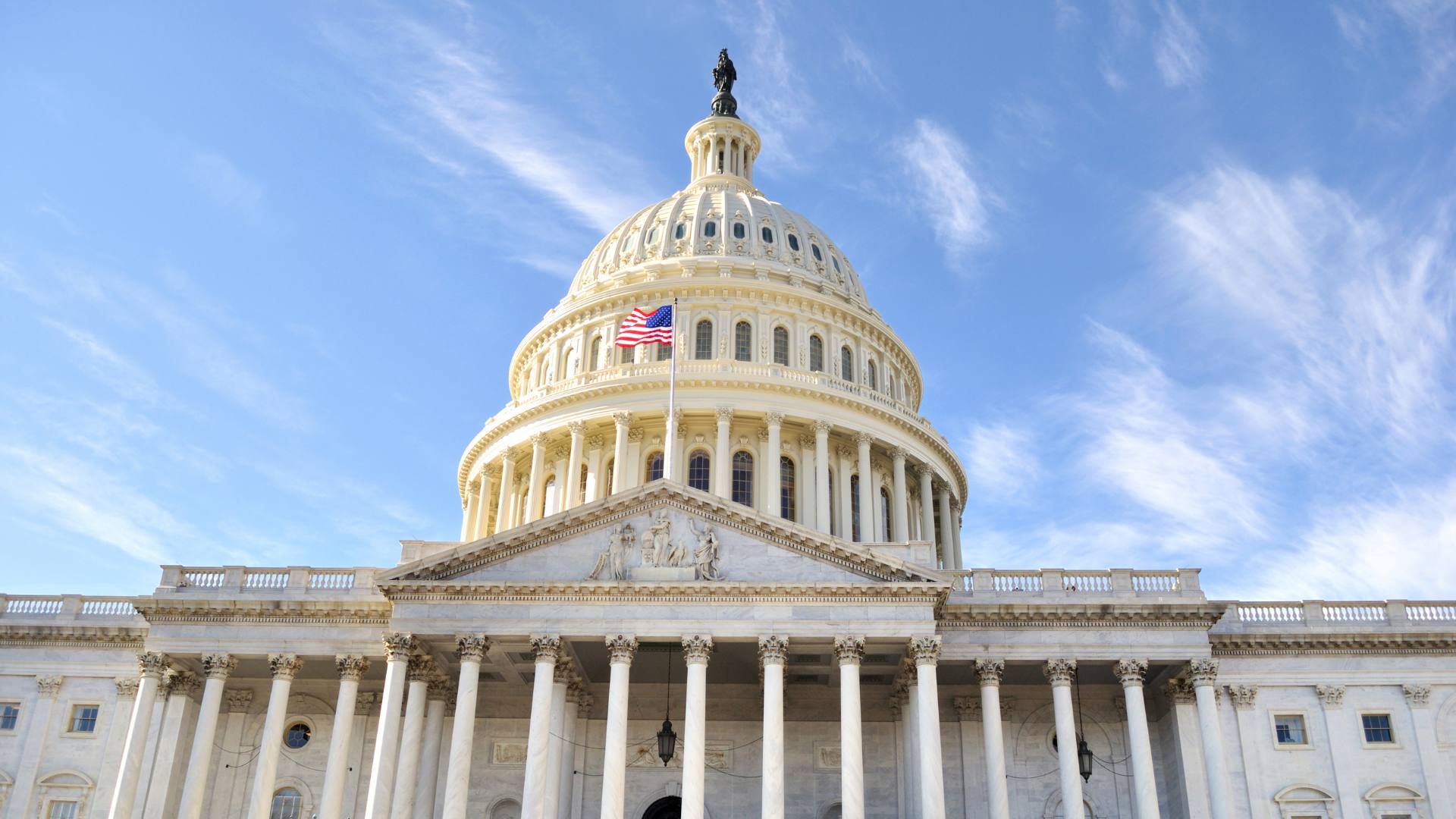
Fall is very nearly here. The leaves will turn brown, Halloween costumes will continue to creep onto store shelves, and millions of Starbucks customers will treat themselves to a Pumpkin Spice Latte. That also means Congress (well, the Senate at least) is back in session. Lawmakers have their work cut out for them and are supposedly on their best behavior—which still isn’t good—ahead of midterm elections in November. Fortunately, the Taxpayers Protection Alliance (TPA) has some reading homework for returning lawmakers as they make their way back to Capitol Hill. So, put on those spectacles, unpack that fall jacket, and buckle up for a busy autumn.
There is so much for Congress to do with such little time. As The Hill reporter Sudiksha Kochi noted in a recent analysis, “Republicans in both chambers are staring down a September sprint after returning from August recess, with a jam-packed legislative agenda and little time to clear their biggest remaining priorities before the midterm election crunch.” Most critically, lawmakers will have to contend with a national debt that now exceeds $40 trillion—or $117,000 for every man, woman, and child in the U.S. As Brookings Institution Budget and Tax Fellow Jessica Riedl noted in May, “surging government debt is harming the economy and our fiscal priorities—and its rapid growth poses an existential threat to the long-term American economy. Economists have a cliché that compares government debt to the unnoticed termites quietly eating the foundation of a home. A better analogy: Indulging in escalating debt is like indulging in a lifestyle of fast food, cigarettes, and no exercise. It may be occasionally manageable—and one may avoid feeling the effects for years or even decades—but the damage accumulates until a day of reckoning becomes virtually inevitable.” Excessive federal budgets absorb “savings that would otherwise have financed private investment … This large government borrowing also drives up interest rates, which are simply the price of borrowed money.”
Fortunately, well-thought-out reform proposals would cut significant government spending and save taxpayers trillions of dollars over the long run. In an August op-ed published in The Center Square, TPA policy analyst Vladlena Klymova describes the significant issues facing Social Security—the single largest federal spending program measured by annual outlays—and proposes commonsense reforms to shore up the program: “current benefits are calculated according to the same unsustainable formula that is leading to the depletion of the program’s trust fund six years hence. … [reform] can begin with something as modest and intuitive as slowing the automatic benefit expansions built into the current program’s design. A 2023 Hoover Institution study concluded that, had price indexing (instead of wage indexing) been enacted in 1977, it would have preserved the inflation-adjusted value of recipients’ initial benefits but averted the program’s looming insolvency. If implemented in 2032, indexing initial benefits to prices would close 74 percent of Social Security’s long-term funding gap—and even yield a surplus beginning in 2079—while maintaining the purchasing power of average starting benefits.”
Klymova notes that Congress would also be wise to “consider the Committee for a Responsible Federal Budget’s Six Figure Limit. This proposal would cap a couple’s combined annual Social Security benefits at $100,000 —affecting only the wealthiest 0.05 percent of couples today—and curtail future benefit growth largely for seniors with six-figure post-retirement incomes and million-dollar net worths.”
In addition to addressing skyrocketing spending, Congress will need to take on “[t]he annual defense policy bill [and] the farm bill … though priorities will almost certainly slip until after the midterms.” While the House passed its version of H.R. 8800, the fiscal year 2027 National Defense Authorization Act (NDAA), and the Senate Armed Services Committee advanced its own version of the NDAA, the Senate has not yet passed this legislation. But, when all is said and done, it will almost certainly be filled with waste and unnecessary programs.
As Taxpayers for Common Sense noted in a July analysis of the House’s version of the NDAA, “If enacted, the Pentagon’s total request for $1.5 trillion would dig the nation even deeper into debt, while the discretionary request of $1.15 trillion—a $250 billion increase over last year’s discretionary budget—would set a dangerous new baseline that on its own would add trillions to the debt over the coming years. In fact, over the next eight years, this budget request envisions spending over $3 trillion more than the Pentagon budget request just two years ago envisioned spending over that period.” While it is critical to defend America and keep it safe, wasteful programs such as the $2 trillion F-35 fighter jet program (which just got $51 billion more expensive) actually make America less secure by sending debt levels soaring. As Admiral Mullen, former Chairman of the Joint Chiefs of Staff, rightly pointed out: “The most significant threat to our national security is our debt.” Yet, Defense spending will almost certainly continue to climb.
Congress is similarly unlikely to put out-of-control Farm Bill spending out to pasture. While the Senate bill failed to get out of committee in August, TPA pointed out several problems with proposed provisions that will likely be cowed into passage. For example, “The Renewable Fuel Standard—which requires the blending of biofuel into America’s fuel supply—has increased energy costs for millions of families and businesses. … Small Refinery Exemptions were originally created as a temporary hardship relief valve for smaller refiners struggling to comply with onerous federal mandates. However, replacing discretionary, case-by-case hardship petitions with a system of fixed statutory carve-outs—as the Senate Farm Bill would do—creates an uneven playing field. Codifying permanent exemptions transforms temporary relief into a system where the government picks winners and losers.” Hopefully, lawmakers will stop leaving taxpayers holding the feed bag.
Finally, lawmakers must take up the reauthorization of FirstNet—a successful public-private partnership created to build, operate, and maintain America’s dedicated nationwide high-speed wireless broadband network specifically for first responders and public safety personnel. TPA Telecom Policy Director Johnny Kampis recently noted, “The initial five-year buildout resulted in 1,200 cell towers in locations where public safety leaders identified a need for better coverage, usually in rural locations hard to serve via terrestrial broadband. The requirement by the 2012 law to work with small and rural telecom providers resulted in more broadband infrastructure in rural areas. For example, more than 100 FirstNet tower sites launched on Navajo Nation through a collaboration between AT&T and two regional carriers.” Lawmakers must work together and act quickly to keep this pivotal program going.
Lawmakers have their work cut out for them as the November elections and end of the year approach. Members of Congress need to do their homework, finally get spending under control, and ensure that the people’s business is done wisely and without delay.