
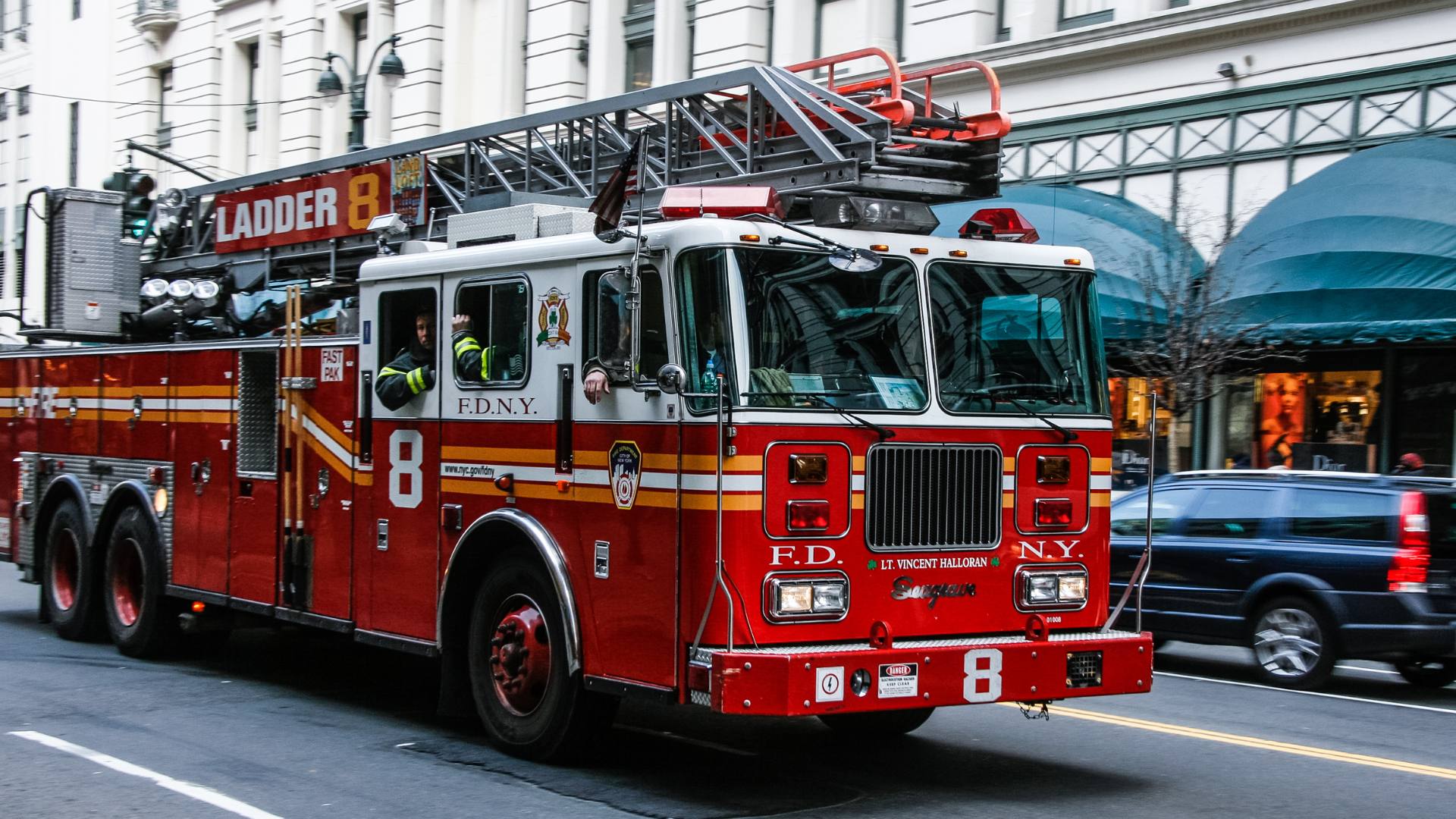
Hosing Wall Street Won’t Make More Fire Trucks
Ross Marchand
August 11, 2026
This op-ed was originally published in Inside Sources.
Politicians love claiming everything is a three-alarm fire — without evidence.
Recently, Sens. Jim Banks, R-Ind., and Elizabeth Warren, D-Mass., and Reps. Becca Balint, D-Vt., and Ben Cline, R-Va., called on the Federal Trade Commission to investigate alleged “anticompetitive” practices in the fire truck manufacturing industry driving costs higher for fire departments nationwide.
Banks claims, “Anticompetitive practices are strong-arming our cities, wasting taxpayer dollars, and leaving firefighters without life-saving equipment.” This follows Warren and Banks’ investigation into the alleged “harms of private equity roll-ups of fire truck manufacturers” in 2025.
While there are real issues driving up truck costs, the FTC action will do nothing to extinguish the truck price hikes. In this case, fighting fire with fire means burning away the outdated rules keeping truck costs high. Dowsing myths and outdated regulations are critical as Congress entertains nonsensical remedies.
The narrative pushed by politicians blaming consolidation and private equity for high truck prices completely ignores what goes into a modern fire truck. Over the last 20 years, federal and state safety mandates have expanded dramatically. The Environmental Protection Agency introduced stringent clean-air standards for diesel engines, while the National Fire Protection Association updated baseline requirements to enhance rollover structural stability, advance driver-assist safety systems, and integrate complex digital command dashboards.
As a 2025 report from the automotive news publication CBT News noted, “Since 2010, every diesel engine sold in the U.S. has come fitted with diesel particulate filters (DPFs) and selective catalytic reduction (SCR) systems — components meant to capture soot and neutralize nitrogen oxides. In theory, they’re good for the environment. In practice, they’re crippling the very trucks that keep shelves stocked and first responders rolling.” DPF filters require high and sustained engine heat to burn off trapped soot (a process called “regeneration,” or “regen”).
Commercial long-haul trucks can naturally achieve high and sustained heat on the highway, but fire trucks must spend a lot of time making short, low-speed drives or extended idling at incident scenes. This causes DPF filters to clog much faster, adding to costs on top of sensor failures, clogged filters, and faulty DEF quality sensors. Overall, these emissions systems add thousands of dollars in maintenance, manufacturing, complex electronic control modules, and extra wiring harnesses to every custom chassis — contributing directly to higher prices.
While the prevailing political narrative treats pre-consolidation manufacturing as a golden era, many family-owned fire apparatus builders were chronically undercapitalized, operating on razor-thin margins, and vulnerable to economic headwinds. Legacy builders rarely had the capital required to invest in modern automation, meet aggressive EPA compliance costs, or survive prolonged economic shocks.
Private equity investment provided the capital lifeline needed to modernize aging factories, integrate fragmented supply networks, and keep domestic manufacturing plants open when they otherwise would have closed. Without institutional capital stepping in, many smaller brands would have liquidated, leaving municipal departments with even fewer options than they have today.
Further, the claim that corporate greed is purposefully throttling production capacity overlooks a severe nationwide shortage of skilled manufacturing labor. Building a custom fire truck requires highly skilled welders, master auto-electricians, and specialized mechanical engineers. Manufacturers across North America are competing in one of the tightest skilled-labor markets in modern history. According to a 2024 survey of more than 200 manufacturing companies, 65 percent of the firms said recruiting and retaining workers was their top business challenge. Wage inflation and an aging trades workforce mean factories cannot scale up shifts overnight, regardless of who owns the company or how much capital is available.
Hosing Wall Street makes for a great fire show, but targeting private equity won’t kibosh harmful regulations, magically manufacture more specialized microchips, or train thousands of new precision welders. If lawmakers want to give local fire departments a ladder up, they should focus on streamlining regulatory compliance, lowering barriers to vocational technical training, and facilitating free trade around truck parts.
The sirens for reform are blaring, and they demand real solutions.